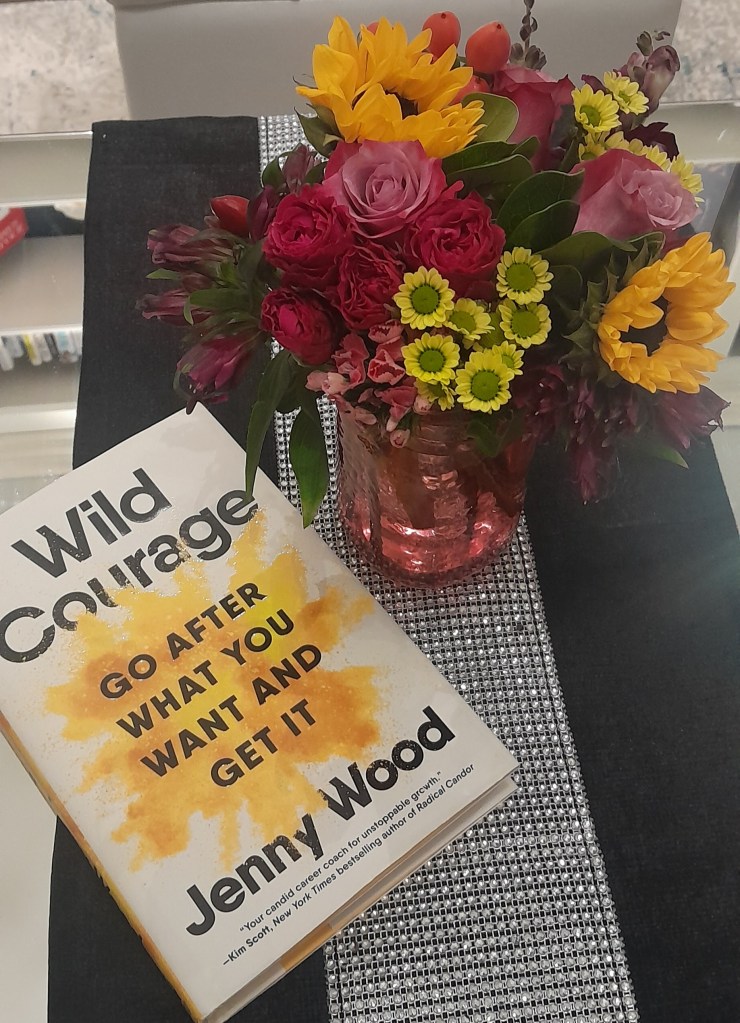
Book Review: Helping People Win at Work

Book: Helping People Win at Work, A Business Philosophy Called “Don’t Mark My Paper, Help Me Get An A”

Author: Ken Blanchard and Garry Ridge

Key message of the book: Performance review systems can be burdensome, and managers are often compelled to assess employees on a normal distribution bell-shaped curve – with poor, good and high-performance levels. The book describes a different approach to performance review, one that stands out as effective, transparent and a catalyst for high performance for ALL employees.

The proposed framework is rooted in a business philosophy called “Don’t Mark My Paper, Help Me Get An A“. The approach is compared to a teacher who, instead of grading his/her students at the end of the course, he/she supports students by sharing the final exam at the beginning of the course, then supports their learning with the aim that all students get an A, with teaching, coaching and ongoing assessment throughout the semester. For leaders in an organization, this philosophy for performance review translates into:

  • Managers sitting down with their employees to set expectations and goals at the beginning of each year
  • Consistent coaching, feedback and re-direction in day-to-day and weekly interactions and execution plans – while affirming or re-affirming the employee’s potential to get an A
  • Regular (quarterly if possible) reviews to assess gaps, confirm progress and goals and values alignment

In this system, an employee’s performance level is the direct responsibility of his/her manager – and manager is bound to provide regular feedback – “with candor and care” – to help his/her employee get an A at the final performance evaluation. This approach puts more responsibility on the manager helping his/her employees and making sure feedback and support are provided first, before concluding if an employee is ready to be shared with competition as he/she cannot get an A: “If our culture of candor, caring, accountability and responsibility doesn’t work for you, let’s share you with the competitor.

This framework enhances what true leadership is as the book authors highlight: “At its best, leadership is a partnership – one that involves mutual trust and respect between two people who work together to achieve common goals. When that occurs, both leader and direct report have an opportunity to influence each other. Both parties play a role in determining how things get done. In other words, it’s all about we, not me.”

The book overall reinforces what many high performing leaders and managers do and believe: a successful performance review system is one that incorporates clear communication of and alignment in goals, values and expectations from the beginning (Q1 of a year for instance) and is followed with regular feedback and touchpoints throughout the year for an employee to successfully meet his/her performance goals.

One specific learning from the book:  Candor and caring” are needed for feedback to be effective. Caring is defined as “behavior that demonstrates your concern about the person’s development, professionally and personally” while candor is about being honest with a person about his/her performance. “With caring, you get to make deposits in your emotional bank account with a person“, while negative feedback always hurts, acting as a withdrawal in the emotional bank account with that person. The authors point to how such pain is short lived and turns into a “Learning moment” if the emotional bank account is balanced.

One favorite quote from the book: 

“The key to developing people is to catch them doing something right.”

Bonus resource: Another book review of the book

This brief book review by Growth Is A Journey is an invitation for readers to discover the book in its entirety.
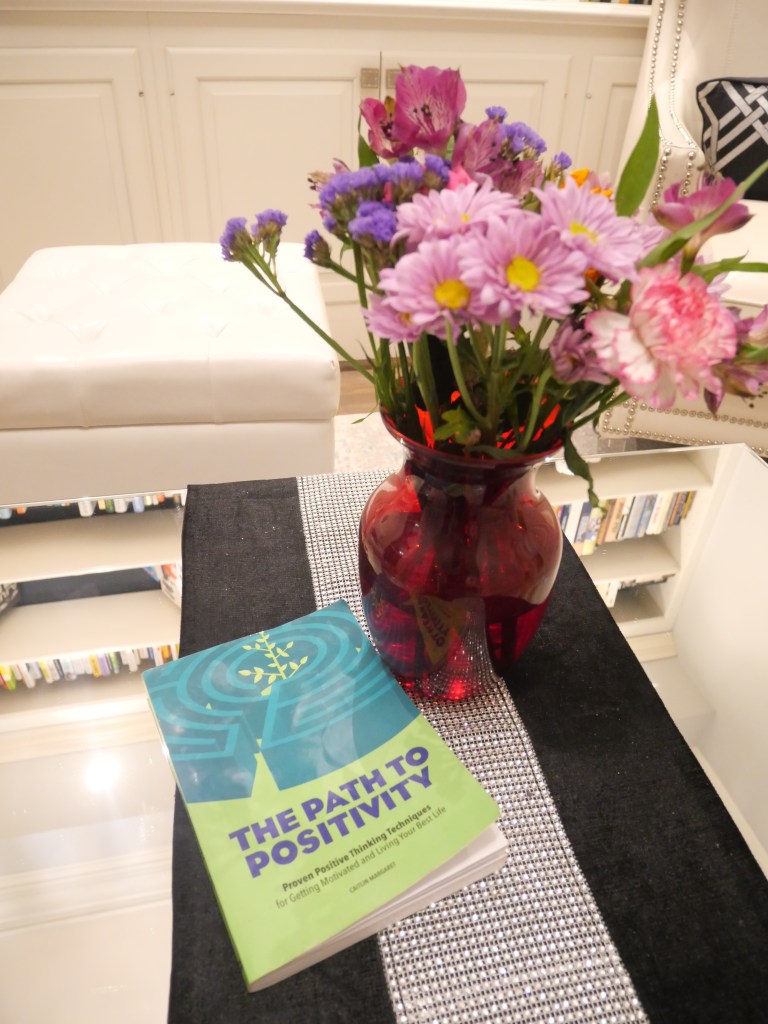
Book Review: Don’t Believe Everything You Think

Book: Don’t Believe Everything You Think, Why Your Thinking Is The Beginning & End of Suffering

AuthorJoseph Nguyen

Key message of the book: The story of our human suffering is directly tied to our thinking. This is because our thinking ultimately determines our feelings. The same experience or event can be perceived in significantly different ways by two individuals, based on the meaning each individual has assigned to it. We have the power to move from a state of suffering to a state of being happy, peaceful and free by paying attention to our thinking and reducing it. The more we are in a state of non-thinking – which is akin to being in a state of flow – the longer we experience our natural state of being which is joy, love and peace: “The reason thinking destroys is because as soon as we begin to think about the thoughts, we cast our own limiting beliefs, judgements, criticisms, programming, and conditioning onto the thought, thinking of infinite reasons as to why we can’t do it and why we can’t have it.” The framework to reduce our human suffering is to catch ourselves in our thinking/suffering, and let ourselves guided by our intuition or inner wisdom to “expand our consciousness and experience a deeper feeling of love at all times, which comes from a state of non-thinking.”

One specific learning from the book:  Based on the same principle of non-thinking, there are two types of goals: goals created out of inspiration, which feel expansive, uplifting, light and energizing; and goals created out of desperation, which feel heavy, draining, confining and empty.

One favorite quote from the book: We can only feel what we are thinking“; ” We’re only ever one thought, one insight, and one idea away from living a completely different experience of life.”

One favorite passage from the book: 

“Buddhists say that anytime we experience a negative event in our lives, two arrows fly our way. Being physically struck by an arrow is painful. Being struck by a second emotional arrow is even more painful (suffering). The Buddha explained, “In life, we can’t always control the first arrow. However, the second arrow is our reaction to the first. The second arrow is optional.”

Growth Is A Journey book review is intended to represent 1-2 key nuggets of insights from the book, with an invitation for readers to discover the book in its entirety.

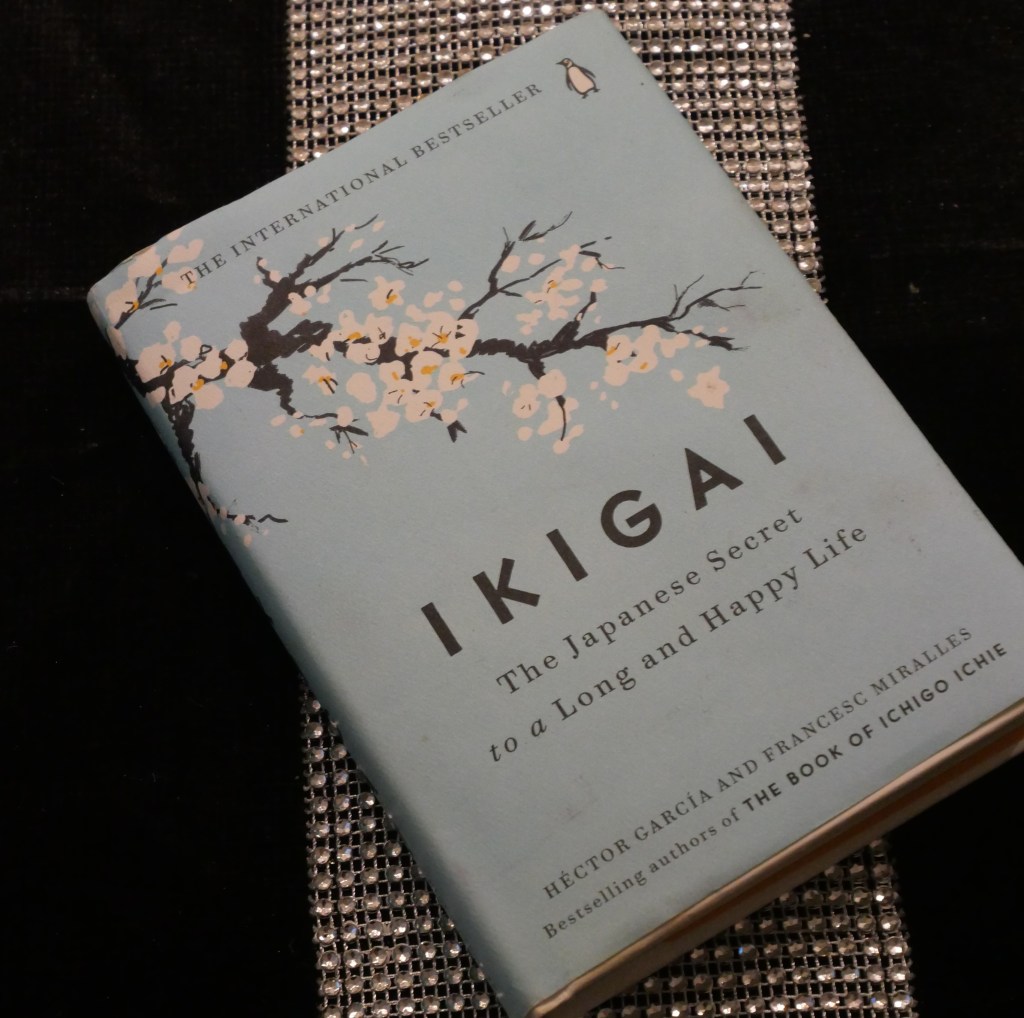
Book Review: Ikigai

Book: Ikigai, The Japanese Secret to a Long and Happy Life

Author: Hector Garcia and Francesc Miralles

Key message of the book: The book is focused on capturing the Japanese concept of Ikigai, which can be translated as “a reason for living” or “the happiness of always being busy“. Ikigai is associated with living a long (and fulfilled) life, as demonstrated by the extraordinary longevity of residents of the Okinawa Island of Japan, one of the world’s Blue Zones with the largest population of centenarians.

The authors went on a search to document the lifestyle of Okinawans and discovered that Ikigai was a core component of their longevity, in addition to: maintaining a healthy diet or Okinawa’s miracle diet (with antioxidants-rich food and drinks like green tea and white tea, fish and many fruits and vegetables, and a principle to eating less than our hunger might demand or the 80% rule), practicing low-intensity physical activity (like yoga and tai chi), and keeping close bonds within their local communities.

Ikigai is to be seen as “the reason we get up in the morning” and should be found or discovered at the intersection of our passion, mission, vocation and profession – by addressing the following questions: What we love, What we are good at, What we can be paid for, and What the world needs.

Our ikigai is to be discovered and preserved:

  • Finding our own unique ikigai involves identifying when we are in a state of flow or “optimal experience”, defined further by psychologist Mihaly Csikszentmihalyi as “the state in which people are so involved in an activity that nothing else seems to matter; the experience itself is so enjoyable that people will do it even at great cost, for the sheer sake of doing it.’ Flow is therefore a clue to our ikigai – “keep busy by doing things that fill you with meaning and happiness” – and a key ingredient for happiness: “The happiest people are not the ones who achieve the most. They are the ones who spend more time than others in a state of flow.”
  • Preserving our ikigai requires resilience to weather adversity and overcome setbacks: “The more resilient we are, the easier it will be to pick ourselves up and get back to what gives meaning to our lives.” Going beyond resilience is antifragility, the ability to “get stronger when harmed“.

One specific learning from the book:  Two additional Japanese concepts interlinked to ikigai are wabi-sabi and ichi-go ichi-e. Wabi-sabi means “the beauty of the fleeting, changeable and imperfect nature of the world around us“. Ichi-go ichi-e means “this moment exists only now and won’t come again.” By focusing on the present and appreciating the beauty of imperfection, we can remain guided by our ikigai in our day to day lives.

One favorite quote from the book: “When we spend our days feeling connected to what is meaningful to us, we live more fully; when we lose the connection, we feel despair.”

One favorite passage from the book: 

Once you discover your ikigai, pursuing it and nurturing it every day will bring meaning to your life. The moment your life has this purpose, you will achieve a happy state of flow in all you do, like the calligrapher at his canvas or the chef who, after half a century, still prepares sushi for his patrons with love.”

Additional resources: Interview with the author on Urban Chapter blog: https://www.theurbanchapter.com/author-interview-hector-garcia/

Growth Is A Journey book review is intended to represent 1-2 key nuggets of insights from the book, with an invitation for readers to discover the book in its entirety.
Book Review: The How Of Happiness

Book: The How Of Happiness, A New Approach to Getting the Life You Want

Author: Sonja Lyubomirsky, professor of psychology at the University of California with Ph.D. in social psychology from Stanford University; https://thehowofhappiness.com/

Key message of the Book: Higher levels of happiness are achievable because – based on research – 40% of our happiness is determined by our intentional activity or behavior, while 50% is influenced by our genetic makeup and only 10% by our life circumstances. This means that 40% of our happiness is within our ability to control through “what we do in our daily lives and how we think.” Our circumstances (e.g. rich or poor, healthy or sick, married or single, getting promoted, moving to a different city or country…) -which are often mistakenly believed to make a huge difference in our lives – don’t create lasting happiness primarily due to a phenomenon called hedonic adaptation – the ability of “human beings to adapt to favorable changes” to the point that these circumstances will no longer provide the happiness boost they once provided. Furthermore, even if we are born with a lower set point for happiness due to our inherited genes, there are strong reasons and perks to undertake some “happiness work”: “In becoming happier, we not only boost experiences of joy, contentment, love, pride and awe but also improve other aspects of our lives: our energy levels, our immune systems, our engagement with work and with other people, and our physical and mental health.” Based on research, happy people are also “better leaders and negotiators and earn more money”; they also live longer.

With 40% of our happiness being driven by our behavior, the author documents several “happiness boosting” activities that an individual can undertake to increase his/her happiness level. An effective “happiness strategy” takes into account each individual’s strengths, weaknesses, values, needs and lifestyle such that practices that are a better fit and come more naturally to that individual are being pursued: e.g. someone might get a higher happiness boost from a walk in nature or a party with friends versus committing himself/herself to a gratitude journal or reading a book. The fit could be identified by what comes more easily or naturally to someone, at least at the beginning.

Happiness-increasing activities, detailed in the book with associated practices and documentation on their proven effectiveness based on numerous studies conducted or researched over the author’s 15-year research career, include:

  • expressing gratitude
  • cultivating optimism
  • avoiding overthinking and social comparison
  • nurturing and investing in relationships
  • learning to forgive
  • increasing flow experiences
  • savoring life’s joys
  • taking care of your body and soul, via meditation, physical activity, and spiritual or religious practice.

The key in becoming happier – activating the 40% of happiness that is within our control – is to commit to and implement happiness practices like the above. These activities boost positive emotions and positive experiences which ultimately increase our happiness level. This is because “Happiness is not out there for us to find. The reason that it’s not out there is that it’s inside us…. […] …happiness, more than anything, is a state of mind, a way of perceiving and approaching ourselves and the world in which we reside.

Another key to becoming happier is to vary these happiness-boosting practices such that they yield most benefits and avoid us moments of frustration or boredom: “A crucial method of maximizing the impact of an activity is to attend to its variety. So sprinkle a little of this and a little of that, revivify your happiness strategies on a regular basis, surprise yourself sometimes. Regard happiness as an adventure, full of enterprise, developments, and detours.”

One specific learning from the book:  Cultivating optimism is one happiness activity the author recommends. One specific practice for cultivating optimism involves writing a narrative description of your “best possible future self” across all or specific areas of your life on a regular basis. Journaling about your best future self helps gain insights into your own goals, needs, and builds momentum and motivation to achieve your dreams, and be a happier person.

One favorite quote from the book: “The fountain of happiness can be found in how you behave, how you think, and what goals you set every day of your life – there is no happiness without action.”

One favorite passage from the book: “….some people associate happiness-enhancing strategies with people who seem to be too cheery and blissed out to be real….Above all, understand that there are many faces of happiness aside from the ubiquitous smiley face and the inspirational poster. The face of happiness may be someone who is intensely curious and enthusiastic about learning; it may be someone who is engrossed in plans for his next five years; it may be someone who can distinguish between the things that matter and the things that don’t; it may be someone who looks forward each night to reading to her child. Some happy people may appear outwardly cheerful or transparently serene, and others are simply busy. In other words, we all have the potential to be happy, each in our own way.”

Additional resources: https://www.psychologytoday.com/intl/blog/how-happiness

Growth Is A Journey book review is intended to represent 1-2 key nuggets of insights from the book, with an invitation for readers to discover the book in its entirety.

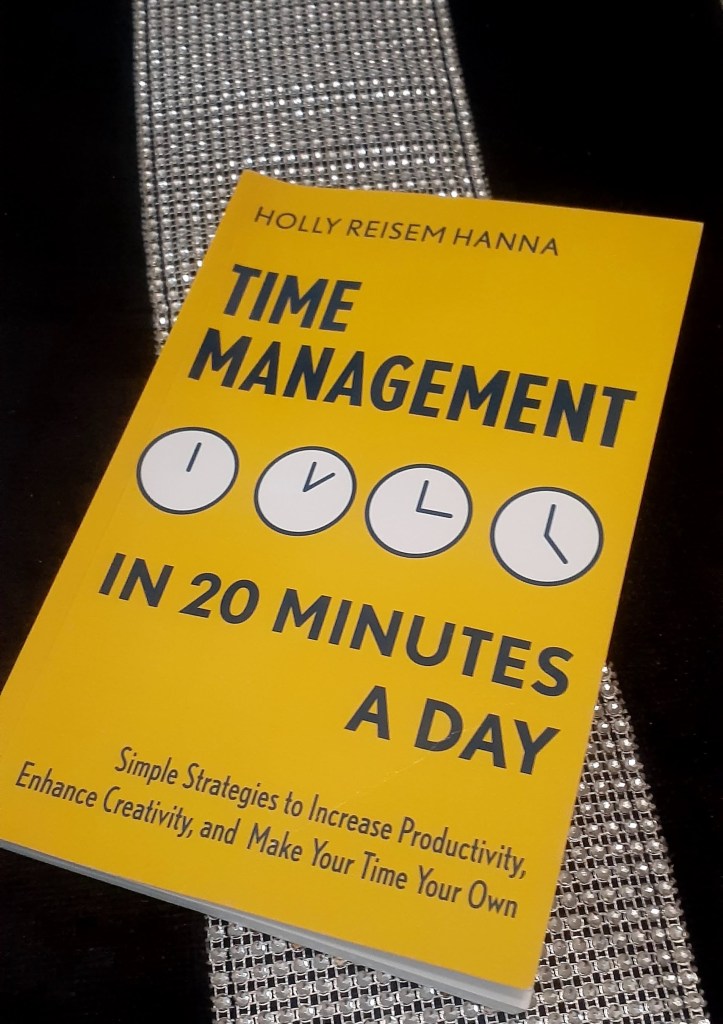
Book Review: Time Management In 20 Minutes A Day

Book: Time Management In 20 Minutes A Day – Simple Strategies To Increase Productivity, Enhance Creativity, and Make Your Time Your Own

Author: Holly Reisem Hanna

Key message of the Book: Time management is not a “fit-for-all” set of systems, tools and disciplines. Finding the right practices and tools involves a lot of experimenting, as the author discovered in her own life. The book is a quick read with simple strategies that helped author Holly Reisem Hanna to increase her productivity, creativity and overall well-being as a busy mom and entrepreneur. Holly’s strategies include:

  • Setting daily goals & 30-minute time blocking for all daily activities (especially when we all tend to under-estimate the time needed to complete a task), starting with highest priorities.
  • Reduce digital distractions that could lead to mindless scrolling and un-necessary fear of missing out.
  • Evaluate priorities on a regular basis by doing brain dumps, re-assessing what’s urgent versus non urgent, a short-term versus a long-term goal, and assigning realistic deadlines to all.
  • Simplify, declutter, delegate, batch, and automate whenever and wherever possible.

One specific learning from the book:  Two items worth highlighting are:

  1. Time blocking: the author recommends 30-minute blocks with each “day’s errands, appointments and must-do tasks, starting with your highest priorities”. The strategy is effective because “having a scheduled time for each task lets you know exactly how much you can realistically take on each day, making it easier to accomplish each task.” The practice is presented as something that could be done at the end of each day for no longer than 10 minutes.
  2. “Stop doing” list: in addition to a to-do list, the author is also recommending a “stop doing” list to identify habits, activities and tasks that should be let go off: ” When you get crystal clear on what you don’t want in your life, you become more focused on the things that you do want.”

One favorite quote from the book: “You only get one chance with time; once it’s used up, it’s gone forever.”

One favorite passage from the book:

“When it comes to perfection, the bottom line is this: Stop putting unnecessary pressure on yourself to achieve some unattainable standard. Give yourself and others grace and consider how you feel and what you want to be remembered for – then learn to let the rest go. You are the only one who gets to decide what is a priority in your life and what is not. Do not let an unrealistic mind-set or someone else’s definition of success dictate your task list or your sense of well-being!”

Growth Is A Journey book review is intended to represent 1-2 key nuggets of insights from the book, with an invitation for readers to discover the book in its entirety.
Book Review: Emotional Intelligence 2.0

Book: Emotional Intelligence 2.0

Author: Dr. Travis Bradberry & Dr. Jean Greaves

Key message of the Book: Emotional intelligence is a critical skill that anyone should be looking at strengthening with research and numerous studies having found it to be “the single predictor of performance in the workplace and the strongest driver of leadership and personal excellence” as per the authors Dr. Bradberry and Dr. Greaves.

Emotional intelligence is defined as the set of four skills – self-awareness, self-management, social awareness and relationship management – grouped around two competencies: personal competence and social competence.

  • Personal competence is “your ability to stay aware of your emotions and manage your behavior and tendencies.”
  • Social competence is “your ability to understand other people’s moods, behavior and motives in order to improve the quality of your relationships.

The four above-mentioned emotional intelligence skills can be expanded by applying specific strategies. For example:

  • Self-awareness is the ability to “accurately perceive your own emotions in the moment and understand your tendencies across situations” and can be improved by a number of strategies including allowing yourself to feel both negative and positive emotions, keeping a journal about your emotions, understanding and tracking the source of your feelings and triggers, revisiting your values and whether your emotions and behavior are in line with these values, observing the effect your emotions have on others around you, and seeking feedback from others. As we can’t escape our emotions – “your hard-wired emotional reactions to anything come before you even have a chance to respond” – we can only strive to become more self-aware.
  • Self-management: is the ability to “use your awareness of your emotions to stay flexible and direct your behavior positively” or “to actively choose what you say and do” and can be improved by strategies such as deep breathing, making your goals public, sleeping on a situation before taking action, setting aside time in your day for problem solving and thinking, taking control of your self-talk, visualizing yourself succeeding, and building good sleep habits.
  • Social awareness: is the ability to “accurately pick up on emotions in other people and understand what is really going on with them.” Good strategies for expanding your social awareness include greeting people by name, watching body language, and practicing listening and empathy.
  • Relationship management: is the ability to “use your awareness of your own emotions and those of others to manage interactions successfully” and can be expanded by being open and curious, acknowledging other person’s feelings, sharing feedback, showing care, increase transparency on your decision-making, providing constructive and direct feedback, aligning your words and actions with your intent, and taking the high road when entering tough conversations.

One specific learning from the book:  If there is misalignment between your emotions and your words, you could be in a situation where you might be sending a mixed signal that can cause mistrust or confusion in a relationship. The authors explain how the best way to deal with this is to “use your self-awareness skills to identify your emotions and use your self-management skills to decide which feelings to express and how to express them“. At times, “the best bet is to explain what’s happening (i.e. “If I seem distracted, it’s because I can’t stop worrying about a phone call that went awry this morning”).”

One favorite quote from the book: “Getting to know yourself inside and out is a continuous journey of peeling back the layers of the onion and becoming more and more comfortable with what is in the middle – the true essence of you.”

One favorite passage from the book:

“Since our brains are wired to make us emotional creatures, your first reaction to an event is always going to be an emotional one. You have no control over this part of the process. You do control the thoughts that follow an emotion, and you have a great deal of say in how you react to an emotion – as long as you are aware of it.”

Growth Is A Journey book review is intended to represent 1-2 key nuggets of insights from the book, with an invitation for readers to discover the book in its entirety.

Book Review: 100 Ways To Motivate Others

Book: 100 Ways To Motivate Others, How Great Leaders Can Produce Insane Results Without Driving People Crazy

Author: Steve Chandler and Scott Richardson

Key message of the Book: 100 Ways To Motivate Others is a synthesis of leadership traits and principles that a leader ought to exhibit in order to motivate others to achieve desired results. A practical guide in leadership, the book includes powerful and condensed insights with truths and myths about motivation and leadership, as well as many inspiring real-life stories and anecdotes. A leader who motivates others is not a leader who controls them, but one who knows himself/herself well and acts intentionally, in a way that is inspiring to these around him/her.

For instance, great leaders who motivate others are these who:

  • understand the need for providing real and regular feedback, and the power of thoughts and of continuous learning;
  • know that self-discipline and focus are to be learned like a foreign language and are not innate traits;
  • get input from their people;
  • don’t confuse stressing with caring; are “ruthlessly” optimistic and replace worry with action;
  • manage agreements and not people;
  • don’t “focus first on trying to be liked” but “on the practices and communications that lead to being respected”;
  • don’t try to be right all the time;
  • teach others to embrace challenges and changes as they arise, to master problem-solving and do what’s required.

One specific learning from the book:  It can be draining to have pessimists in a team – these individuals who seem to perpetually complain and have a negative attitude about everything. To motivate such individuals is to inspire them. The real work is not on the pessimists to change but on the leaders to seek ways to become an inspirational figure in a pessimist’s life. Inspiration is more powerful than constructive criticism because “victims and pessimists hate to be fixed, hate to be corrected, and even hate to be taught things, because their whole position is defensive.”

Another specific learning is about inspiring “inner stability” for others even under circumstances that are always changing. People generally yearn for stability and leaders can offer that, not by looking outside themselves but by finding stability and calm within themselves in the “inner enthusiasm for work“. Doing your best as a leader every single day is a source of stability even when external changes occur: “Does anything motivate people more than to be in the presence of a leader with inner stability and self-esteem?”

One favorite quote from the book: “Masterful, artful, spirited leadership has ways of bringing out the best and the highest expression of self-esteem in others”.

One favorite passage from the book:

“You will really enjoy motivating others if you start thinking of your life as a mathematical equation. […]

Here it is:

When you are positive (picturing the math sign: +) you add something to any conversation and meeting you are part of. That’s what being positive does, it adds.

When you are negative (-), you substract something from the conversation, the meeting, or the relationship you are a part of. If you are negative enough times, you substract so much from the relationship that there is no more relationship left.

When you are a positive leader with positive thoughts about the future and the people you lead, you add something to every person you talk to.”

Steve Chandler & Scott Richardson, 100 Ways To Motivate Others

Growth Is A Journey book review is intended to represent 1-2 key nuggets of insights from the book, with an invitation for readers to discover the book in its entirety.

Book Club: Small Habits Big Changes

Book: Small Habits Big Changes, How the Tiniest Steps Lead to a Happier, Healthier You

Author: Steven Handel https://stevenhandel.com

Key message of the Book: Transformational life changes and long-term improvements are achieved via the collection of small habits we integrate into our daily routines. This is because big changes never or rarely happen overnight; as per the author, changes are “often slow and gradual” and dependent on our daily actions: “Often, it’s not any single act that will completely change your life, but the consistency and the persistence of a habit that leads to real consequences over time.”

Big SMART (Specific, Measurable, Achievable, Relevant, Time-Bound) goals are a valuable way to push us forward, but they become a reality or a means for transformation when they are accompanied by specific tactics, systems and routines … which enable us to get from state “A” to state “B” on the long-term.

As part of this framework, the author describes several essentials we ought to pay attention to, create and re-create in our lives – on a regular basis – for self-growth and self-improvement. These include (1) what morning and nighttime routines we develop; (2) the basics of sleep, diet and exercise, which are critical for sustaining positive habits and good performance, and (3) the systems we put in place, which can turn into a lifestyle, if pursued consistently.

One specific learning from the book:  In the self-improvement literature, there is a lot of talk about “going outside of our comfort zone” – by pushing our boundaries and conquering our fears. That is good advice; however, it does not mean that “staying inside our comfort zone” is always bad. The author makes the point that going outside our comfort zones often times comes with costs and stress, and it is equally important to give ourselves “permission to take it easy and “chill” out”. In other words, is it important to understand what activities enable us to relax and recharge, especially after sustained levels of effort. Building relaxation into our days and lives is as important as hard work and building disciplines and systems for focused efforts.

One favorite quote from the book: “Think Big, Act Small”.

One favorite passage from the book:

“Our patience is strongest when we have a healthy expectation of future difficulties and obstacles. Get ready to be challenged. Get ready to make mistakes. Get ready to fail. And make sure you are ready to keep moving forward no matter what happens.”

Steven Handel, Author of Small Habits Big Changes

Growth Is A Journey book review is intended to represent 1-2 key nuggets of insights from the book, with an invitation for readers to discover the book in its entirety.

Book Club – The Gap and The Gain

Book: The High Achievers’Guide To Happiness, Confidence, And Success By Dan Sullivan, founder of Strategic Coach with Dr. Benjamin Hardy

Key message of the Book: When it relates to our goals and happiness, there are two ways of being – in the gap or in the gain – based on what our reference point is.

  • If we measure ourselves against an ideal, needs and wants, we function from a state of gap, lack and frustration.
  • If we measure ourselves against our starting point, we appreciate our progress and accomplishments, which puts us in a state of gain.

When we are in the gain, we are more likely to extract uses, lessons, and purposes from our experiences, in other words, we are turning our life experiences into either wins or learning. This type of living becomes a catalyst for more impactful and meaningful GAINS.  To practice our “GAIN” muscles, we need to build the habit of journaling and measuring our top gains, as well as defining what our desired gains for the future are.

One specific learning from the book: 

  • Personal development: The self-determination theory says that a crucial aspect of motivation and thriving is autonomy: “The more independence and ownership you take for yourself, your circumstances and your life, the more self-determined you will be.” In order to become self-determined and intrinsically motivated, we need to define our “success criteria”, our “I’m being happy/successful when” versus “I will be happy/successful when…”
  • Leadership development: We can help others see and appreciate their own gains by (1) asking them about their recent progress and (2) pointing out to them their progress. When we are in a difficult situation, we can help others find the GAIN with questions like: “What is the GAIN in this?” Or “How can we turn this into a GAIN?”.

Favorite quote from the book: Happiness is a byproduct of realizing that you are the destination”.

Additional resourcesHome – Gap And The Gain Book (gapandgainbook.com)

Growth Is A Journey book review is intended to represent 1-2 key nuggets of insights from the book, with an invitation for readers to discover the book in its entirety.

Book Club – Thrive By Arianna Huffington

Book: Thrive, The Third Metric To Redefining Success And Creating A Life Of Well-Being, Wisdom, And Wonder

Publishing Year: 2014

About the Author: From the Thrive Global bio: Arianna Huffington is the founder and CEO of Thrive Global, the founder of The Huffington Post, and the author of 15 books, including Thrive and The Sleep Revolution. In 2016, she launched Thrive Global, a leading behavior change tech company with the mission of changing the way we work and live by ending the collective delusion that burnout is the price we must pay for success. Arianna has been named to Time Magazine’s list of the world’s 100 most influential people and the Forbes Most Powerful Women list. Originally from Greece, she moved to England when she was 16 and graduated from Cambridge University with an M.A. in economics. At 21, she became president of the famed debating society, the Cambridge Union. She serves on numerous boards, including Onex and The B Team. Her last two books, Thrive: The Third Metric to Redefining Success and Creating a Life of Well-Being, Wisdom, and Wonder and The Sleep Revolution: Transforming Your Life, One Night At A Time, both became instant international bestsellers.

Growth Is A Journey book review consists of a series of questions and answers, intended to represent 1-2 key nuggets of insights from the book, as well as personal takeaways with an invitation for readers to discover the book in its entirety.

Key message of the Book: Thrive is a well-documented book debunking the myths that power and money are key to a successful life. Arianna is introducing a third metric for a fulfilling life, which is the ability to create and sustain a life of well-being, wisdom, wonder and giving. Such third metric is like a third leg to a stool, without each the stool would collapse, just like Arianna experienced in April of 2007, when she found herself lying on the floor of her home office in a pool of blood, as result of exhaustion and lack of sleep.

What to know before reading: The book is not one of these “new age” memorandum, full of big (empty) words and proclaiming new-found wisdom and peace. It is a very down-to-earth and pragmatic book that takes the reader through a journey of documented facts and data, stories and science-based truths on the benefits of well-being, and of cultivating wisdom, wonder and giving. Arianna borrows research and stories from a range of sources, from her mom and family, to scientists, businessmen, psychologists, artists, and sportsmen.

Biggest personal learning from the book: Key personal learning from the book is that the third metric is not something to remember doing and looking for – from time to time; it is truly a way of life, a gift that keeps on giving to ourselves and these around us, including family, friends and our communities. Indeed, “what we’re beginning to recognize now is that success is not always about doing more, but also about doing better – and we do better when we’re connected to our inner wisdom, strength, and intuition.” Furthermore, such creation of wonder, wisdom, giving and well-being is not something that is magically arising in our lives; it is the result of practices, disciplines and routines that we need to make room for – from a genuine desire to find the true essence of ourselves, which in turn, leads to a life of thriving: “In our daily lives, moving from struggle to grace requires practice and commitment. But it’s in our hands. I’ve come to believe that living in a state of gratitude is the gateway to grace. Gratitude has always been for me one of the most powerful emotions. Grace and gratitude have the same Latin root, gratus. Whenever we find ourselves in a stop-the-world-I-want-to-get-off mindset, we can remember that there is another way and open ourselves to grace. And it often starts with taking a moment to be grateful for this day, for being alive, for anything.

One specific learning from the book: A point made in the book is about time affluence and the importance of cultivating it. Arianna talks about how her mom always made a point that “rushing through life was a sure way to miss the gifts that come only when you give 100 percent of yourself to a task, a conversation, a dinner, a relationship, a moment.” Time affluence is thus more about the ability to be “in the moment” than having more time for a particular activity or in general. This is a pragmatic view that I particularly relate to. Because it is impossible to escape being subject to deadlines or finding ourselves not rushing through to get to a next appointment in some hectic days. However, Arianna highlights via Carl Honore’s work, the author of In Praise of Slowness, that “Speed can be fun, productive and powerful, and we would be poorer without it. What the world needs, and what the slow movement offers, is a middle path, a recipe for marrying la dolce vita with the dynamism of the information age. The secret is balance: instead of doing everything faster, do everything at the right speed. Sometimes fast. Sometimes slow. Sometimes in between.” The secret is balance… between speeding up and slowing down, …in taking on the stress of a challenge, as much as giving ourselves a mental and physical break.

How is this book different from other leadership books: The book is a compelling invitation to living a life of well-being, wisdom and wonder. It’s compelling not because of the author’s name, fame and editorial empire. It is compelling thanks to the myriad of life stories, facts, and science-based research that are woven to make this book a course in the third metric, that regardless of our social-economic statuses, is a sure way to ground ourselves and experience fulfillment and well-being.

Additional resources: The Third Metric with Google.

Book Club – The Subtle Art Of Not Giving A F*ck by Mark Manson

Book: The Subtle Art Of Not Giving A F*ck, A Counterintuitive Approach To Living A Good Life

Publishing Year: 2016

About the Author: Mark Manson is an American blogger and author of three books including another #1 New York Times bestseller titled “Everything is F*ucked, A Book About Hope“. He is a speaker to large events and corporations, and has been featured in over 50 large newspapers and TV/radio shows including the BBC, the New York Times, Larry King and Dr Oz. In his words, “My life’s mission is to improve the public conversation around personal development and happiness. My approach to this has been to disrupt the self-help industry and debunk many of the old tropes about positive thinking and the law of attraction and other woo-woo nonsense.”

Growth Is A Journey book review consists of a series of questions and answers, intended to represent 1-2 key nuggets of insights from the book, as well as personal takeaways with an invitation for readers to discover the book in its entirety.

Key message of the Book: The Subtle Art of Not Giving A F*ck is a one-of-a-kind self-book, written in a hilarious style -(and not for the faint of heart who cannot utter a word of profanity) – to break away from “all positivity, all happiness”, “you are special”, “feel better” books.  The counterinituitive approach comes from the fact that focusing on chassing positive experiences and wanting too much – giving too many f*cks-  is in fact negative: “The desire for more positive experience is itself a negative experience.  And, paradoxically,  the acceptance of one’s negative experience is itself a positive experience.” This is because “everything worthwhile in life is won through surmounting the associated negative experience“. When we learn to not give a f*ck about too many things, that’s when we focus on what really matters and we put things, problems and people we deal with in the right perspectives. As per Mark, “the idea of not giving a f*ck is a simple way of reorienting our expectations for life and choosing what is important and what it is not. Developing this ability leads to something I think of as a kind of “practical enlightenment“. The “subtle art of not giving a f*ck” comes down to “learning how to focus and prioritize your thoughts effectively – how to pick and choose what matters to you and what does not matter to you based on finely honed personal values.

What to know before reading: The book debunks a series of fundamentally flawed beliefs that many of us need to unlearn. For instance, Chapter 2 walks us through how trying to feel always happy is a trap we fall into so often. Problems, discomfort and dissatisfaction are part of life irrespective of how much we try to avoid them. Happiness comes therefore from solving problems, it is a form of action and a constant work-in-progress because solving problems is a constant work-in-progress. “Suffering is biologically useful” in fact with emotions and pains giving us clues to problems and solutions. The conclusion -at the end of this 2nd chapter – is made obvious by these poignant points: “Who we are is defined by what you’re willing to struggle for.”

Similar “north star” beliefs are presented across the rest of the book as counterintuitive truths challenging previously-held beliefs: You Are Not Special, The Value of Suffering, You Are Always Choosing, You’re Wrong About Everything, Failure Is The Way Forward, The Importance of Saying No, and Then You Die….

Biggest personal learning from the book: Eat your veggies! In the chapter You Are Not Special, Mark Manson makes a simple but powerful point that at the end of the day, our actions don’t matter that much in the grand scheme of things. There are only very few special people and very few special actions in the long history of our civilization. Acknowledging this – eating this bland and mundane veggie- will actually take the pressure off and enable us to live a more meaningful and joyful life: “The vast majority of your life will be boring and not noteworthy, and that’s okay. This vegetable course will taste bad at first. Very bad. You will avoid accepting it. But once ingested, your body will wake up feeling more potent and more alive. After all, that constant pressure to be something amazing, to be the next big thing, will be lifted off your back. And the knowledge and acceptance of your own mundane existence will actually free you to accomplish what you truly wish to accomplish, without judgement or lofty expectations. You will have a growing appreciation for life’s basic experiences: the pleasures of simple friendship, creating something, helping a person in need, reading a good book, laughing with someone you care about. Sounds boring, doesn’t it? That’s because these things are ordinary. But maybe they are ordinary for a reason: because they are what actually matters.

One specific learning from the book: A point made in the book is motivation doesn’t always comes first, with Mark reminiscing over a saying from his math teacher from high school: “Don’t just sit there. Do something. The answers will follow”. If we wait to feel motivated, we miss opportunities and what the solutions to problems could be. The principle “do something” means committing to doing something, anything …which will generate a chain reaction leading to increased inspiration and motivation.

Another specific takeaway from the book is that by consciously choosing what you give a f*ck about, you are also choosing what problems you have or don’t have to solve: e.g. if you choose to give a f*ck about your job or a particular relationship, you are also choosing to put up with some of the stresses that come along, and that’s okay: “True happiness occurs only when you find problems you enjoy having and enjoy solving.” Clarifying and prioritizing good values is a first step to then only give a f*ck towards things that matter.

How is this book different from other leadership books: The book is a wake-up call about choosing what we care about and why, and about accepting adversity, uncertainty and failure as necessities for leading a “good life”. It is, as per Mark, “a refreshing slap in the face for all of us that we can start to lead more contented, grounded lives.

Book Club – Atomic Habits by James Clear

Book: Tiny Changes, Remarkable Results Atomic Habits

Publishing Year: 2018

About the Author: James Clear, one of the world’s leading experts on habit creation, is the author of Atomic Habits, a #1 New York Times bestseller which has sold in over 4 million copies worldwide. The creator of the Habit Journal and The Habits Academy, and the publisher of the 3-2-1 newsletter, James writes about habits, decision making, and continuous improvement, and is a frequent speaker at major companies and events.

Growth Is A Journey book review consists of a series of questions and answers, intended to represent 1-2 key nuggets of insights from the book, as well as personal takeaways with an invitation for readers to discover the book in its entirety.

Key message of the Book: Atomic Habits provides a receipt for success in life via the habits we develop or break. The entire philosophy of the book is that “your outcomes are a lagging measure of your habits” and that we should always be in the pursuit of a 1% improvement: “If you get one percent better each day for one year, you’ll end up thirty-seven times better by the time you’re done.” If understood and implemented, the laws and systems around habit creation will result in changes that even if they “seem small and unimportant at first will compound into remarkable results if you’re willing to stick with them for years.”

The Four Laws of Behavior Change “Make it obvious. Make it attractive. Make it easy. Make it satisfying” – are decoded by James Clear via a mixture of real-life examples and stories, and science-based insights and findings. Good habits are not the result of willpower but of the systems we put in place; likewise, we can put tools, strategies and systems in place to break bad habits by making them “invisible, unattractive, hard or unsatisfying”: “When scientists analyze people who appear to have tremendous self-control, it turns out those individuals aren’t all that different from those who are struggling. Instead, “disciplined” people are better at structuring their lives in a way that does not require heroic willpower and self-control. In other words, they spend less time in tempting situations.

What to know before reading: The book is a step-by-step plan for developing good habits and breaking bad ones. After going through some Fundamentals on the compounding power of small changes, James Clear delves into the four laws of habits, which can be applied to develop or break habits.

To make it more concrete, as an example, the 1st Law section starts with a chapter titled The Man Who Didn’t Look Right. It starts with a story of a paramedic who during a family event said to her father-in-law that he didn’t look right. Jokingly, he replied: “Well, I don’t like your looks, either.” She insisted that her father-in-law goes to the hospital, and a few hours later, he was undergoing lifesaving surgery. Her daughter-in-law’s intuition had saved him. After several other examples of similar accurate predictions, James Clear lays out the theory that “with enough practice, you can pick up on the cues that predict certain outcomes without consciously thinking about it. Automatically, your brain encodes the lessons learned through experience“. In other words, “the more automatic a behavior becomes, the less likely we are to consciously think about it“. If we want to change a behavior, we need to increase our awareness. Two tools are offered for this purpose: a “point-and-call” system to verbalize our actions and therefore move from non-consciousness to consciousness; and a “habits scorecard” to track our habits, be it good, bad or neutral. Both tools will enable a better acknowledgement of engrained habits and their associated cues, a starting point in firming up a habit or breaking it.

Throughout the book, the reader will be discovering insights and research-based principles around the science of habits, with James Clear drawing on ideas from biology, psychology, and neuroscience, and on real-life examples.

Biggest personal learning from the book: Key personal learning was the idea that a habit can be successfully created or replaced not based on sheer willpower but on the tools, strategies and practices we develop around that habit – and this has application in both our personal and professional lives. The book makes it obvious how success around our behaviors has nothing to do with our personality or motivation, it simply comes down to our systems and understanding the Four Laws of behavior change.

One specific learning from the book: A point made in the book is around one of the best ways to start a new habit, called habit stacking. This is the practice of pairing a new habit with a current habit: “After [current habit], I will [new habit]”. The habit stacking enables building a new habit by creating a structure and a routine benefiting from the momentum created from the existing behavior, which becomes a cue for the new habit. For instance, “After I exercise in the morning, I will meditate for five minutes” can lead to a new routine on meditating.

How is this book different from other leadership books: The book was recommended to me as one of the best personal development books out there. It didn’t disappoint – it’s a very powerful guide, offering practical wisdom, tools and strategies to build good habits and stop bad ones.

Additional resources: For more details Books | James Clear

Atomic Habits Resources | James Clear

Source/Credit: Atomic Habits (Atomic Habits: Tiny Changes, Remarkable Results by James Clear)