How to Recharge Your Mind with Whimsy and Playful Joy

By Guest Writer: Donna Erickson

Donna Erickson is a retired public educator. She created Fit Memory with a few friends as a way to promote wellness among senior citizens with the hopes it will help inspire others to make the most of their golden years.

Busy parents juggling work and wellness, caregiving, and constant notifications often hit the same wall: burnout recovery starts to feel like one more chore. Whimsy maxxing is a simple mindset shift toward playfulness and joy in everyday moments, not as escapism, but as a way to support psychological well-being when life feels relentlessly serious. When the brain gets small, safe sparks of fun, dopamine activation can help restore motivation and lift the fog that comes with chronic stress. Over time, these moments can support nervous system regulation and make steadiness feel reachable again.

Why Playful Joy Actually Recharges You

At its core, whimsy maxxing works because childlike joy speaks the brain’s reward system in a language it understands: safe pleasure. Small moments of play can spark dopamine and other “feel-good” signals that nudge you out of survival mode. That shift makes stress reduction techniques easier to access, and it supports steadier nervous system regulation.

This matters because burnout is not just tiredness. It is a body-and-brain pattern of constant alert, low motivation, and thin patience. Gentle fun helps you come back to yourself, so you can respond instead of react.

Picture a parent making lunch, then pausing for ten seconds to doodle a silly face on a sticky note. It is tiny, but your brain tags it as rewarding and non-threatening. Your breathing softens, your shoulders drop, and the day feels more workable. That’s why a playful mug can become a reliable cue for calm and bright emotion.

Turn Your Morning Drink Into a Tiny Whimsy Ritual

When your brain learns that small moments of play signal safety and reward, it helps to give that feeling a consistent “home base” in your day. Designing a whimsical mug, covered in colorful illustrations, playful patterns, or a cheerful saying, can turn an everyday coffee or tea break into a tiny ritual that reinforces the joy and creativity at the heart of whimsy maxxing. Each time you reach for it, the design becomes an object-based mindfulness cue: a quick, reliable prompt to soften your mood and invite a lighter mindset before you’ve even taken a sip.

If you want something you’ll actually use (or love giving as a thoughtful gift), look for a custom mug design and printing service that makes the process feel easy and predictable. Options like multiple mug styles, full-wrap printing or simple accent printing, transparent pricing with no hidden fees, and reliable delivery help your idea land exactly as you imagined, so the ritual can stick. You can explore customized mugs to find the style and print approach that fits your vibe.

Build Your Whimsy Menu: Easy Ideas to Start Today

Whimsy works best when it’s easy to reach for, like a menu you can order from depending on your energy, mood, and time. Pick a few ideas below and treat them as tiny experiments in stress relief through joy.

  1. Anchor whimsy to an object you already touch daily: Choose one “cue object” (your playful mug from your morning drink ritual, a pen, your keys) and assign it a micro-practice: a 10-second doodle, a silly affirmation, or three slow breaths while noticing color and texture. This turns whimsy into mindfulness through play, your body learns “when I see this, I soften.” The consistency is what builds joyful habits, not the size of the moment.
  2. Create a two-minute “tiny quest” after a routine: After brushing teeth or making coffee, do one small mission: spot three heart shapes, find the brightest color in the room, or walk like you’re on the moon to the kitchen. Daily imagination exercises like these gently interrupt autopilot, which is where stress tends to accumulate. Keep it intentionally short so it feels like a treat, not homework.
  3. Make one ordinary task slightly theatrical: Add a playful rule to something you already do: fold laundry like you’re a museum curator (“Exhibit A: The Cozy Sock”), narrate dishwashing like a cooking show, or set a “soundtrack” and move in slow motion for one minute. The “why” is simple: creative play practices shift your nervous system from effort-only mode into flexibility. You’re still being productive, you’re just doing it with a lighter grip.
  4. Start a pocket-sized “whimsy menu” list for low/medium/high energy: Write 12 options on paper (or a note): 4 for low energy (watch clouds for 60 seconds, smell your tea, trace a pattern), 4 for medium (draw a tiny cartoon, dance to one song, make a funny snack face), 4 for high (5-minute craft, playful walk, improv story). This helps with incorporating whimsy into routines because you won’t have to invent joy when you’re tired. You’re building a reliable system for stress relief through joy.
  5. Use playful constraints to spark creativity fast: Set a timer for 5 minutes and pick a constraint: “only circles,” “only three colors,” or “draw with your non-dominant hand.” Constraints quiet the inner critic because the goal is exploration, not perfection. This is a beginner-friendly way to practice creative play while still feeling structured and doable.
  6. Do one social micro-invitation (consent-based): Send a friend a “tiny joy prompt” like, “Send me a photo of something oddly delightful you saw today,” or start a two-person running joke (a weekly ‘best tiny victory’ exchange). Community makes playful habits stick, and shared laughter is powerful nervous-system medicine. Keep it optional and light so it feels connecting, not performative.

Whimsy and Play FAQs (Without the Cringe)

Q: What if this feels silly and not “real” self-care?
A: If it feels silly, that can be a sign your nervous system is thawing from constant seriousness. Playful moments can shift you out of threat-mode and into flexibility, which supports clearer thinking and calmer choices. Try a 30-second experiment once a day, then judge it by how your body feels afterward.

Q: How does playfulness help mental health goals like anxiety or burnout?
A: Gentle play can lower stress arousal by giving your brain a quick cue of safety and novelty. Keep it simple: one playful sensory focus, one tiny laugh, or one creative constraint, then return to your task with a softer grip.

Q: Can I use whimsy if I’m dealing with depression or grief?
A: Yes, as long as you treat it like a small light, not a demand to “cheer up.” Choose micro-joy that is neutral and steady, like noticing colors or making tea an intentional ritual. If it brings up big feelings, pause and opt for comfort over performance.

Q: Why isn’t play just for kids?
A: Adults process emotions through story, movement, humor, and imagination too. A structured approach to play is used in psychology to help people process complex emotions, which shows play can be purposeful. Your version can be smaller and still effective.

Q: When should I skip playful practices?
A: Skip them when safety, urgent crisis, or deep overwhelm is present. Choose grounding instead: feet on the floor, slower breathing, or reaching out for support. Whimsy works best when it feels resourcing, not forced.

Build a 7-Day Whimsy Habit for Steadier Mental Energy

When life is busy or heavy, play can feel optional, and that’s exactly when the mind starts running on fumes. The way forward isn’t forcing positivity; it’s embracing playful joy as a steady mindset and sustaining whimsy practice in small, repeatable ways. With encouragement for daily play, many people notice more ease in their body, clearer perspective, and reflecting on well-being improvements becomes surprisingly simple. Play is not extra, it’s how a tired mind remembers how to recover.


Radiant living amid challenging times

Radiant living amid challenging times is hard. When you feel you are breaking in multiple pieces, gluing these pieces back together feels impossible…each piece is like an open wound with a pain that you once thought it was forgotten.

And when it feels too much for one person to carry, remember this:

  • You are not the experience you are having. Yes, it is hard, but it is one of many experiences you will be having in this journey of life. No experience should define it. Your life is meant to be the sum of all experiences and not be limited to the negative one you might be going through at this time.
  • Take care of yourself. Sleep, rest, do whatever you need to keep yourself together. Even some good cries.
  • Act. You might not be able to problem-solve overnight but if there is one step that could be taken, that is what you can do and should do … Each step you take is a domino that will be building momentum for positive change.
  • Surround yourself with what or whom you love: nature, books, friends, family,…These positive experiences and energy giving sources will sustain you during the more difficult times. It might feel like luxury or fluff to take a nature hike but that is the oxygen tank for the chapter ahead.
  • Have a schedule. Don’t give up to your routine or all goals that make life meaningful to you. Some parts of life will be deprioritized but don’t put everything and everyone on pause because of these hard times. Think what is most meaningful to you and give yourself permission to still pursue building some meaning and wonder in your life.

“When everything seems to be going against you, remember that the airplane takes off against the wind, not with it.” — Henry Ford

One day, you will look back at this experience, and you will understand the lessons it taught you, the strength it helped you build and the perspectives it created.  And often, it is the hardest of life experiences that also build the most strength and character … and it is this strength and not this experience that will be defining your life.

How to Build Confidence and Start Living the Life You Want

By Guest Writer: Donna Erickson

Donna Erickson is a retired public educator. She created Fit Memory with a few friends as a way to promote wellness among senior citizens with the hopes it will help inspire others to make the most of their golden years.

Building self-confidence doesn’t require a dramatic personality change or a perfect track record. Confidence grows when people take meaningful actions, develop useful skills, and learn to trust themselves through everyday experiences.

Whether you’re considering a new career, trying to improve your health, or hoping to feel more comfortable in social situations, small decisions can create lasting momentum. The trick is to stop waiting until you feel ready and start doing things that help you become ready.

Small Changes That Make a Big Difference

Confidence isn’t about never feeling uncertain. It’s about believing you can handle challenges, learn from setbacks, and keep moving forward.

Here are five practical ways to begin:

  • Move your body regularly. Physical activity can improve your mood, energy, and overall well-being.
  • Eat with intention. Choose nutritious foods that help support your health and daily activities.
  • Learn something unfamiliar. Developing a skill creates opportunities to recognize your capabilities.
  • Practice speaking up. Express your preferences, ask questions, and contribute your ideas.
  • Celebrate small accomplishments. Notice what you’ve completed instead of focusing exclusively on unfinished goals.

You don’t need to tackle everything simultaneously. Choose one activity that feels manageable and build from there.

Give Your Body a Reason to Feel Good

Physical well-being can provide a foundation for greater confidence. Establishing a fitness routine, for example, offers opportunities to practice discipline and recognize progress.

You might begin with a ten-minute morning walk, beginner yoga, or simple strength exercises. Gradually increase your activity as your abilities improve.

Nutrition deserves attention, too. Preparing balanced meals, drinking water regularly, and keeping convenient nutritious snacks available can make healthy eating easier.

Rest matters just as much. Consistent sleep habits and opportunities to unwind help you approach daily responsibilities with greater energy.

Importantly, confidence doesn’t depend on achieving a particular weight or appearance. Focus on feeling capable, comfortable, and healthy in your own body.

What Could You Change This Week?

Different goals call for different starting points. Consider which activity addresses something you’d genuinely like to improve.

Your GoalAction to Try TodayWhat You Can Gain
Feel physically strongerTake a brisk walkA manageable fitness habit
Improve self-expressionShare an opinion in conversationPractice communicating
Explore career optionsResearch an unfamiliar professionGreater career clarity
Reduce everyday stressSpend ten minutes relaxingTime to reset
Become more independentComplete a postponed taskEvidence of your capabilities

The best choice isn’t necessarily the most ambitious. It’s the one you’re willing and able to repeat.

Open New Doors Through Education

Feeling stuck professionally can affect how you view your potential. Rather than assuming your career options are limited, consider whether additional education could help you pursue a different direction.

Returning to school can strengthen existing abilities, introduce specialized knowledge, and prepare you to explore new professional opportunities. An online degree may offer greater scheduling flexibility, making it easier to balance coursework with employment and family responsibilities.

For those interested in healthcare leadership, the University of Phoenix offers healthcare administration education through online healthcare degree programs focused on organizational and management skills. Earning a healthcare degree can prepare you to contribute to services and systems that support the health of individuals and families.

Before enrolling, compare program costs, time commitments, accreditation, and how well the curriculum matches your career goals.

A Simple Confidence-Building Plan

Building confidence becomes easier when an intimidating ambition turns into a series of manageable actions.

Step 1: Identify one meaningful goal. Choose something specific, such as applying for a position, establishing a workout routine, or making a new friend.

Step 2: Shrink the first action. Instead of promising to transform your life, commit to something achievable within 15 minutes.

Step 3: Schedule your effort. Put the activity on your calendar so it doesn’t depend entirely on motivation.

Step 4: Record what happened. Write down what you attempted, what you learned, and what you’d change next time.

Step 5: Repeat and adjust. Review your progress weekly, acknowledge improvements, and adapt when circumstances change.

Progress doesn’t always feel impressive while it’s happening. Consistency gives those ordinary efforts meaning.

Stop Treating Every Mistake Like a Verdict

One overlooked confidence-building habit is learning to interpret setbacks more fairly.

A disappointing interview doesn’t prove you’re unemployable. An awkward conversation doesn’t mean you’re socially incapable. These experiences provide information, not permanent definitions of your worth.

Try replacing harsh judgments with useful questions: What went well? What could I practice? What would I tell a friend facing the same situation?

Also, consider setting boundaries around commitments that leave you exhausted. Saying no respectfully can protect time for goals that genuinely matter.

A Trusted Starting Point for Better Health

For anyone interested in becoming more active, the Centers for Disease Control and Prevention’s physical activity guidelines offer practical recommendations.

The CDC recommends that most adults aim for at least 150 minutes of moderate-intensity aerobic activity weekly, along with muscle-strengthening activities on two days.

You can start below that target. Even modest amounts of physical activity offer health benefits, and gradual progress is worthwhile.

Frequently Asked Questions About Confidence

How can I become more confident quickly?

Complete one small task you’ve been avoiding. Taking action provides an immediate opportunity to practice trusting yourself, even if your feelings don’t change overnight.

Can confidence improve at any age?

Yes. People can develop new skills, change habits, and gain confidence throughout adulthood.

What if I’m afraid of failing?

Begin with lower-stakes challenges. Gradually attempting more difficult activities can help you become more comfortable with uncertainty.

Your Next Chapter Starts With One Decision

Confidence develops through participation, not perfection. Every thoughtful choice, new experience, and completed commitment gives you another opportunity to trust your abilities. Start with something achievable today, and allow your ambitions to grow alongside your experience.

Everyday Mental Wellness: Simple Fresh Ways to Feel Better Daily

By Guest Writer: Donna Erickson

Donna Erickson is a retired public educator. She created Fit Memory with a few friends as a way to promote wellness among senior citizens with the hopes it will help inspire others to make the most of their golden years.

Busy parents juggling work and family, shift workers running on uneven schedules, and community-minded caregivers often carry everyday mental health challenges that don’t look dramatic but still drain energy and patience. The tension is simple: stress keeps showing up in small, constant ways, while the usual advice can feel repetitive, unrealistic, or disconnected from real life. Accessible mental wellness strategies can make room for steadier moods without demanding a complete lifestyle overhaul. With innovative mental health approaches grounded in community mental health awareness, emotional resilience for general readers becomes something that can grow in ordinary routines.

Understanding Outside-the-Box Mental Wellness

Sometimes the best support is not the usual checklist. Outside-the-box mental wellness activities are small, creative actions that steady your mood and fit alongside holistic care, not instead of it. Think of them as extra tools that work with your sleep, food, movement, and any professional help.

This matters because repetitive advice can feel impossible on a tough week, which can lead to giving up. Building reliable micro-habits can improve follow-through, and daily self-care practices can strengthen therapy adherence while easing common symptoms.

Picture a shift worker who cannot fix their schedule, but can add a five-minute “reset ritual” after work: a voice note, a doodle, or a calming playlist. The activity does not solve everything, but it creates a consistent emotional landing pad. That same low-effort approach fits well with reflective listening and personal storytelling as audio support.

Use Storytelling Podcasts to Strengthen Your Daily Wellness Routine

When mental wellness support can come from unexpected places, even the voices in your headphones can help you feel steadier and more connected. Listening to podcasts can be a simple, low-effort way to support everyday mental and emotional wellness, especially when you choose shows centered on real personal stories. Hearing people describe how they’ve worked through setbacks, pursued personal growth, or reached meaningful goals can offer encouragement on hard days and fresh perspective when you feel stuck in your own thoughts.

Educational and inspirational episodes can also reduce feelings of isolation by reminding you that challenges are shared, and that progress often comes in small, relatable steps. Over time, regularly making space for positive audio content can gently shape a healthier mindset by adding motivation and practical insights to your day. If you’re looking for story-driven examples, the University of Phoenix alumni podcast shares firsthand experiences that can reinforce that sense of connection and possibility.

Unexpected Mood-Lifters You Can Start This Week

Small mood shifts add up, especially when you pair them with a tiny ritual, like a short “what did I notice?” prompt after your favorite storytelling podcast. Try one idea for a week, keep what helps, and let curiosity do the heavy lifting.

  1. Make a 10-minute “feelings sketch” (art therapy style): Pick one emotion you’ve had this week and draw it as a shape, color, or scene, no talent required. The point is emotional expression, not a finished product, and this kind of guided creativity can help you address their emotions when words feel clunky. To start today: set a timer for 10 minutes, draw without lifting your pen, then write one sentence about what you see.
  2. Try a “micro-volunteer” that takes 20 minutes: Volunteering and mental wellbeing often go together because helping creates connection and meaning. Choose something so small you can’t talk yourself out of it: write two encouraging notes for a community pantry, pick up litter on one block, or make a short call to check on a neighbor. Anchor it to your routine by doing it right after one podcast episode each week.
  3. Go birdwatching as mindfulness, without leaving your neighborhood: Birdwatching works like a moving meditation: your attention is gently pulled to sound, movement, and patterns. Stand outside for 5 minutes and try a simple “3-2-1”: name 3 bird sounds, 2 colors, and 1 behavior (hopping, gliding, pecking). If you want structure, keep a tiny “bird log” with just date + one detail.
  4. Practice tai chi for stress reduction in a “two-song session”: Tai chi is a slow, joint-friendly movement that can settle your nervous system and smooth out stress spikes. Start with 6–8 minutes: feet grounded, soften your knees, and move your arms as if you’re slowly pushing water. Use the same two calming songs each time so your body learns the cue: “we’re safe, we’re slowing down.”
  5. Borrow animal-assisted therapy benefits in everyday ways: If you have access to a calm pet, try “two minutes of synchronized breathing” with your hand resting on their side, noticing the rise and fall. No pets? Ask a friend if you can join a dog walk once this week, or visit a shelter during low-traffic hours to sit quietly near the cats. The goal is steady presence, warmth, touch, and uncomplicated company.
  6. Do a “story-to-action” walk (podcast + one doable step): Choose a reflective episode, then take a 15-minute walk and pick one tiny action the story suggests, send the text you’ve been avoiding, schedule the appointment, or forgive yourself for being tired. When you get home, write a three-line debrief: what resonated, what I did, what I’ll try next time.
  7. Create a low-stakes “creative swap” with a friend: Trade prompts, not pressure: you send a photo of something that made you pause today; they send a short playlist or a 6-word story back. This builds community while keeping creativity bite-sized. Set a rule that responses must be under 2 minutes to make it sustainable.

Everyday Mental Wellness: Common Questions Answered

Q: What if I only have 5 minutes and I’m already exhausted?
A: Five minutes counts, especially if you repeat it. Pick one tiny action: step outside and name three sounds, do one slow stretch cycle, or write one sentence about your mood. Tie it to something you already do, like brushing your teeth or starting a show.

Q: How do I know these unconventional ideas are not just “woo”?
A: Treat them like personal experiments, not beliefs you have to buy into. Choose one practice, try it consistently for a week, and track one simple signal like sleep quality, irritability, or focus. If nothing changes, you learn something and can switch approaches.

Q: Can I do this if I have limited mobility or chronic pain?
A: Yes, and you can keep it chair-based and gentle. Try slow arm movements with steady breathing, a short “notice five things” scan, or a creative prompt using color and shapes. Stop before discomfort spikes and aim for “softer,” not “harder.”

Q: What should I do when I feel awkward or self-conscious trying something new?
A: Make it private and low-stakes at first, and shorten the time so it feels doable. Set a timer for two minutes and give yourself permission to be clumsy. Confidence usually follows repetition, not the other way around.

Q: How can I practice mental wellness when money is tight?
A: Focus on free tools: a notebook page, a walk on your block, a phone call, or listening closely to everyday sounds. If you want support, check community centers or libraries for no-cost groups and classes. The most effective habit is often the one you can afford to repeat.

Run One Small Wellness Experiment and Notice What Changes

When life is busy or motivation is low, mental wellness can feel like one more thing to “get right,” and that pressure can stall progress. A lighter mindset, empowerment through mental health strategies, small experiments, and gentle reflection, keeps self-care and emotional health practical and personal. Over time, these tiny choices build trust in what actually helps, supporting reflective mental health growth without needing perfection. Small experiments create reliable clues about what your mind needs.

When did you last hear yourself?

Mallorca, Spain

You read that right. When did you last hear yourself?

… What do you really want to do today?

… What do you want to give yourself permission to do, to feel, to be…?

… What do you want to experience on your own for yourself?

… What guilt or regrets you want to let go of?

… What joys you want to embrace?

We wear many hats in a demanding society that pushes us to do more and seek external achievements and validation.

We are conditioned since childhood to seek established life milestones: school graduation, marriage, kids, retirement… and to seek everlasting happiness, otherwise something is wrong with us.

There is nothing wrong with any of these beautiful life milestones. There is nothing wrong with wanting to be happy.

But we start to be wrong when we give away our sense of self.

… When we forget ourselves.

… When we forget to seek peace inside.

… When we forget to quiet the external voices, from the loud toxic ones we should ignore to the the best intentioned ones.

… When we abandon ourselves from the fear of being abandoned by others, including by the people who are the dearest to us.

… When we sacrifice so much of our selves that we forget who we are, deep inside, after many layers of conditioning and limiting beliefs have been stripped off.

Today will not come back and your last day on this Earth is undetermined.

This is not about making dramatic decisions and life changes on how you want to spend your life through the end of your time, quitting jobs or relationships.

It is about waking up to your own self. That’s right, that beautiful and imperfect you, who has wounds but also wishes and hopes, who has a past but also a present and a future.

You are worth it. No matter what the future holds, you have got this. Don’t be afraid for your story to unfold in expected and unexpected ways… Your life is a garden where seeds are planted, and the harvest gets ripe at the right time.

The law of an awaken life is that nothing is wasted: no experience, no relationship, no life lessons, no rock bottom,…

Love dearly and deeply, very importantly starting with yourself.

Hear yourself. You are in the right place and at the right time to lead your life from the most beautiful and sacred version of yourself. Undeterred. Unapologetic. Strong and wild. Self disciplined and consistent.

We see, we hear, in general. But are you truly and deeply hearing yourself? It’s your time to hear yourself and lead your life as it should be, your own. You can’t outsource your precious life to anything or anyone. 

And from this place of peace and leadership with yourself, you will live better and love better. You will shine and not be afraid of your own light. You will seek understanding and joy. You will embrace any lessons of painful experiences that your life cannot always be spared of.

If you haven’t heard yourself in days, years, decades, …

Hear you … the true you, evolving and learning every single day.

Hear you … the one to love dearly and hold in self-compassion.

Hear you … the one with big dreams and hopes, no matter where you stand today.

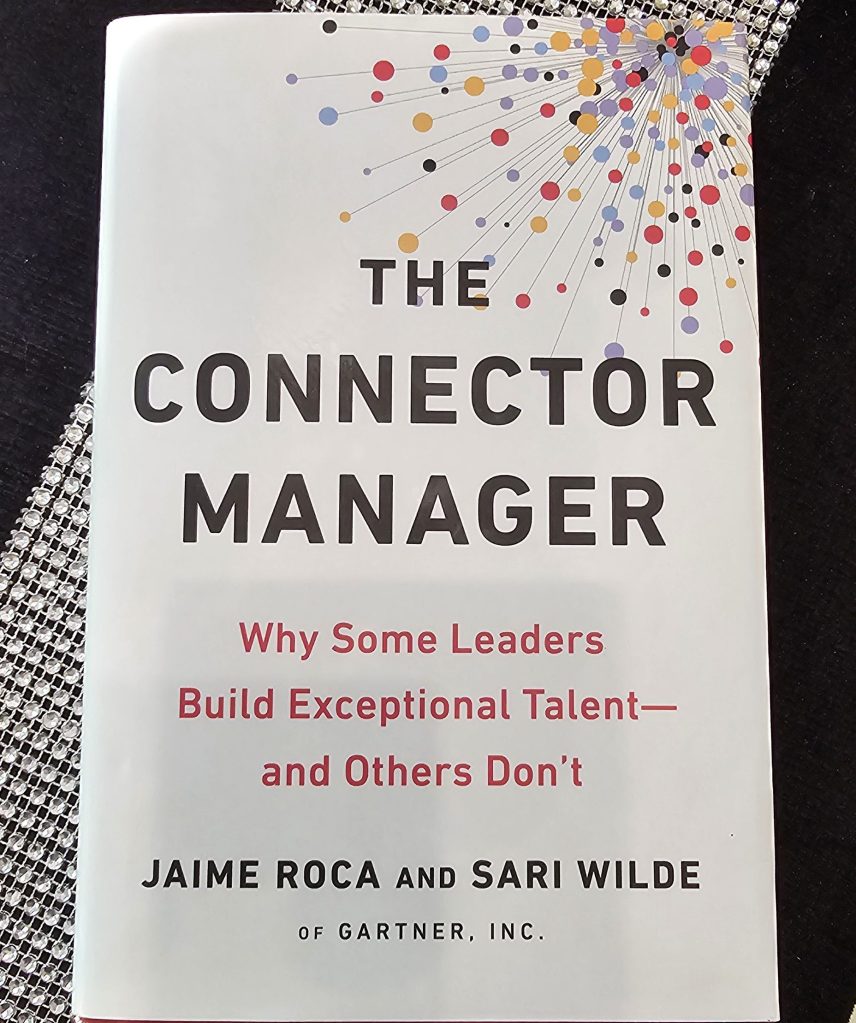
Book Review: The Connector Manager

Book: The Connector Manager, Why Some Leaders Build Exceptional Talent – and Others Don’t

Author: Jaime Roca and Sari Wilde of Gartner. Inc

Key message of the book: The most effective management style is that of a Connector Manager, who improves performance by connecting employees to the right resources, people and opportunities. Such style is more impactful than the “always on” manager who can stifle performance and authenticity with constant feedback.

Based on Gartner’s research (with a survey of over 9,000+ employees and managers),  Connector managers increase employee performance by up to 26% and more than triple the chances an employee becomes a high performer.

Connector managers drive above average results through three connection types:

  1. Employee connection: The Connector Manager understands each team member’s motivations, goals, strengths and areas of improvement and uses this knowledge to provide tailored support.
  2. Team connection – The Connector Manager puts systems in place that are conducive to learning and development of everyone in the team, making peer coaching and sharing of skills a core value of the team.
  3. Organization connection – The Connector Manager puts team members in touch with other subject‑matter experts, mentors, and opportunities across the organization and industry.

Some favorite quotes from the book:

“The fundamental mandate of a manager is to solve an ever‑growing number of complex problems and achieve extraordinary results through other people.”

“The snowballing effect of digitalization on work and changing employee skill needs translates into a new manager mandate: to act as a central source for upskilling employees in real time to meet current and future skill needs.”

“Connector managers help their employees build bridges across and outside their enterprise to make the best (not just the most) connections.”

“When managers play the role of mapmakers, they help employees locate the new skills and development they need.”

“As a manager, it’s insufficient to simply make the connection and let the development magic happen on its own.”

This book review by Growth Is A Journey is an invitation for readers to discover the book in its entirety.

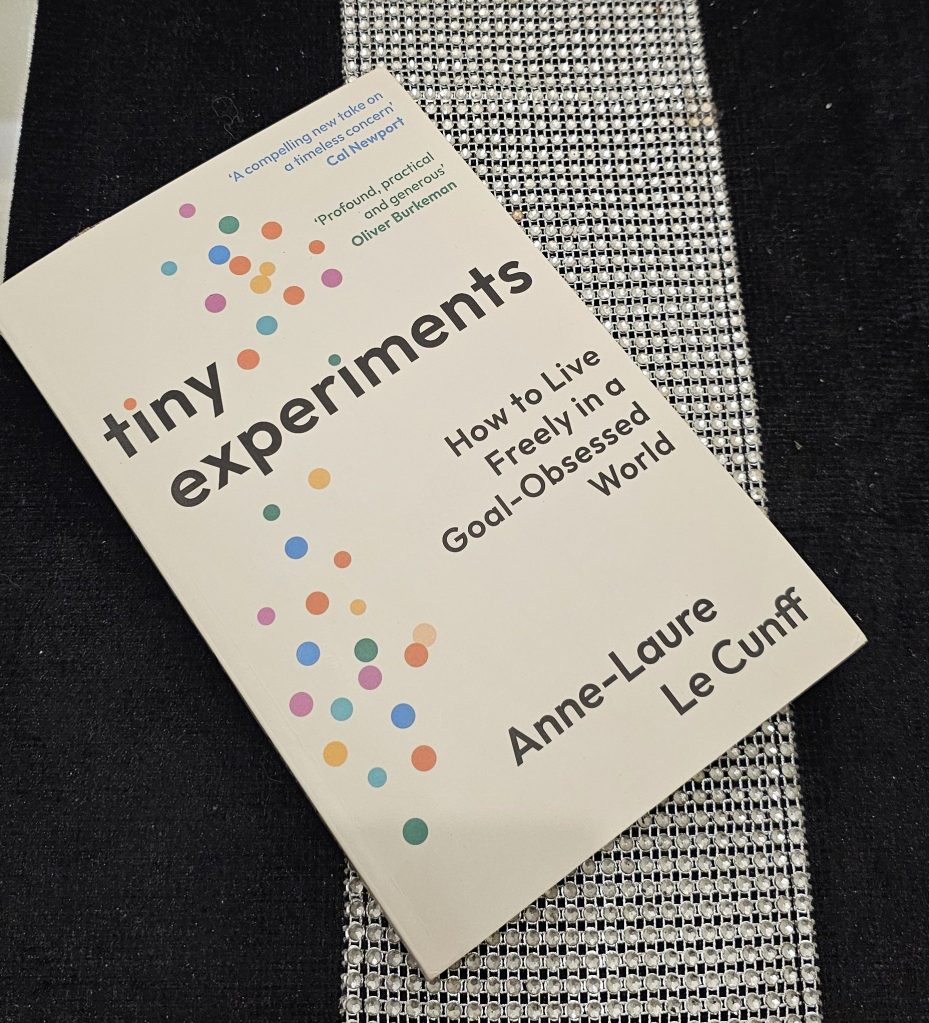
Book Review: Tiny Experiments

Book: Tiny Experiments, How to Live Freely in a Goal-Obsessed World

Author: Anne-Laure Le Cunff, neuroscientist, entrepreneur and educator

Key message of the book: The book is an invitation to approach life differently, by moving away from the more traditional and rigid goal setting framework (e.g. SMART goals) and embracing the concept of “tiny experiments”, following our own curiosity and genuine interests. The PACT (Purposeful, Actionable, Continuous and Trackable) framework – e.g. “I will publish 25 newsletters over the next 25 weeks”- encourages us to experiment without getting hung up on specific goals. It is more about trying new things, collecting data and feedback, and ultimately letting the experience guide us – it does not matter if we continue, stop or push for higher goals from the initial PACT. The journey in itself is the catalyst for growth: “Compared to linear goals, a pact fosters an experimental mindset – an attitude of openness and curiosity, a willingness to learn with a sense of receptiveness, and a lack of preconceived notions.”

One reflection practice supporting the “tiny experiments” framework is highlighted in the book as the Plus, Minus, Next journaling practice, whereby we let our brain unload positive or negative developments of the day, week or month, and next steps we can experiment with, creating compounding growth.

Some favorite quotes from the book:

“Confidence isn’t a quality we are born with or something that magically happens; it’s built through action. To create confidence, you need to get started. Every time you act, you bet on yourself and gather evidence that you can do what you set out to do.”

“…the most reliable way to be successful is to try, fail, learn and try again.”

“When you focus on being more – finding ways to be present and to slow down time – you can avoid burnout without abandoning your ambitions.”

“You are an evolving canvas, an unfolding story, a great work in the making. All you can do is imagine a world of possibilities and keep on experimenting until you discover what works. Each experience, whether a success or a failure by conventional standards, opens new doors, which you’ll pass through with new capability and wisdom.”

“This is how you discover your life’s meaning—by focusing on your daily actions rather than the content of your future eulogy. When generativity becomes your focus, the immediate impact of your actions is all the motivation you need. Every pact you make, every shift, every “What if?” becomes not just a step in your own journey, but a chance to inspire and elevate others. Your career is no longer a linear ladder you climb alone, but a nonlinear path of shared discovery.”

“When we fixate on finding one singular purpose, we rule out the side quests that help us grow the most. Your life doesn’t need to follow predictable acts and arcs. The best stories are full of surprises, with colorful characters and unexpected plot twists.”

“When we use trial and error, we set in motion a series of growth loops where progress emerges in conversation with our environment. Each cycle adds a layer of learning to how we understand ourselves and the world around us. Instead of an external destination, our aspirations become fuel for transformation. We don’t go in circles; we grow in circles.”

“We think that once we get to that destination, we’ll be happy. What most people discover is that once they get there, they’re still the same person. All of their other problems are still here. And they’re not any happier. That’s one of the main reasons to stop focusing so much on the end goal and focus on the process instead. By focusing on the process, whatever the outcome, you’ll still be happy exploring and experimenting while you’re getting there, during the journey.”

This book review by Growth Is A Journey is an invitation for readers to discover the book in its entirety.

On Grief and Heartbreak

There are times in life when parting ways with someone becomes necessary despite the pain such parting creates. You have made the decision at the deepest level of your self-awareness, when soul, mind and body concurred that the relationship is not for you any longer. You knew in that deliberation what the truth was for you, with every inch of your body and soul. However, grief is poignant and might continue to follow you, in ebbs and flows, for a while, sometimes with inklings of doubt whether the right decision was made or not.

These moments of grief are the moments when you need to remind yourself:

  • A relationship is supposed to bring you joy overall, even if at times, there might be discomfort, misunderstandings or some heartache. But in the long run, the account needs to be positive. If it is not, the relationship is draining more energy and resources from you than it should, and it cannot be sustained.
  • Grief is normal when you think in terms of the lost potential of what that relationship could have been – however, potential does not always equal capability, current or future. Be honest if that relationship exhibited the attributes of the relationship you aspired to have. Journal from a third person point of view to avoid unbalanced subjectivity and confirm your standards are worth standing up for.
  • Acknowledge the loss, the human shortcomings, the imperfections on both sides, forgive yourself and the other person, and move on. Focus on growth and learning from this experience  – what lessons you have learned or have yet to learn, what changes you can make, what new perspectives you have gained…
  • A grieving heart can always be at risk of more prolonged sadness or at the more extreme spectrum, depression or anxiety. Look for experiences where the kid in you is alive again – the one who is curious, playful and undeterred to learn to walk even after multiple falls. Schedule at least one of such experiences regularly, find hobbies or interests that bring you joy and meaning. Don’t give up on a life that is worth living to its fullest potential and joy, with people who genuinely care for you.

Every time we lose something, or someone is also the opportunity to gain something even bigger if we have the courage to trust ourselves and to embody, little by little, one action and one experience at a time, a wiser version of ourselves…one that we could not have entered into without the loss.

Be caring to yourself and allow yourself to grieve. And at one point, you will discover that after each moment of grief, there is a rainbow. One that shows you what you stand for, what your soul needs and why your past relationship could not have thrived. Getting over the loss of a relationship is not denying ourselves to grieve, but it is about finding that rainbow every time grief comes back.

A Guide to Growing Yourself Steadily Without Losing Steam

By Guest Writer: Donna Erickson

Donna Erickson is a retired public educator. She created Fit Memory with a few friends as a way to promote wellness among senior citizens with the hopes it will help inspire others to make the most of their golden years.

Busy professionals juggling work, family, and health goals often start personal growth with real motivation for growth, then hit the same wall: progress becomes pressure, and the start‑stop cycle returns. The core challenge isn’t effort, it’s personal development sustainability, when ambitious plans outrun energy, attention, and emotional bandwidth. Without burnout prevention, long-term self-improvement can quietly turn into self-criticism, exhaustion, and giving up altogether. With supportive stress management strategies and a steadier pace, growth can feel doable and consistent.

Use 6 Gentle Strategies to Improve and Stay Balanced

Sustainable growth works best when you treat your energy like a budget: spend it on what matters, leave a little margin, and review regularly. Use these gentle strategies to keep progress steady without sliding back into the start‑stop cycle.

  1. Set one SMART “next step,” not a total life overhaul: Pick a goal that’s Specific, Measurable, Achievable, Relevant, and Time‑bound, then shrink it to a 2–10 minute daily action. For example: “Practice active listening” becomes “Ask one follow‑up question in each meeting for two weeks.” Keeping the action small reduces friction, which is often what triggers burnout.
  2. Create two non‑negotiable self‑care anchors: Choose one “body” anchor and one “mind” anchor you can keep even in busy weeks, like a consistent bedtime plus a 10‑minute walk after lunch. Many people find that setting a bedtime helps protect sleep quality, which makes every other habit easier. Treat anchors as maintenance, not a reward you earn after you “do enough.”
  3. Plan your week with a simple time budget: Once a week, list your fixed commitments, then assign 3–5 hours total to growth activities (not per day). Break it into small blocks (two 30‑minute sessions + three 20‑minute sessions) and decide what you’ll not do to make room. This protects your calendar from the “everything at once” pattern that leads to quitting.
  4. Use a “top 3” daily priority + one closing ritual: Each morning, choose three outcomes: one must‑do, one should‑do, and one small win. End the day with a 2‑minute reset: write tomorrow’s first task and clear one small physical space (desk, bag, kitchen counter). This makes it easier to restart the next day, even if today didn’t go perfectly.
  5. Add micro‑mindfulness to lower stress quickly: Try one minute of slow breathing before you open your inbox, a quick body scan while washing your hands, or five mindful breaths before you enter your home. If you want more structure, mindfulness-based stress reduction can be a helpful framework for practicing consistently. The goal isn’t to “empty your mind,” but to interrupt stress spirals before they drain your motivation.
  6. Rotate your growth areas to stay balanced: Instead of pushing hard in one lane (fitness and career and relationships), pick one “focus” area for 2–4 weeks and keep the others on maintenance. A simple rotation could be: Weekday learning sessions for career, weekend social connection, and short movement breaks for health. This variety builds a well‑rounded life, and it’s a natural fit when you’re considering structured learning, like an online program, alongside work and home responsibilities.

Choose an Online Psychology Program That Supports Steady Growth

When your goals are clear, the next step is choosing support systems that add structure without adding strain. If school is part of your development plan, pick an online program the same way you’d plan sustainable growth: make sure the workload matches your real life, use proven adult-learning approaches to stay engaged, and connect continuing psychology education to your longer-term career direction so progress feels steady instead of draining. Online learning can make growth more accessible and flexible, letting you learn on a schedule that fits your responsibilities. If you want a thorough look at options, it can help you explore paths that align with your pace and priorities. By earning a degree in psychology, you can study the cognitive and affective processes that drive human behavior so you can support those in need of help.

Weekly Micro-Habits for Burnout-Free Growth

Micro-habits matter because they protect your energy while still giving you proof you are moving forward. When the action is tiny and the cue is clear, consistency in personal development becomes easier to repeat without relying on willpower.

Daily Two-Minute Start
  • What it is: Begin with the smallest next step, like opening notes and writing one line.
  • How often: Daily
  • Why it helps: It lowers friction, making follow-through feel automatic.
Three-Block Week Plan
  • What it is: Choose three focus blocks for the week: learn, practice, and recover.
  • How often: Weekly
  • Why it helps: It prevents overloading one area and neglecting rest.
One-Line Habit Tracker
  • What it is: Track one behavior using a simple checkbox, since estimates vary widely for how habits take hold.
  • How often: Daily
  • Why it helps: It makes progress visible and reduces all-or-nothing thinking.
Calendar a Real Recovery Slot
  • What it is: Schedule a no-productivity break and keep it like an appointment.
  • How often: 2 to 4 times weekly
  • Why it helps: Recovery protects focus and reduces burnout risk.
Weekly Reflection and Reset
  • What it is: Review wins, obstacles, and next steps in 10 minutes, noting many Americans practice micro health habits.
  • How often: Weekly
  • Why it helps: It turns setbacks into tweaks, not stop signs.

Personal Growth Without Burnout: Common Questions

Q: What are early signs I’m pushing too hard?
A: Watch for irritability, sleep changes, dread around routines, or needing more effort for the same results. Treat those as data, not failure. Reduce the goal to the smallest workable step and add a real rest block.

Q: How do I stay motivated when progress feels slow?
A: Make the win easier to complete and easier to notice. Track one tiny behavior and celebrate completion, not intensity. A lighter streak beats a heroic sprint.

Q: Why do I keep quitting after a great start?
A: Over-optimistic plans create a rebound effect: you overdo it, then avoid it. A shift in mindset toward long-range pacing helps you choose actions you can repeat on bad days.

Q: When should I scale back instead of “pushing through”?
A: Scale back when your habits start harming sleep, relationships, or health. High burnout levels like symptoms of burnout show how common overload is, even in high achievers. Lower the volume, keep the cue, and protect recovery.

Q: How should I handle setbacks without losing momentum?
A: Do a fast reset: name what got in the way, choose one adjustment, and restart within 24 hours. Keep the next action tiny so restarting feels safe.

Choose a Sustainable Habit for Burnout-Free Personal Growth

Personal growth can start to feel like pressure when every week demands more effort, more discipline, and faster results. A balanced self-improvement approach replaces that grind with a kinder pace: small, realistic changes supported by honest check-ins and room for setbacks. Over time, that steadier rhythm supports long-term personal growth, maintaining motivation without relying on constant intensity, and building trust in the process. Consistency at a kind pace beats intensity that burns out.

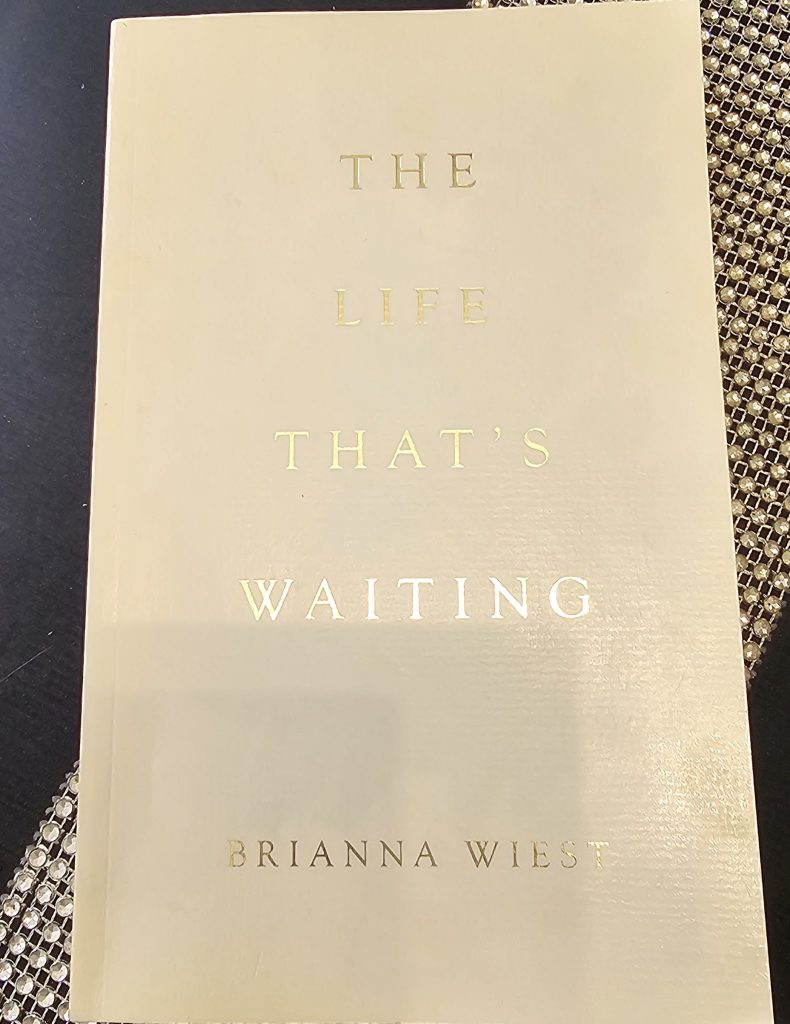
Book Review: The Life That’s Waiting

Book: The Life That’s Waiting

Author: Brianna Wiest, bestseller author and speaker

Key message of the book: The life we want often begins on the other side of fear, discomfort, uncertainty, grief and self-protection. With self-compassion and gentleness to ourselves, we arrive to a place where life feels fuller and richer.

Some favorite quotes:

“A life of meaning is one where you wake up each day excited for what is to be created, to be experienced, to be felt.”

“When you begin to see every one of those instances of inner knowing as tiny invitations to meaning, you begin to generate momentum. You get more and more inspired, because you feel more and more accomplished…[…] Rather than seeking the next milestone, the next bragging right, you began seeking the joy of tomorrow.”

“Happiness isn’t found; it’s forged.”

“You have to fill your life with what matters to you, even if it doesn’t make sense to anyone else.”

“Don’t shrink your life to meet your comfort zone; expand your vision to meet your standard.”

 “Sometime, we just need to rest and recalibrate, allow our bodies to go through a wintering season, allow ourselves to reconnect to our center.”

“… you begin to exist in a more peaceful equilibrium where you are excited to wake up in the morning and build. That’s the richest, most fertile ground of your entire life.”

“Sometimes, what we really have to reconcile is the false idea that we are not enough, not worthy, for the lives that are already ours or are about to be. Sometimes, we have to let go of the old patternings that tell us if life is not imbued with suffering and denial, it is not noble or realistic.”

“One of the things that most limits our capacity in life is the belief that any measure or degree of success or progress is akin to a house of cards, something that becomes more vulnerable as it grows. In reality, true success is more like adding legs beneath a table. The more you grow, the more stable you become.”

“You will learn that you can withstand more than you ever thought.”

“You will guide yourself through every heartache, every loss. You will also get to cherish every victory, every success, every resounding win.”

“The doors that are right for you will gently open – and you will not have to push or force them. Because the things that are behind them want you and need you as much as you want and need them.”

“Fear controls us when we invest more into the problem than the solution.”

“You can learn. You can use rock bottom as a clean state.”

“Live with palms wide open – what’s right will land and remain without your fists closing to keep it.”

“What you gather evidence for is what will appear most true. Gather evidence of your fortitude, your faith. Gather evidence of your strength, the way the road has always risen. If you don’t trust ahead, look to what’s behind. Remember, what you got you here will get you to whatever’s next.”

“When good things are trying to find you, I hope you let them. I hope that you leave room for things to turn out better than you had planned. I hope that you do not deny yourself happiness because you know how human you are, because you are most familiar with your rough edges, your mistakes, your past. I hope that when the sun is finally shining on you, you let yourself feel its warmth.”

This book review by Growth Is A Journey is an invitation for readers to discover the book in its entirety.

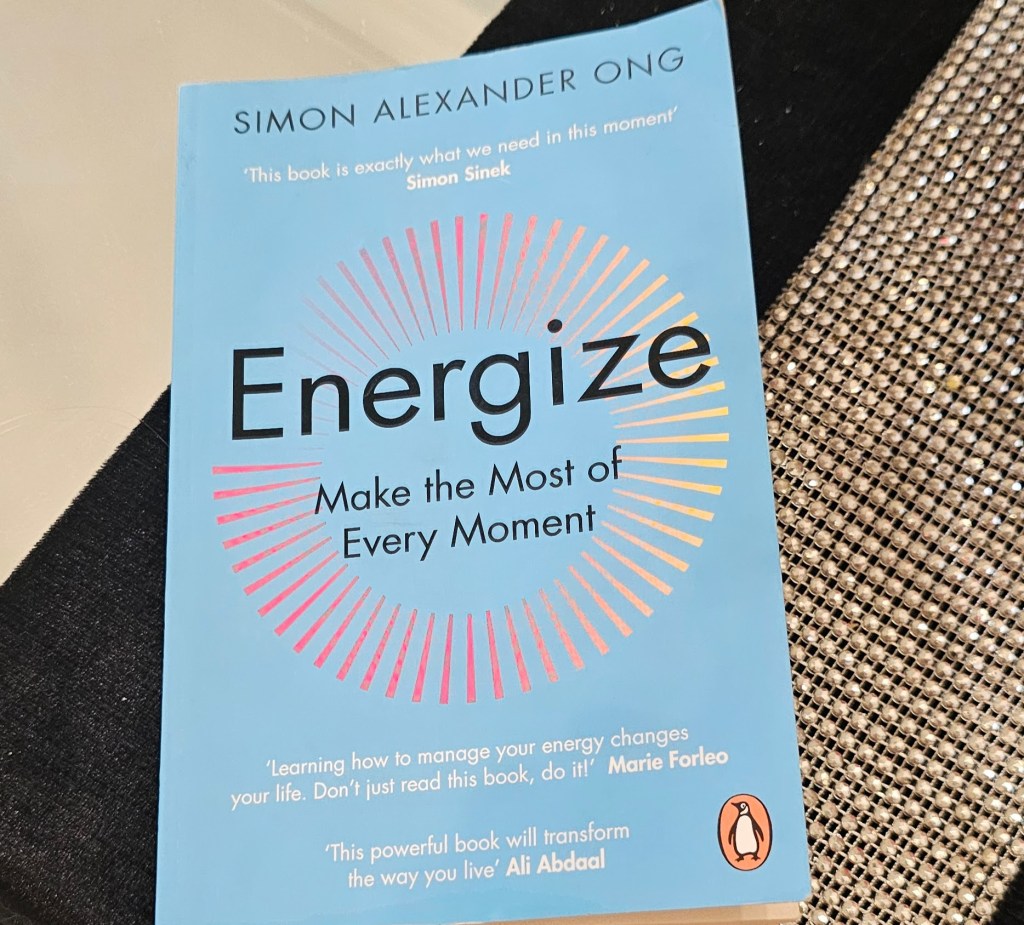
Book Review: Energize

Book: Energize, Make the Most of Every Moment

Author: Simon Alexander Ong, speaker, bestseller author, and podcaster

Key message of the book: “Energize” is a practical guide about energy management, as a fundamental skill and framework for life. It is energy more so than time management that shapes our outcomes and ultimately identity in life. Energy is contagious and is key to who we are and what we do every single day and on the long term. Understanding and protecting your energy comes with several practices like sleep hygiene, health and exercising, journaling and gratefulness that if applied consistently will unlock new levels of personal energy and meaning.

Quotes that I loved:

“When feeling energized, we become the chief architect of our future and there’s nothing that we feel we can’t overcome…Once we understand how to awaken, nurture and protect this energetic force, it will breathe life into what we feel is possible to accomplish during our time here on earth.”

“To live in energetic flow is to be connected to your true self with a focus on living a life of purpose and meaning.”

“Writing [journaling] creates this magical space around you where your soul gets to have a meaningful conversation with itself and allows you to get to know yourself better – your strengths, your weaknesses, your emotions, your priorities and where you currently are relative to where you would like to be.”

“You go on this expedition to hunt down happiness, but sooner or later we learn that happiness is not found outside ourselves; it’s found from within and it begins with gratitude.”

“A grateful heart is a magnet for joy and positivity”.

“When you live life with this deep feeling of gratitude, a galaxy of possibilities awaits and you discover yourself immersed in the breathtaking beauty of life like never before.”

“When you bring together a clearly defined vision with the act of visualization, you begin to live every moment in a state of absolute certainty that you will achieve it.”

“Your ability to reflect, make plans and then actually follow through on them will become one of the greatest skills that you will come to master.”

“The most powerful dialogue is the one that happens within yourself every day, because what consumes your thinking influences who you become.”

“You are going to face many challenges ahead, but when you understand how to awaken, protect and nurture your personal energy, you will possess the wisdom to unearth the lessons behind every single one of them so that you may come back stronger.”

“The truth is that for every challenge you face, there’s often a hidden blessing in disguise.”

“Be kind and forgive yourself when you make mistakes.”

“One tiny step forward each day snowballs into at least 365 steps forward in a year’s time.”

“The question is whether the dream means so much to you that you are willing to go after it for as long as it takes.”

“It’s never too late to begin again and rewrite your story with an ending that gives your life meaning.”

This book review by Growth Is A Journey is an invitation for readers to discover the book in its entirety.

Micro Moments of Wisdom Nr 1

This series is designed for individuals who have limited time and energy, but unlimited thirst for genuine growth in their lives, whether that is about personal or professional dreams and aspirations.

This is because any 5 to 10 minute ritual can compound into meaningful positive change, be it exercising, meditating or simply getting better at our craft.

  1. Eliminate comparison with others. James Clear, author of Atomic Habits, beautifully summarized how external comparisons are a source of nuisance: “Compete against yourself. When you look outside — your rivals, your industry, your luck — there is always something to blame. When you look inside — your process, your effort, your rate of learning — there is always something to improve.” When we are focused on what we can control and improve, we will always come out better and ahead of the prior version of our ourselves. At the end, that is what should matter and is most fulfilling – a version of us that is evolving and growing. Every time you find yourself in a comparison trap, go back to “your process, your effort, your rate of learning“.
  2. Focus on progress not perfection. This mindset helps us stay focused on what we can learn, do, and improve versus beating ourselves up for any shortcomings or imperfections. Building momentum and evidence of our progress serve us better than self criticism and negativity. Refuse to become your own saboteur. Progress is a path to change, but we need to stay committed to our goals through discomfort, feedback and failures at times. This is not an excuse for lacking discipline, hard work or accountability … but an acknowledgement that growth is not always linear.
  3. Schedule something to get excited about. We are all human beings with need for rest, relaxation and community around us. The same challenge or stressful situation will reduce its effect on us when we genuinely take care of ourselves. By taking the time to enjoy an outing, a special activity or simply a nap, we remind ourselves of our human needs and identities beyond work and miscellaneous responsibilities. Building a habit out of scheduling some R&R moments in advance is both practical in our busy lives but also a constant reminder of our humanity.