The Gift of Self- Reflection – Emotions

Decades and centuries of technological innovation, prospering societies and industrial advancements have conditioned us to keep moving ahead as human beings, from childhoods to retirements, with predictable and desirable life milestones. In this conditioning, we are easily in touch with our physical ailments and needs. We know to stop when our heads or stomachs are hurting, and we can interrupt our daily routines to attempt to take care of the pesty ailment. But over this long-term conditioning, we often overlook to stay attuned to our own emotions and deepest desires of our souls.

We might have buried or suppressed emotions, in particular the negative ones, so deeply that it might take months, years or decades to tend to them. But it comes a time in life when the doing is no longer enough to keep us “put together”. Even the highest contributors might be slowing down. Even the most caring person can no longer care. Our mental or physical health might be taking a toll; our relationships might be suffering; our bodies might be breaking.

We understand we can no longer live life like before and do things like before. The pressure cooker was on within our bodies and souls. And the cooker is on – all the time – not because of some childhood or adulthood tragedies, although these are often cause of major trauma in someone’s life.

What we might be fundamentally missing is that we are human beings designed to live life in touch with our emotions. Our oldest brain is the emotions (limbic) brain. Our thinking (neocortex) brain is an add-on in our homo sapiens evolution. Emotions have always come first, and they can be our highest source of intelligence and human progress. If we neglect or deny this body, soul and mind connection, we might end up missing a big part of our potential for a fulfilled life.

In the simplest of terms, emotions are portals for growth. Behind emotions that challenge us – usually our triggers – therein lies the more evolved versions of ourselves. And this is a gift in itself, a coin with two sides. Once we develop the skills to detect, feel and understand negative emotions, we also perfect the skills to feel, embody and emanate positive emotions like profound joy, love, and gratefulness.

This self-awareness to the gravity of our emotions can often appear as a breaking point, especially if emotions are negative or have been suppressed or repressed for a long time, but it is, in fact, a turn-around point. Although it might seem like we could be breaking in many pieces, we are not. We are re-creating ourselves, putting ourselves together, but this time, with all the parts that make us whole finally … It’s a rebirth from a place of authenticity, self-love and freedom. By allowing us to feel and make space for the hardest and possibly ugliest of our emotions, we start making space for what we desire and need underneath layers of surface emotions and for what we might have been looking for but possibly in the wrong ways and places – to feel loved, appreciated and safe.

There is no better way to live in fact than when we are attuned to our emotions. And that starts with embodying and understanding them one at a time. And in this self-awareness journey, truthful to who we once were and who we have become – with scars and trophies of our past experiences, but also truthful to our deepest desires, there are two important pieces to remember – vulnerability and nourishment.

  • Vulnerability is being honest with ourselves and with others including about boundaries we need to create or have in place.
  • Nourishment is feeding our bodies, souls and minds in ways that help us stay in the energy of the present moment and of the love within and outside us.

Transformation comes from within. Embracing and understanding our emotions offers a pathway to a life that is fuller, built on love and vulnerability but also on boundaries and expression of our truest desires and needs.

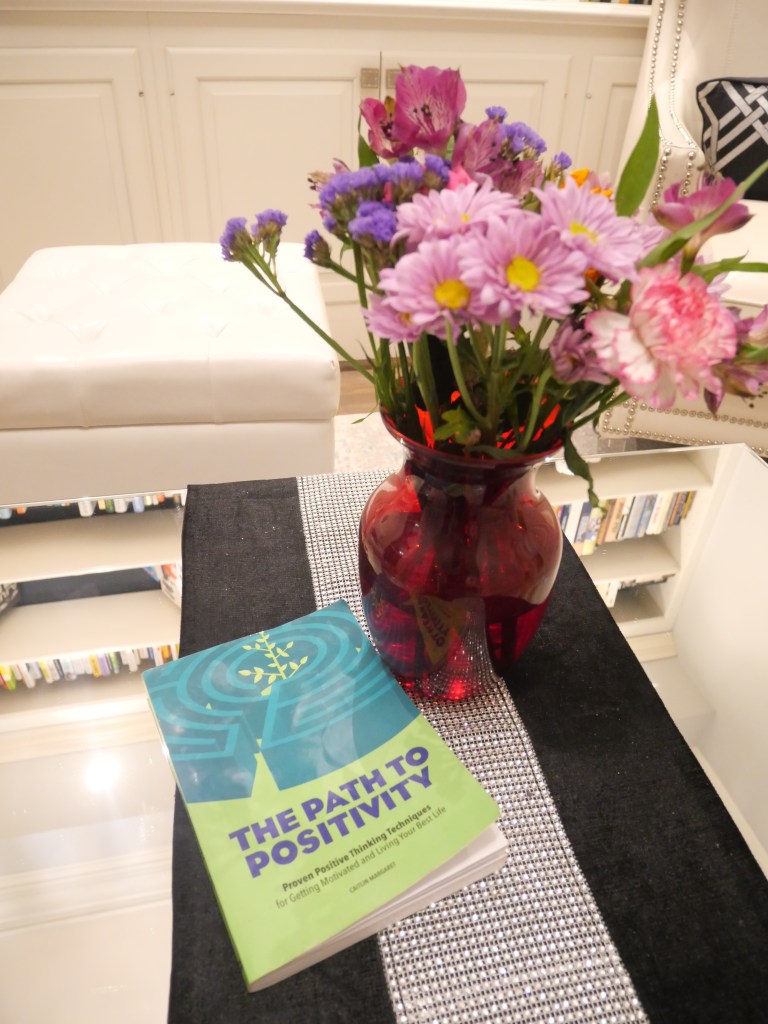
For a practical way to apply these concepts, the “Pathway” book by Laurel Mellin is a wonderful resource. It talks about the concept of emotional balance and getting ourselves above vs below the (emotional) line, by building the skills of feeling our emotions and of setting boundaries including self-boundaries that might not exist when we use external solutions (e.g. addictions) to soothe ourselves. Behind feelings of anger, sadness, or guilt, there might be, in fact, an unreasonable expectation that we hold. Once we name what might be unreasonable in the story we told ourselves, we are able to identify a more reasonable expectation and overcome an existential pain that we might need to face for these negative emotions to no longer have the same hold on us: e.g. moving from “my parents always neglected me” to “my parents were busy with my youngest sibling and couldn’t reasonably give me all their attention”. The book talks about everyone journeying towards his or her “internal” solution which is found when we live in alignment with our most authentic desire in life: e.g. intimacy, joy – by moving ourselves from below to above the line every single time negative emotions take the better of us.

The Gift of Self Reflection – Our Identities

Paradise Island, Bahamas

During a Mother’s Day weekend, as many working moms juggling family and work, I cannot stop thinking how I wouldn’t be the mom I am today without the professional journey I have experienced for the last two decades, and I wouldn’t be the professional I am today without what the journey of being a mom has taught me so far. This is because at the end of each day, we are more than being a parent, a professional, a wife, a daughter, or a friend; and we are more than any accomplishments or mistakes we could count in our lives. What defines and shapes us is:

  • To live in alignment with who we truly are or who we have the potential to become.
  • To not let us be defined by a single experience of life, a single identity, a single role, specific success or failure.
  • To be intentional about the environment and relationships we want to cultivate around us.
  • To be intentional about protecting our energy and setting boundaries.
  • To see the opportunity afforded by each moment to grow and evolve.
  • To live inspired by others as the window to what is possible to create in our lives.
  • To find the joy in the moment, one life milestone and chapter at a time.

These are principles that a mom would so dearly want to pass on to her kids.

When we live by these principles, we live awaken, transformed, and empowered. We build our stories of life as the unique sum product of all our roles and life experiences.

“To the world you may be one person; but to one person you may be the world.” — Dr. Seuss

“All that I am, or hope to be, I owe to my angel mother.” — Abraham Lincoln

“Motherhood is a choice you make everyday, to put someone else’s happiness and well-being ahead of your own, to teach the hard lessons, to do the right thing even when you’re not sure what the right thing is…and to forgive yourself, over and over again, for doing everything wrong.” ― Donna Ball, At Home on Ladybug Farm.

Enjoy the gift of self-reflection and be transformed by it!

The Gift of Self-Reflection … On Women’s Day

Happy International Women’s Day!

My sister-in-law posted a wonderful wish to women all around:

“Value yourself, love yourself, respect yourself, give yourself the best on this earth, because no one can do it for you. You are unique, you are a woman, you are a creator, you are wonderful just the way you are, you are divine!

I couldn’t have found better words than hers. I wish every woman takes such statement to heart to live in this truth and spread the positive influence women were created to have.

Empathy, hard work, strength, grace, resilience …. these are values women have in their DNAs.

To my younger self and to women who need to hear that statement and believe it for themselves, here a few truths:

  • Don’t be afraid – whatever it is, make progress, be imperfect, learn, unlearn, re-learn… over time, the truth will stand – the truth about who you are as a person and what you are capable of…

  • Don’t give up your power, don’t give up on yourself: action and intention compound to the potential you have. Consistency is key, including in knowing when and how to slow down.

  • Train your mind to find hope even in the midst of dark times, to see the bright spot, the growth, the good or the positive in any situation … The more we train our brain for empowerment, the more resilient and stronger we become.

  • Set the boundaries you need. Boundaries are not a luxury but a necessity to live a healthy life by owning the environments, attitudes, habits and relationships that support us in a quest to create the lives we desire and deserve.

Two leadership views on our identity and potential as human beings, be it female or male, are offered below from some of the best leadership coaches in the world:

Enjoy the gift of self-reflection and be transformed by it!

A Gift of Self-Reflection …about self-reflection, wealth and endings

Blancaneaux Lodge, San Ignacio, Belize

When we take time to pause and reflect, we make time for growth and transformation. It might not appear as simple as that, especially during chaotic and complex times; however, it is worth trying.

Why? Because change starts within. Because transformation can only come when we are self-aware and in control of our decisions. And when we are in control of our decisions, shaping them based on self-reflection and gained experience, we become the primary beneficiaries of these decisions. A simple equation with an exponential outcome – it is us for the benefit of ourselves – in an authentic and responsible way, with positive ripple effects in the communities and environments we operate in.

Every single moment, we make decisions – what to do, what not to do, by default or intentionally. Self-reflection is hitting the pause button – taking a moment to look back but also to look forward – before going back to life. And in this process, there is wisdom you can find … to try something new, to take a bold step, to confirm a decision, a strategy or a next step, to celebrate a win, to get energized for what’s ahead …

So this is an invitation to make 2025 a year when self-reflection is part of your priorities. Be it daily, weekly, monthly, quarterly – whatever the frequency and duration you find suitable for your life – give yourself this gift of self-reflection and you will be amazed what will come out of it!

Halfway through the first quarter of 2025, it is very apparent to me that self-reflection is a critical ingredient for how I want to define success in 2025 both on a personal and professional level. And from these few moments of self-reflection to date, there are insights that I know will serve me well through the rest of the year:

  • Accumulation of wealth – be it time, energy, financial, relationships, energy – is as much about additions, as it is about eliminations and subtractions.
    • When your inbox or calendar are clogged, unsubscribe from everything you end up not reading and not consuming. Delete calendar reminders that you no longer read and uncommit from activities you no longer have the energy for. That empty space or clean slate will energize you for a new way to spend your time, more aligned with where you are today in your growth journey.
    • The cost of having too many goals is procrastination, frustration and depleted energy. Decide which goals, areas of life or areas of improvement are your top priority for this time in your life and go for it – be it one or two or three, recognizing time, energy and resources are scarce.
    • We all thrive when the sense of belonging is strong – be it in our families, communities, work environments, … However, the quality of our relationships is more important than volume. Letting yourself guided by this principle can spare you pain, disappointments or frustration.

  • Everything has an ending whether we anticipate it or not, whether we like it or not, whether we can control it or not.
    • If I remind myself of the fact that my kids will go to college and leave the house in the next decade, I am more likely to cherish the moment even in the midst of tiring or challenging times. When you think about a relationship ending or someone not being part of your life be it at home or at work, you would want to do and be your best today to bring that relationship to its full potential. Appreciate the people and things that are in your life today.
    • And when you can’t stop or control what is happening, when sudden and involuntary changes and endings are happening, cling to love (in its purest essence love for humanity, others, nature, life) and some action you can control to weather the storm. If an ending causes hurt or grief, put the life vest on to stay focused on surviving: getting the sleep you need, making a phone call to reach out… The less alone we are in our suffering – be it with family or friends, or at a professional support level – the faster we can process it. The end of something can be the beginning of something else.

As Carl Jung said: “your vision will become clear only when you look into your heart. Who looks outside, dreams; who looks inside, awakens.”

Enjoy the gift of self-reflection and be transformed by it!

Happy New Year, 2025!

San Blas Islands, Panama

The passing of another year is an opportunity to reflect upon its lessons, challenges and opportunities, and to commit or recommit to what is important for us to be or do in the new year. And the beauty of a philosophy of life that embraces a growth mindset and continued improvements is that each year builds on each other, as another piece in a puzzle called life, with serenity for both what is left behind and what is ahead.

As you think about 2024, ponder upon what you would want to have left behind, continue or begin in 2025. Such reflection would allow you to gain clarity and set intentions for the new year. While 2024 had some specific challenges for me to work through or learn how to work through, it was an amazing year with a lot of discovery work and several world travels across multiple continents, that brought back a sense of adventure and passion for life that I had in my 20s but quieted in my 30s as a hard working professional and new parent of two. The result of it all is entering 2025 with a renewed life vision in my 40s, anchored in values that define who I am as an individual in this world, with dreams and ambitions at both personal and professional levels.

My serenity for what’s ahead is on the basis of several life lessons crystallized through 2024:

  • Allow yourself to experiment with life as a way to decide what works or doesn’t work for you. Of course, this is to be done within the boundaries of integrity and legality. For instance, after almost 20 years of working hard professionally, I’m more committed than ever to honoring the time off I am entitled to, and without feelings of guilt or regret. This right I allowed myself to enjoy without worrying about work left behind or crises that could happen while I am away (which could in fact turn into opportunities for growth and contributions for working staff) made space for great experiences including energizing trips abroad, discovering new countries and cultures. The time off spent disconnecting from work and the regular routine was a reset and refuel moment, which helped sustain high performance without burnout throughout the year, while building memories with the humans and the non-humans that bring joy in my life. Adopting an experimenting mindset speeds up decision making and increases learning and resilience, as you take every decision and experience as feedback loop. And while not planning for mistakes, when these happen, they are part of your growth journey. You can apply this lesson in your own life by considering what you would like to experience more of, be it fitness, writing a book, building or growing a business, or taking more time off as I did. At the end of our lives, what regrets would you want to minimize? The answer to this question can give you clues as to what you could or should experience more of. And if hiking Mt Everest is not within your budget or ability levels, think about what local hikes you could do instead and if you are really serious about hiking Mt Everest, make it a project to study how such dream could be achieved one year or a few decades later. At a micro level, in the day-to-day life, experiment with making fast decisions at least in certain situations where before you might have been an overthinker or a procrastinator. It is Amazon’s founder, Jeff Bezos, who talked about decisions as one-way and two-way doors, with most decisions qualifiable as two-day doors, meaning they are reversible and inconsequential, as opposed to one-way decisions which are irreversible and consequential or life-altering (bonus read on this point here).

  • Your inner circle is the most influential group of people in your life, whether it’s intentional or not. This is because people who are the closest to you (mentally and emotionally, not necessarily physically) end up having a strong influence on your thinking, mood, behavior and choices. These people could be family members, friends, work colleagues, or some individuals with influence over us. At times, we grant access to people who might leave our energy levels depleted. Other times, we come across amazing individuals who are inspiring and leave us energized after each interaction. It is important to be self-aware and intentional about who is in your immediate circle and what expectations you set for such interactions. You could even decide to experiment in this area and guide your choices following a path of least regrets or a path that optimizes the positivity that a person might bring into your life. For instance, getting to meet and start a friendship with dr Val Margarit, a leadership and high-performance coach is one of my highlights in 2024. Her uplifting newsletters, self-empowerment books, insightful courses and our interactions in general were a rich source of sheer enthusiasm for life and wisdom throughout 2024. When I think of her and the positive influence she had on my life, in such a short time span, I understand how important it is for each one of us to surround ourselves with individuals who live in their values and are inspiring us to do the same. There are many more individuals that I could list including my partner in life and adventure, my spouse, who inspires me every day with his determination, as well as his unsatiable thirst for knowledge and growth. As you think about your inner circle, remember the strong influence these individuals are positioned to have on you and be intentional about your interactions. We can frame every relationship as a gift two individuals give each other, even if it’s temporary in nature. This nurtures a sense of hope in our humanity and belonging and represents the practical exchange that happens when two persons interact, in terms of exchange of ideas, energies, information, and wisdom.

  • Thriving is a way of living when you are guided by and stay true to your values. I will always remember 2024 for the amazing experiences I was fortunate to live and for the inner growth I continued to experience, with internal and external changes including in my fitness level and resilience. At the end of 2024 and the beginning of a new year, I realize that all these experiences and activities are part of my core values and when I act in alignment with such values, I thrive. When you think about the past year and 2025, what values guide your actions or what values represent who you want to be or what you would like to do in 2025? These values are clues for what is fulfilling to you and what habits and activities you should consider integrating in your life in 2025 to align with your values. This is not about societal views or other people’s views of what you should do and how success should be defined; it is about your own vision of what you want from this life, and it is your fundamental right. And this vision could well change over time and be inspired or guided by others… but only you can find your balance on the waves of life and, with it, fulfillment in life – when you have clarity over your own set of values and goals, and act in alignment with them.

  • Replace worrying thoughts with a positive attitude. Instead of watering seeds of worries, water seeds of positivity and abundance. Turn any worrisome thought into a reminder to ask yourself the question what if everything will work out and work out for the better at the end? How will that look like? How will events or outcomes be reframed? How will you feel if everything turned out well? What actions or behaviors will be required for such positive outcomes to occur? A lot of our fears are simply the result of our brain working how it was designed – to keep us safe and in our comfort zones. The more we practice getting out of our comfort zones, the more we reduce friction to what drives our growth, and our brain won’t signal danger. The more we quiet the inner voice that might bring anxiety or thoughts of worries, the louder we can make the voice of us as individuals who can handle or learn to handle anything that might come our way. There can be dark experiences and clouds, but the sun will always rise the next morning. No matter how we have been conditioned to respond to challenges, or how much control we have over what happens to us, we can control our response to these challenges and adopt the mindset and behavior of empowered individuals – most often not alone but with others around us, be it family members, friends, coaches, or other individuals who can offer professional help. A life with continuous happy moments and feelings is an illusion we shouldn’t fall in the trap of seeking. But what we should aim for is to get back up every time we get knocked down and to believe that, at the end, life happens for us – the dark moments and paths will lead to a path of light that could have never been found if the darkness didn’t occur. Hope in its purest form even in the midst of dark challenges and crises, doubled down by pragmatism fuels our resilience and turns obstacles into steppingstones for growth. And if you don’t know how to embark on a self-empowerment journey, look no further – dr Val Margarit has a transformational guide that will help you find fulfillment in life and work.

2025, here we are, committed to work towards our dreams, inspired by a community around us that builds each other up with accountability but also with compassion and fellowship as travelers of life in this new year 2025.

PS: If you are still pondering what New Year’s practices you could experiment with this year, two awesome activities I highly recommend are: (1) choose a word for the year, leaning into your own inner wisdom about the most important intention – reflected in such choice of the word – for the coming year and (2) build a personal wall calendar with pictures from every month of the previous year as a way to reflect upon the year that passed and to prolong savoring its greatest memories, one month at a time.

The Power of Journeying

Secret Beach, Ambergris Caye, Belize

A fulfilled life is about building a lifestyle around our specific goals, with strategies, habits and a mindset that promote holistic growth in the process rather than simply checking dreams off on our vision boards. This is because who we can become in the journey of achieving our goals is far more important than attaining these goals. In other words, the real growth is in the journey rather than the final destination. This is what my recent experience of doing several long races reminded me of. While the final goal -to attain or not this year or in the future – is that of running my first marathon, the long runs have taught me a lot … Whether I ultimately complete a marathon or not, this year or into the future, is becoming secondary consideration. So, what have this journey of long races taught me to date?

  • Life itself is a series of races – sprints at some times and long distance at other times. Be it in the personal or professional spheres, change and movement are constant and the secret is to find balance, just like riding a bike. The more we are attuned to these various cycles of movements, and know when to go for speed vs distance, the more resilient and driven we become.
  • No one can run our own race. The moment the clock starts, our race begins. And we can keep going, one mile at a time until the race is done or give up. There is no shortcut to the finish line – responsibility, discipline and pragmatism are required in all our personal and professional endeavors to get to the finish line of our own dreams and aspirations.
  • To attempt something we have never done, it will likely require doing something we haven’t done. While I was able to get by with minimum stretches and warm-up sessions in prior race seasons, to attempt to run a marathon requires taking care of my body and paying attention to it, in ways I haven’t done it before. New strategies, new routines and new ways of thinking are likely necessary when we strive to reach new horizons.
  • Endurance and perseverance are a muscle to grow. A long race is always conquered one mile at a time – towards the first half and then against the other half. Building endurance one mile at a time on a course is building endurance in life in general because we get used to discomfort or simply sustaining focus on a particular task.
  • There is an end to celebrate. Often times in life, we forget to mark an end to an experience, a chapter, a win that took hard work and dedication…. A race has always an end … followed by a few days of recovery and rest. This is a good habit to build in life to be not only present in the moment, but also compassionate and supportive of ourselves and these around us who run their own races.
  • Acknowledging our multiple needs and passions is the path to acceptance, fulfillment and joy. While running for me is embracing the inner child, excited about running around outdoors, I am yearning for more – other activities, achievements, and hobbies … We are complex human beings with multiple needs as a way of self-expression in this life. The more self-aware we become about our needs and desires, the more we spend our time and energy in meaningful and life-giving ways.

When we embrace the journey of attaining goals and dreams, rather than the pressure of reaching them, we stop chasing dreams that are not ours and we start living for ourselves, a lifestyle conducive to genuine learning, growth and fulfillment.

“Run your race, and the rest of your life will fall into place.” – Unknown


For a practical application of this journeying concept, while you think about your own dreams and goals, what is it that you are learning in the process? What is the experience to progress towards these goals teaching you? What types of skills, soft or hard, are you building or in need of building? What do you need to do more of or less of? Who can help or inspire you on this journey? What milestones do you need to reach to attain your ultimate goals? Take some time to reflect on these questions and make the journeying the focus! When we grow, we are more likely to reach goals we set for ourselves, and we are opening ourselves up to new opportunities.

Life by Design

Miramare Castle, Trieste, Italy

“The world will ask who you are, and if you do not know, the world will tell you”, said Carl Jung, a leading psychologist who founded the school of analytical psychology.

A Covid illness with 10 days of isolation was a good reminder recently of the power of living by design, as paradoxically as it might sound. Despite the illness, I amazed myself with steady focus and progress on many fronts, some for which a catch up was long due. Granted, I was fortunate that my symptoms remained mild through the sickness and that I had enough support around me to be able to recover. However, reflecting over this episode, it dawned on me that certain practices can lead to a more intentional way of living, therefore, to a life by design. These practices include:

  • Staying in touch with our bodies: While I really wished to not have to take time off from work throughout this period, I had made a tacit pact with myself, my body in particular, that if I got too tired, I would honor the need and rest as long or as often as necessary.  Our bodies have more intelligence on ourselves than we give them credit for. Tapping into this source of intelligence accessible to each one of us is an under-rated practice. The more we lean into the wisdom of our bodies, the stronger we become – physically, mentally and emotionally.
  • Applying the right amount of pressure: While there was uncertainty as to how fast I would recover, I didn’t want to waste time knowing that if I got worse, I would have a harder time to catch up. The pressure of using my time wisely sustained a high level of focus and execution. Knowing exactly what I needed to do and focusing on execution, one step at a time, resulted in more progress than expected. While stress generally gets a bad vibe, some amount of pressure is in fact needed for being more disciplined in general, getting ourselves outside of our comfort zones and to a next level of growth.
  • Focusing on the right things: What we focus on is what we magnify in our lives and relationships. While I could have focused on the negative of the experience of being ill with covid, I was paying attention to my body and my to-do-list to make progress in a balanced fashion. What we focus on can change our behaviors in a positive or negative way. Often times, we can’t control our circumstances, but we can control how we respond to them. Tony Robbins, world renowned coach, calls this “life working for us and not to us”. We might default to a state of victimhood as a way to cope with life, but it is critical to wake ourselves up from a victim mode and to live empowered beyond specific circumstances of life. Self-awareness and seeking help are, often times, the fastest path to problem solve.
  • Understanding the power of self-love. Who we are and what we end up doing or not doing in our lives has a lot to do with how we treat ourselves. Self-talk, self-acceptance and self-forgiveness are pillars for building resilience, which is foundation for growth and overcoming adversities. Self-love is a necessity to live life as a victor rather than a victim. Meaning it is OK if we make mistakes, or if our lives feel messy at times, … The more we grow in our self-love, the kinder and more supportive we become for others around us because self-love makes us understand that we are all “perfectly imperfect” as Dr Val Margarit, a leading transformational coach and sociologist, likes to say.

We all have good and bad days, good and bad chapters, …. but it’s never too late to become more intentional, more in touch with our bodies, more disciplined and more focused… to do even a tiny bit better today than yesterday. That tiny bit will compound over time … to a life by design.

As the amazing Dr Val Margarit says, “create a life you are proud of”!

Bonus Resource: https://www.valmargarit.com/blog/how-to-design-a-life-you-love

Managing Overwhelm

Diocletian Palace – Cathedral Bell Tower, Split, Croatia

Nelson Mandela once said: “The brave man is not he who does not feel afraid, but he who conquers that fear.” Likewise, being productive and determined in the pursuit of one’s goals does not mean living a life without overwhelm. It is quite likely that sooner or later, or at repeated times, we find ourselves in a state of overwhelm, challenged by the scope or number of challenges to tackle, be it at home, work or both.

Overwhelm is usually experienced as anxiety, stress, or lack of control over our daily routines and life experiences.

The feeling of overwhelm is not entirely bad news, as long as we are dealing with it effectively.  This doesn’t mean that we should focus our energies to banish it once and forever. It simply means that every time we feel overwhelmed, as often as that might happen, we don’t spin out of control, but we use our gained awareness for self-empowerment, by turning the state of overwhelm into a steppingstone for growth and as feedback for continuous improvements in our lives.

There are three simple steps to managing overwhelm, which I call ABC:

  • Step 1: Acknowledge
    • Taking gauge of our overwhelm levels is critical to avoiding burnout and operating at our highest productivity levels. Chronic or acute pain, lack of sleep or other physical ailments are typical signs of overwhelm or even burnout.
    • The act of acknowledging overwhelm is allowing us to pause before some recalibration and action. We are, often times, one deep breath away from the path that leads to success.
  • Step 2: Be bold
    • Simply acknowledging that we are overwhelmed does not mean conquering overwhelm. Even if we might not feel like it, it is important to set ourselves into motion – by thinking of what’s most important for us to do in that moment, and what steps we can take. Then, simply go about it and do it! This could include making a phone call, signing up for a class, or simply taking a nap or many naps if you are chronically tired.
    • Boldness can be in the action to be taken but it could also be in what we are deciding to no longer act upon, or in what could be placed on hold, abandoned or replaced.
    • This step is, at the end, deciding in that particular moment what our top priorities are – at least on the very short term – which ought to be aligned with our top values and in touch with our limited time and resources. This can be done by assessing what can wait, what is time sensitive, what is important, what can be delegated, or where we might need to get help…If this part is hard, use the 5-year test … imagine yourself 5 years from now and think of what would matter the most that you have done or achieved in that moment.
  • Step 3: Celebrate
    • We are human beings and not human doings.
    • Often times, we underestimate the power of rewarding ourselves after taking a first step, reaching a milestone or meeting a goal. The more we celebrate ourselves and grow into our biggest cheerleaders, the happier and more resilient we become.
    • A reward can take many forms including rest, time set aside for a hobby, or simply being around positive people, who understand the cathartic power of celebrating wins and victories of ourselves and of these around us.

As simple as these ABC steps might appear, they are effective because they are pushing us away from overwhelm into an empowered mindset, confident in and at peace about our choices, priorities and immediate action.

And if you are on the lookout for some further tips on managing overwhelm, several listed below were learned the hard way on my own personal and professional journey:

  • Every time you remember something to do or act upon, write it down in your notebook, planner, or your calendar, …
  • Do a regular brain dump…listing all items that are on your mind, some of them turned into clutter.
  • If you can’t make progress or you have too many things you would like to accomplish, make a point to spend 15 minutes on each of your goals every day or have dedicated blocks of time in the week for your top 3 goals. If you have more than 3 goals, think about what can be put on hold or sequenced in a way that doesn’t put stress on your limited resources. Think what goals could be thought of in terms of ranges and could be deemed achieved whether it’s at minimum, average or maximum levels: e.g. the goal of being fit could be deemed achieved in a week by going to the gym anywhere between 2 and 5 times.
  • Be mindful of how many workstreams are started vs completed. It can be more productive and less stressful to not start something new, until the item that might clutter your planner, or mental and physical energy is covered. Sometimes it takes overall less energy to get that item done, rather than to carry it through on your to-do list from a day, week, month to another – taxing your energy and happiness levels.
  • Ask for help, rest, take breaks. This is something that could make type A personalities uncomfortable, while high achievers understand that balance and high productivity are not something we achieve 24/7 but an optimization function across emotions, resources, energy, and responsibilities.

Although our brains like us to think we are perpetually in survival mode, it behooves us to draw a line in the sand and pragmatically deal with overwhelm. We are powerful human beings with the capacity to pause, take action, then celebrate; these are three simple steps which, if turned into a lifestyle, have the potential to lead to beautiful and fulfilling lives.

To Suffer with Grace

Those who know me well know I love hot yoga…I love the feeling of being hot especially during cold winter days and of pushing through 26 poses that challenge both my body and mind. During one such awesome class with heat above 105 Fahrenheit, the instructor told us the following: “Let me tell you a secret: we all suffer…[students laughing]…but who can suffer with grace?”.

Since that class, I’ve been pondering over the concept of “suffering with grace”. Aging with grace is a more popular concept … but what about suffering with grace?

The word grace can be described in many ways, but one potent meaning is “ease and suppleness of movement or bearing as per Merriam-Webster dictionary. Add suffering to this ease of movement or bearing… and what do we get?

First, to not suffer with grace is easier to characterize than to suffer with grace. Let’s think about behaviors like anger, depression, addictions, and so on. Grace is absent here because under such behaviors, we have fallen prey to the suffering and denied our emotions, the absolute act of suffering and with it, our own healing.

So, to suffer with grace is first about accepting that suffering is part of our human story. In very simple terms, suffering can be defined as an experience or condition we wouldn’t want to live through – if we had a choice – but that is happening or has happened to us. Acceptance is the first step of suffering with grace, as it allows us to embrace, then move through suffering. The act of an embrace is seizing someone or something. Embracing suffering is therefore confining and framing it as a temporary state or condition. We then start moving through it and through any feelings of pain or other negative emotions…

Grace in suffering is also about not getting stuck in our pain, grief, anger or disappointment. In the book “Letting Go, The Pathway to Surrender”, dr David Hawkins talks about the importance of letting feelings come and go: “Letting go involves being aware of a feeling, letting it come up, staying with it, and letting it run its course without wanting to make it different or do anything about it.”  Staying stuck in pain or other negative feelings will unconsciously paint our inner and outer world, as per dr David: “when the pressure of suppressed and repressed feelings exceeds the individual’s tolerance level, the mind will create an event “out there” upon which to vent and displace itself. Thus, the person with a lot of repressed grief will unconsciously create sad events in life. The fearful person precipitates frightening experiences; the angry person becomes surrounded by infuriating circumstances; and the prideful person is constantly being insulted.

Grace helps us to see that suffering is a fluid and temporary condition that takes us to a new version of ourselves, one grown stronger as result of the suffering. Grace is accepting that we might not always immediately comprehend the meaning of suffering but trusting that one day, we will understand it. Suffering might come back – often the case of trauma survivors- but its meaning has been perfected and the grace of suffering acquired like a new taste.

To suffer with grace is to understand that: (1) how we frame suffering determines what we get out of it and ultimately who we become; and (2) we might not be able to control what suffering crosses our paths of life, but we can control how we frame it. Building the ability to frame the meaning of any suffering in a way that expands rather than constricts life is at the end a critical survival and thriving factor … for a life that remains good despite adversities and setbacks. Holocaust survivor and psychiatrist, dr. Viktor Frankl majestically states in the “Man’s Search for Meaning”, one of the most read books of many generations: “Everything can be taken from a man but one thing: the last of the human freedoms—to choose one’s attitude in any given set of circumstances, to choose one’s own way.”

Lastly, to suffer with grace is removing the stigma of suffering.

We all suffer… from time to time or more often …

We all suffer… for similar or different reasons …

Suffering is woven in all our growth stories…

Hiding our suffering is not suffering with grace. We extend grace to suffering when shame, stigma and self-judgement are not attached to our act of suffering….

This might mean sharing our stories of suffering, with a potential for richer lives and relationships. As Brené Brown beautifully puts it in her writings about vulnerability: “We don’t have to do all of it alone. We were never meant to.” Or it might simply mean keeping our stories to ourselves but keeping our heads up and our hearts in peace even in the midst of turbulent times and our suffering… The inner knowing and conviction that everything will work out for the better bring courage and grace to our suffering, and fuel compassion and self-compassion, a necessity for sustained grace.

Grace in suffering also does something very important: it brings solutions and breakthroughs to problems, courage to seek help and resources, or new perspectives. As poet and memoirist Maya Angelou said it: “If you don’t like something, change it. If you can’t change it, change your attitude”. 

We all suffer but who can suffer with grace….?

The One Word Ritual For A New Year

Kilauea Lighthouse, Kauai, Hawaii

There are many rituals at the beginning of a new year, many of which call for reflection on the past year and setting goals for the year ahead. Without attempting to assign a ranking value to any of these practices, there is one activity that can be covered relatively fast and without time-consuming prerequisites such as collecting pictures or other memorabilia. This is the practice of choosing one word for the new year - a word engineered to capture and manifest an intent for the next 365 days. Granted, it’s sometimes hard to settle on one word solely. But it can be fun and somewhat mystical to think of and select words, that akin to seeds planted in the soil, would emerge and blossom throughout the year, bringing a strong intent or desire into reality. 

The one-word ritual is, in its essence, about getting honest about what we might need or desire the most and making that one word our North Star and anchor in the new year. It is a practice that can be applied in both personal and professional settings, as it relates to taking stock of past and current results and setting an intention for higher aspirations and improved outcomes.

The following tips are to guide you through an impactful one-word ritual:

  • Fewer vs more: Think about selecting a single word – one which might represent your most intense desire, or which might signal an interest, behavior or necessity across multiple areas of life. For instance, the word “love” could refer to the highest aspiration of an individual – to fall in love with someone – or could be a behavior to engage in – e.g. to respond in love- across all romantic or non-romantic interactions. While it could be tempting to select multiple words in line with our many possible ambitions, at the end, we all have limited time, energy and resources to manage and prioritize. “The 12-week Year” is a book about how to be successful at meeting goals by splitting the year into four quarters with goals, strategy and tactics that are defined, implemented and measured within a 12-week timeframe. If you can’t limit yourself to one word per year, you can consider selecting one word per quarter, add a new word every quarter or limit yourself to two words representing your top aspirations.
  • Personal vs popular: Think about choosing a word that is the most meaningful to you at this time in life. While some words could be popular choices, your word needs to be “yours” – for it to become the catalyst for growth and transformation. A final word choice might require a few sessions of reflection, visualization and getting in touch with your inner self – either at a personal or professional level. For instance, as a leader, you can assess what you need to better focus on or focus your teams on for bigger results and the one word could symbolize the path to get there e.g. simplification. At a personal level, the selected word is to position ourselves to build momentum in a specific direction, hence its power. It’s like opening the door of the Universe to the meaning of this word into our lives with both expected and unexpected learnings and developments to ensue. To give you an example, I choose the word “radical” in a prior year, and that was from the perspectives of an aspiring leader, with a goal to be highly effective in my work and reach a new professional milestone. Fast forward to the end of that year, I experienced several radical shifts in my personal life … beyond the meaning I initially assigned to the selected word. We might argue that, irrespective of any spiritual or religious beliefs, our wisdom -via the choice of a word – meets and creates space for the Universe’s wisdom to manifest the one word into our lives in ways that are not all known to us.
  • Positive vs negative: Think about a word that energizes, motivates or reminds you of your highest aspirations or needs. The one-word should be a reminder of your North Star and an anchor in stormy times. For instance, coming back to the word “love”, love can become the mantra word when you don’t feel you can respond in love, or the love you feel for your family or friends can be the anchor to sustain you when in difficult times. Thinking of the one-word in this framework also acknowledges the realities of life with dualities of emotions and events. For instance, joy, a popular choice of a word, exists and is amplified by moments of sadness. The one-word is not to negate any one side of our experiences or emotions but to carry us through, both to allow us to embrace the good and positive, but also to remind us to remain or grow strong in the face of adversity.

The one-word ritual can be a powerful one for two main reasons. First, it exercises our power of reflection and choice – one word, one intention - which at the end is life-giving as highlighted by James Hollis in his book “Living An Examined Life”: Our life begins twice: the day we are born and the day we accept the radical existential fact that our life, for all its delimiting factors, is essentially ours to choose. And the moment when we open to that invitation and step into that accountability, we take on the power of choice.” Second, it frames our inner talk which is the beginning of all changes – what we say to ourselves shapes our behavior. Our words, which start with our thoughts, are the inputs that shape our outputs, as Henry Ford puts it: “Whether you think you can, or you think you can’t – you’re right“. Likewise, in a professional setting, the one-word is a reminder of a set intention to bring in better results – which can shape our leadership behavior in both good and tough times, our communications and, at the end, the bigger impact we and our teams can make.

May this article be an invitation to choose your word for 2024, and with it, a beacon of wisdom to shine through your experiences throughout the new year.

Happy New Year!

2023 is one of these years that I wouldn’t want to let go off – so good and extraordinary. Thank you 2023!

As I reflect on what has made 2023 an extraordinary year, a few insights transpire:

An extraordinary experience is lived twice, as it starts with what we allow ourselves to dream of.

An extraordinary experience might often time follow days, weeks, months or years of consistent action, planning, hard work and efforts.

An extraordinary experience can be an unexpected blessing if we open ourselves up to receiving what an abundant Universe has in stock for each one of us.

An extraordinary year is not one devoid of sad moments or experiences, growing pains or frustrations. It is a year during which we know ourselves deep enough to walk our paths of life boldly –

with confidence that things will work out no matter the storms that might come our way;

with grace when we set and express boundaries and expectations for ourselves and these around us;

with compassion, judging less and loving more, be it ourselves or these we interact with;

with broader perspectives when emotions might overwhelm us or when we only see pieces of our life and relationships puzzle;

– with wisdom and patience as we sail away into our destinies, one experience and one year at a time;

with sharp focus, aligned with our values and priorities, while being open to shifts in perspectives, how we think or what we do to reach our destinations.

May 2024 be a healthy and expansive year, with extraordinary growth in our journeys!

One of my favorite poems at the beginning of a new year:

“This is the beginning of a new day.
God has given me this day to use as I will.

I can waste it or use it for good, but what I do today is important because I am exchanging a day of my life for it.

When tomorrow comes, this day will be gone forever, leaving in its place something that I have traded for it.

I want it to be gain and not loss; good and not evil; success and not failure; in order that I shall not regret the price I have paid for it.” 

(Author: Heartsill Wilson)

A Fulsome Life

Finding our way to a fulsome life is a goal and yearning that we all share. It might take different pathways and timelines, but we all know when we have got there. It is that place and time in life when, irrespective of external circumstances, met or unmet personal and professional goals, we live with self-awareness and compassion vis-a-vis ourselves and, subsequently, these around us. It is that time and place in our lives when we recognize we are all on a journey to self-love, and that behind many of our aspirations, shortcomings and frustrations, it is just that – a deep desire for feeling loved, appreciated, and understood.

The journey to a fulsome life is rarely a straight line. It usually zigzags across many chapters and experiences of life, through hills and valleys, deserts and seas, sunsets and sunrises, storms and rainbows… We know we are nearing the destination when the following starts to happen:

  • We are in touch with our body and needs. This practice is under-rated in our busy lifestyles. At times, it takes a breaking point or getting close to a breaking point -mentally or physically – to realize how important it is to listen to our bodies. This might take the form of getting the rest we need or medical attention in a particular area, better nutrition or practicing walking or a new physical activity. Thinking back to how our bodies have carried us through over years and different experiences of life (e.g. including birthing if you are a mom), it is hard not to be in awe at the strength and dignity of our bodies. And beyond the physical needs, there can also be emotional needs impacting our bodies. The extreme might be coming from traumatic experiences. “The body keeps the score” as per psychiatrist Bessel Van der Kolk, as traumatic memories can get stuck in our bodies and come as fragments of images, physical sensations or intense emotions. Unhealed and unprocessed trauma can lead to mental or physical health issues, as well as tendencies to numb emotional pain via destructive behaviors vis-a-vis our bodies.
  • We are in touch with our emotions. This practice is also under-rated in our systems of learning and lives. Teaching about emotions seems to stop in pre-school years, despite the fact that the way we deal with both positive and negative emotions is key to a healthy and joyful life. Dr. David Hawkins in his book “Letting Go, the Pathway of Surrender” talks about the importance of not suppressing or repressing emotions: “Letting go involves being aware of a feeling, letting it come up, staying with it, and letting it run its course without wanting to make it different or do anything about it. It means simply to let the feeling be there and to focus on letting out the energy behind it.” It is equally important to allow ourselves to sit with our negative emotions in order to let go of them, as it is to make space for our positive emotions which amplify the beauty and gifts of our life, relationships and the present moment. And this is important because more often unconsciously rather than consciously, “what we are holding inside colors our world“: “To the fearful person, this world is a terrifying place. To the angry person, this world is a chaos of frustration and vexation.”
  • We practice self-compassion which in turns leads to compassion towards others. This practice is often misunderstood or mis-applied. Self-love is not about unhealthy egocentric behaviors which we can fall prey to when putting ourselves and our needs first. Self-love is about us becoming our ultimate best friend and cheerleader in a way that cultivates not the strongest of egos but a compassionate human being. When we show ourselves self-compassion in the purest of ways, we can also more easily share this gift with these around us. When we forgive ourselves for our shortcomings or work-in-progress, we can also more easily forgive others for their shortcomings or imperfections. At times, self-compassion takes the form of setting boundaries; other times, it is building new bridges and reaching out to others with the yoke of judgement surrendered. Dr. Kristen Neff sums it up perfectly in her book “Self-Compassion: The Proven Power of Being Kind to Yourself“:When we’re mainly filtering our experience through the ego, constantly trying to improve or maintain our high self-esteem, we’re denying ourselves the thing we actually want most. To be accepted as we are, an integral part of something much greater than our small selves. Unbounded. Immeasurable. Free.

A fulsome life is one where self-awareness and self-love are an anchor and a north star for who we are and what we do. None of this means relinquishing earthly goals and ambitions. It simply recognizes that self-love and self-awareness are catalysts to a fulfilled life. In the long history of humanity, a fulsome life is like a pebble creating a reverberating effect in the ocean of our intertwined lives:

Just as ripples spread out when a single pebble is dropped into the water, the actions of individuals can have far-reaching effects” — Dalai Lama.