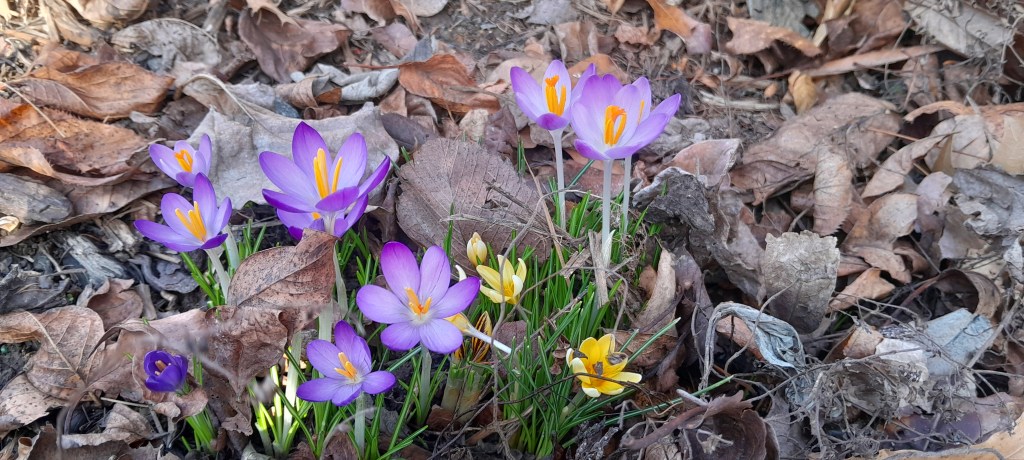
When did you last hear yourself?

Mallorca, Spain

You read that right. When did you last hear yourself?

… What do you really want to do today?

… What do you want to give yourself permission to do, to feel, to be…?

… What do you want to experience on your own for yourself?

… What guilt or regrets you want to let go of?

… What joys you want to embrace?

We wear many hats in a demanding society that pushes us to do more and seek external achievements and validation.

We are conditioned since childhood to seek established life milestones: school graduation, marriage, kids, retirement… and to seek everlasting happiness, otherwise something is wrong with us.

There is nothing wrong with any of these beautiful life milestones. There is nothing wrong with wanting to be happy.

But we start to be wrong when we give away our sense of self.

… When we forget ourselves.

… When we forget to seek peace inside.

… When we forget to quiet the external voices, from the loud toxic ones we should ignore to the the best intentioned ones.

… When we abandon ourselves from the fear of being abandoned by others, including by the people who are the dearest to us.

… When we sacrifice so much of our selves that we forget who we are, deep inside, after many layers of conditioning and limiting beliefs have been stripped off.

Today will not come back and your last day on this Earth is undetermined.

This is not about making dramatic decisions and life changes on how you want to spend your life through the end of your time, quitting jobs or relationships.

It is about waking up to your own self. That’s right, that beautiful and imperfect you, who has wounds but also wishes and hopes, who has a past but also a present and a future.

You are worth it. No matter what the future holds, you have got this. Don’t be afraid for your story to unfold in expected and unexpected ways… Your life is a garden where seeds are planted, and the harvest gets ripe at the right time.

The law of an awaken life is that nothing is wasted: no experience, no relationship, no life lessons, no rock bottom,…

Love dearly and deeply, very importantly starting with yourself.

Hear yourself. You are in the right place and at the right time to lead your life from the most beautiful and sacred version of yourself. Undeterred. Unapologetic. Strong and wild. Self disciplined and consistent.

We see, we hear, in general. But are you truly and deeply hearing yourself? It’s your time to hear yourself and lead your life as it should be, your own. You can’t outsource your precious life to anything or anyone. 

And from this place of peace and leadership with yourself, you will live better and love better. You will shine and not be afraid of your own light. You will seek understanding and joy. You will embrace any lessons of painful experiences that your life cannot always be spared of.

If you haven’t heard yourself in days, years, decades, …

Hear you … the true you, evolving and learning every single day.

Hear you … the one to love dearly and hold in self-compassion.

Hear you … the one with big dreams and hopes, no matter where you stand today.

On Grief and Heartbreak

There are times in life when parting ways with someone becomes necessary despite the pain such parting creates. You have made the decision at the deepest level of your self-awareness, when soul, mind and body concurred that the relationship is not for you any longer. You knew in that deliberation what the truth was for you, with every inch of your body and soul. However, grief is poignant and might continue to follow you, in ebbs and flows, for a while, sometimes with inklings of doubt whether the right decision was made or not.

These moments of grief are the moments when you need to remind yourself:

  • A relationship is supposed to bring you joy overall, even if at times, there might be discomfort, misunderstandings or some heartache. But in the long run, the account needs to be positive. If it is not, the relationship is draining more energy and resources from you than it should, and it cannot be sustained.
  • Grief is normal when you think in terms of the lost potential of what that relationship could have been – however, potential does not always equal capability, current or future. Be honest if that relationship exhibited the attributes of the relationship you aspired to have. Journal from a third person point of view to avoid unbalanced subjectivity and confirm your standards are worth standing up for.
  • Acknowledge the loss, the human shortcomings, the imperfections on both sides, forgive yourself and the other person, and move on. Focus on growth and learning from this experience  – what lessons you have learned or have yet to learn, what changes you can make, what new perspectives you have gained…
  • A grieving heart can always be at risk of more prolonged sadness or at the more extreme spectrum, depression or anxiety. Look for experiences where the kid in you is alive again – the one who is curious, playful and undeterred to learn to walk even after multiple falls. Schedule at least one of such experiences regularly, find hobbies or interests that bring you joy and meaning. Don’t give up on a life that is worth living to its fullest potential and joy, with people who genuinely care for you.

Every time we lose something, or someone is also the opportunity to gain something even bigger if we have the courage to trust ourselves and to embody, little by little, one action and one experience at a time, a wiser version of ourselves…one that we could not have entered into without the loss.

Be caring to yourself and allow yourself to grieve. And at one point, you will discover that after each moment of grief, there is a rainbow. One that shows you what you stand for, what your soul needs and why your past relationship could not have thrived. Getting over the loss of a relationship is not denying ourselves to grieve, but it is about finding that rainbow every time grief comes back.

Micro Moments of Wisdom Nr 1

This series is designed for individuals who have limited time and energy, but unlimited thirst for genuine growth in their lives, whether that is about personal or professional dreams and aspirations.

This is because any 5 to 10 minute ritual can compound into meaningful positive change, be it exercising, meditating or simply getting better at our craft.

  1. Eliminate comparison with others. James Clear, author of Atomic Habits, beautifully summarized how external comparisons are a source of nuisance: “Compete against yourself. When you look outside — your rivals, your industry, your luck — there is always something to blame. When you look inside — your process, your effort, your rate of learning — there is always something to improve.” When we are focused on what we can control and improve, we will always come out better and ahead of the prior version of our ourselves. At the end, that is what should matter and is most fulfilling – a version of us that is evolving and growing. Every time you find yourself in a comparison trap, go back to “your process, your effort, your rate of learning“.
  2. Focus on progress not perfection. This mindset helps us stay focused on what we can learn, do, and improve versus beating ourselves up for any shortcomings or imperfections. Building momentum and evidence of our progress serve us better than self criticism and negativity. Refuse to become your own saboteur. Progress is a path to change, but we need to stay committed to our goals through discomfort, feedback and failures at times. This is not an excuse for lacking discipline, hard work or accountability … but an acknowledgement that growth is not always linear.
  3. Schedule something to get excited about. We are all human beings with need for rest, relaxation and community around us. The same challenge or stressful situation will reduce its effect on us when we genuinely take care of ourselves. By taking the time to enjoy an outing, a special activity or simply a nap, we remind ourselves of our human needs and identities beyond work and miscellaneous responsibilities. Building a habit out of scheduling some R&R moments in advance is both practical in our busy lives but also a constant reminder of our humanity.

Disconnection is not an end but a beginning

Pressures in life can be insidious and, from time to time, the pressure cooker gets unbearable. We admit to these pressures often after the water has boiled over, and we understand that the disconnection was a natural consequence of absorbing spoken or unspoken and acknowledged or yet-to-be-acknowledged pressures.

The story of our modern and highly interconnected lives is pressure… to fit in, to be successful by societal standards, to be and do it all … while pressure for our early hominins was getting chased by lions in the savannah. These modern life pressures can come from the most well intended people around us, from ourselves or from standards that, at times, we set too high. They could also come from people who, at the end, are consciously or unconsciously not well intended, with whom we have yet to set proper boundaries.

lf you are at one of these crossroads – where disconnection is what you feel in the moment or have been feeling for a while, the sooner you befriend it, the sooner you can come to grasp with it and use it for your growth. This is an opportune moment to start afresh, more self-aware of what it takes to keep a healthy and happy self – you!

A practical guide to transform a “disconnection” crisis follows below with 5 critical steps:

  1. Pause and Journal: You can’t outrun disconnection. The longer you live with it, the higher the risk that it turns into something more severe, for instance burnout or physical ailments. Even a few days of feeling disconnected warrants a pause. You deserve it. Then jot down what weighs heavy in your mind or body – in full or partial sentences, or simply words – connected to the pressures that might have burdened you lately. You know you are getting to the end of your list when your journaling starts being about what you are grateful for and what your heart yearns the most, including feeling appreciated and loved, which are fundamental needs that motivate our behaviors.
  2. Evaluate these pressure points with your morality and values compass: Once these pressures points are exposed on a piece of paper, it is easier to acknowledge and analyze them. What is real versus perception? What comes from your judgment or the judgement of others? Which ones should you give weight to? Which ones deserve an honest conversation with yourself or someone in your life? Which ones would you want or need to carry forward? Which ones should you leave behind as not aligned with your true values, needs or aspirations?
  3. Rest: Physical rest, be it longer sleep or naps, and taking time for yourself are oxygen to human life. It is when rest lacks that pressures accumulate until everything snowballs into disconnection, burnout, disease or depression. No matter how temporary your state of disconnect has been, give yourself a good few days of rest.
  4. Commit to a fresh start with at least one identified change: With a rested mind and body, and more self-awareness, you can finally see through what has been weighing you down and what adjustments you need to make – big or small- to free yourself from undue pressures. Think in terms of what you need to do to cut the source of pressure points that don’t deserve your focus and energy. As to due pressures, even if there is no immediate action you can identify as needed to be taken, the simple fact of having cleared your mind, will position you to embrace what the day brings and your responsibilities with more clarity and energy.
  5. Remember you are your biggest asset: The danger of disconnection is feeling like a stranger in your own life, and that can remove agency and alter your choices and with them, your future over time. Health can also take a toll from prolonged disconnection. That is the opposite of what we owe to ourselves: self-compassion, self-connection and self-care. When we are our biggest supporters, we can also be better supporters of people around us.

Author Kamal Ravikant noted:

“Pain doesn’t last. And when it’s gone, we have something to show for it: growth.”

Likewise, disconnection doesn’t last … if we let it speak to us and shape the adjustments we need to make in our lives.

Resolutions vs Commitment

At the beginning of every year, there is a lot of talk about New Year’s Resolutions. Many of them become already obsolete or failed attempts by the end of January.

I’m a big fan of New Year’s resolutions, goals and vision boards. I started doing some of these practices with my kids as well to get them to think of life achievements in many ways, including in terms of setting and reaching specific goals.

New Year’s and birthdays are a great time to set new resolutions and goals because we benefit from the “fresh start effect”, a psychological boost that helps us build momentum for creating change and new habits. But one of the most critical considerations for successful resolutions is commitment.

How committed are we to our goals?

As a kid, every time my mom asked me to do something, she always reminded me to first get committed to doing it well. I wondered at times if she had some magic power to know when I was not committed 100% because she knew it. Once, she told me to stop doing something I was doing to help in the house and go back and play. I felt the sting of disappointing my mom but above all, I got the lesson that shaped my strong work and learning ethic. A job well done is one that starts with the commitment of doing a good job. Not a perfect job … but one to which best effort is put forward.

Returning to the concept of New Year’s resolutions, to which goal or goals are we really committed to?

… To put the best effort forward even when no one watches.

… To take matters into our own hands and design a strategy with the resources and ideas we have today. No perfection required, just a genuine start.

… To do the hard work even when the easy work could be tempting.

… To be consistent with habits, behavior or action that are required to reach our goal.

… To start again tomorrow even if we feel we might have failed today.

… To take ownership of the momentum created over time with consistency and efforts, and adjust as necessary to reach the end goal.

Sometimes, our commitment is driven by pressure, social comparison or fears. But this type of commitment is weak and cannot endure. Pursuing goals from such commitment usually leads to stress, burnout or lack of fulfillment.

Real commitment comes when we set resolutions from our most honest and sturdiest self. If clarity lacks, there are a few questions that can help. For instance:

  • If there is one goal or change that if achieved by the end of the year would make you truly happy – what would that be?
  • How would you like this year or chapter of life to be remembered and how can you get there?
  • Start with the end in mind – at the end of your life, what would you like people to say about you?

The question is not what New Year’s Resolutions we have set.

The real question is what are we willing to commit to and why?

As a practical application of this reflection, think about any goal you have set or are considering setting for this year, and go through the above questions to test your commitment to it. This can be done for both personal and professional goals. Only when we are ready to truly commit to what it entails to reach a goal – meaning understanding our what, why and how – we can position ourselves for successfully reaching it. And most of the time, the real success is not in reaching a specific goal, it is in the growth achieved in the process. 

As James Hollis describes in his book, “Living an Examined Life”:

“Our life begins twice: the day we are born and the day we accept the radical existential fact that our life, for all its delimiting factors, is essentially ours to choose. And the moment when we open to that invitation and step into that accountability, we take on the power of choice.”

Happy New Year 2026!

We have more wisdom than we think and more strength than we believe.

We have more wisdom than we think and more strength than we believe.

We have more wisdom than we think and more strength than we believe.

… Because at times we need to say words out loud or repeat the same mistake multiple times for the wisdom of our own souls to be heard. Sometimes this wisdom is heard in little whispers, other times, in a big loud voice which we can no longer ignore, or we will break.

At the end of 2025, the wisdom that each one of us carries within by design is invaluable. So, if you lived in this truth, how a new year of life would look like for you? What intentions will you bring in the new year? What will you do more of, or less of? Who will you be spending more time with? What habits will become non-negotiable for you? What experiences and dreams will you pursue? Who will be your tribe and whose tribe will you be a part of?

Living in the wisdom of our souls is not forced positivity, or lack of honesty vis-a-vis ourselves or others on behavior or habits to stop or develop, or the wisdom to acquire. lt is accountable and empowered living with compassion and rest when we need it and with clarity and alignment with who we are or want to be.

What are your heart’s biggest hopes and dreams? Name and claim them – with perseverance, consistency, gratefulness and appreciation of having the opportunity to pursue them, no matter what the starting point might be, and what beginnings or endings might be required.

May 2026 be lived in wisdom and strength, in peace and love, and in accountability and inspiration of what life has to offer.

May 2026 be the year with more opportunities and blessings that we can ever imagine at the beginning of this year.

May 2026 be a year of radiant and wise living.

PS: If you are still pondering what New Year’s practices you could experiment with this year, two activities I highly recommend are: (1) choose a word for the year, leaning into your own inner wisdom about the most important intention, reflected in such choice of word for the coming year and (2) build a personal wall calendar with pictures from every month of the previous year as a way to reflect upon the year that passed and to prolong savoring its greatest memories, one month at a time.

To Suffer with Grace

Those who know me well know I love hot yoga…I love the feeling of being hot especially during cold winter days and of pushing through 26 poses that challenge both my body and mind. During one such awesome class with heat above 105 Fahrenheit, the instructor told us the following: “Let me tell you a secret: we all suffer…[students laughing]…but who can suffer with grace?”.

Since that class, I’ve been pondering over the concept of “suffering with grace”. Aging with grace is a more popular concept … but what about suffering with grace?

The word grace can be described in many ways, but one potent meaning is “ease and suppleness of movement or bearing as per Merriam-Webster dictionary. Add suffering to this ease of movement or bearing… and what do we get?

First, to not suffer with grace is easier to characterize than to suffer with grace. Let’s think about behaviors like anger, depression, addictions, and so on. Grace is absent here because under such behaviors, we have fallen prey to the suffering and denied our emotions, the absolute act of suffering and with it, our own healing.

So, to suffer with grace is first about accepting that suffering is part of our human story. In very simple terms, suffering can be defined as an experience or condition we wouldn’t want to live through – if we had a choice – but that is happening or has happened to us. Acceptance is the first step of suffering with grace, as it allows us to embrace, then move through suffering. The act of an embrace is seizing someone or something. Embracing suffering is therefore confining and framing it as a temporary state or condition. We then start moving through it and through any feelings of pain or other negative emotions…

Grace in suffering is also about not getting stuck in our pain, grief, anger or disappointment. In the book “Letting Go, The Pathway to Surrender”, dr David Hawkins talks about the importance of letting feelings come and go: “Letting go involves being aware of a feeling, letting it come up, staying with it, and letting it run its course without wanting to make it different or do anything about it.”  Staying stuck in pain or other negative feelings will unconsciously paint our inner and outer world, as per dr David: “when the pressure of suppressed and repressed feelings exceeds the individual’s tolerance level, the mind will create an event “out there” upon which to vent and displace itself. Thus, the person with a lot of repressed grief will unconsciously create sad events in life. The fearful person precipitates frightening experiences; the angry person becomes surrounded by infuriating circumstances; and the prideful person is constantly being insulted.

Grace helps us to see that suffering is a fluid and temporary condition that takes us to a new version of ourselves, one grown stronger as result of the suffering. Grace is accepting that we might not always immediately comprehend the meaning of suffering but trusting that one day, we will understand it. Suffering might come back – often the case of trauma survivors- but its meaning has been perfected and the grace of suffering acquired like a new taste.

To suffer with grace is to understand that: (1) how we frame suffering determines what we get out of it and ultimately who we become; and (2) we might not be able to control what suffering crosses our paths of life, but we can control how we frame it. Building the ability to frame the meaning of any suffering in a way that expands rather than constricts life is at the end a critical survival and thriving factor … for a life that remains good despite adversities and setbacks. Holocaust survivor and psychiatrist, dr. Viktor Frankl majestically states in the “Man’s Search for Meaning”, one of the most read books of many generations: “Everything can be taken from a man but one thing: the last of the human freedoms—to choose one’s attitude in any given set of circumstances, to choose one’s own way.”

Lastly, to suffer with grace is removing the stigma of suffering.

We all suffer… from time to time or more often …

We all suffer… for similar or different reasons …

Suffering is woven in all our growth stories…

Hiding our suffering is not suffering with grace. We extend grace to suffering when shame, stigma and self-judgement are not attached to our act of suffering….

This might mean sharing our stories of suffering, with a potential for richer lives and relationships. As Brené Brown beautifully puts it in her writings about vulnerability: “We don’t have to do all of it alone. We were never meant to.” Or it might simply mean keeping our stories to ourselves but keeping our heads up and our hearts in peace even in the midst of turbulent times and our suffering… The inner knowing and conviction that everything will work out for the better bring courage and grace to our suffering, and fuel compassion and self-compassion, a necessity for sustained grace.

Grace in suffering also does something very important: it brings solutions and breakthroughs to problems, courage to seek help and resources, or new perspectives. As poet and memoirist Maya Angelou said it: “If you don’t like something, change it. If you can’t change it, change your attitude”. 

We all suffer but who can suffer with grace….?

A Fulsome Life

Finding our way to a fulsome life is a goal and yearning that we all share. It might take different pathways and timelines, but we all know when we have got there. It is that place and time in life when, irrespective of external circumstances, met or unmet personal and professional goals, we live with self-awareness and compassion vis-a-vis ourselves and, subsequently, these around us. It is that time and place in our lives when we recognize we are all on a journey to self-love, and that behind many of our aspirations, shortcomings and frustrations, it is just that – a deep desire for feeling loved, appreciated, and understood.

The journey to a fulsome life is rarely a straight line. It usually zigzags across many chapters and experiences of life, through hills and valleys, deserts and seas, sunsets and sunrises, storms and rainbows… We know we are nearing the destination when the following starts to happen:

  • We are in touch with our body and needs. This practice is under-rated in our busy lifestyles. At times, it takes a breaking point or getting close to a breaking point -mentally or physically – to realize how important it is to listen to our bodies. This might take the form of getting the rest we need or medical attention in a particular area, better nutrition or practicing walking or a new physical activity. Thinking back to how our bodies have carried us through over years and different experiences of life (e.g. including birthing if you are a mom), it is hard not to be in awe at the strength and dignity of our bodies. And beyond the physical needs, there can also be emotional needs impacting our bodies. The extreme might be coming from traumatic experiences. “The body keeps the score” as per psychiatrist Bessel Van der Kolk, as traumatic memories can get stuck in our bodies and come as fragments of images, physical sensations or intense emotions. Unhealed and unprocessed trauma can lead to mental or physical health issues, as well as tendencies to numb emotional pain via destructive behaviors vis-a-vis our bodies.
  • We are in touch with our emotions. This practice is also under-rated in our systems of learning and lives. Teaching about emotions seems to stop in pre-school years, despite the fact that the way we deal with both positive and negative emotions is key to a healthy and joyful life. Dr. David Hawkins in his book “Letting Go, the Pathway of Surrender” talks about the importance of not suppressing or repressing emotions: “Letting go involves being aware of a feeling, letting it come up, staying with it, and letting it run its course without wanting to make it different or do anything about it. It means simply to let the feeling be there and to focus on letting out the energy behind it.” It is equally important to allow ourselves to sit with our negative emotions in order to let go of them, as it is to make space for our positive emotions which amplify the beauty and gifts of our life, relationships and the present moment. And this is important because more often unconsciously rather than consciously, “what we are holding inside colors our world“: “To the fearful person, this world is a terrifying place. To the angry person, this world is a chaos of frustration and vexation.”
  • We practice self-compassion which in turns leads to compassion towards others. This practice is often misunderstood or mis-applied. Self-love is not about unhealthy egocentric behaviors which we can fall prey to when putting ourselves and our needs first. Self-love is about us becoming our ultimate best friend and cheerleader in a way that cultivates not the strongest of egos but a compassionate human being. When we show ourselves self-compassion in the purest of ways, we can also more easily share this gift with these around us. When we forgive ourselves for our shortcomings or work-in-progress, we can also more easily forgive others for their shortcomings or imperfections. At times, self-compassion takes the form of setting boundaries; other times, it is building new bridges and reaching out to others with the yoke of judgement surrendered. Dr. Kristen Neff sums it up perfectly in her book “Self-Compassion: The Proven Power of Being Kind to Yourself“:When we’re mainly filtering our experience through the ego, constantly trying to improve or maintain our high self-esteem, we’re denying ourselves the thing we actually want most. To be accepted as we are, an integral part of something much greater than our small selves. Unbounded. Immeasurable. Free.

A fulsome life is one where self-awareness and self-love are an anchor and a north star for who we are and what we do. None of this means relinquishing earthly goals and ambitions. It simply recognizes that self-love and self-awareness are catalysts to a fulfilled life. In the long history of humanity, a fulsome life is like a pebble creating a reverberating effect in the ocean of our intertwined lives:

Just as ripples spread out when a single pebble is dropped into the water, the actions of individuals can have far-reaching effects” — Dalai Lama.

The Goal Achievement Iceberg

Sunrise on the Deep Creek Lake, Maryland, United States

Achieving goals follows the iceberg theory – achievements and accolades are externally observable similarly to the iceberg floating over the surface of an ocean, but the underlying behaviors, supporting meeting these goals, are like the part of the iceberg which is beneath the water.

So what does reaching goals mean? The response includes:

  • Being committed enough to make concerted efforts and take specific actions towards the achievement of a set goal. You can engage in blue-sky thinking, an approach discovered by psychologist Charles Garfield, which entails looking at your life as if there are no limits to what you can achieve. But a goal doesn’t (always) need to be a lofty target. It can simply be an improvement you wish to achieve in an area of your life. Another way to look at goals is an unorthodox one, that Mel Robbins, a New York Times best seller author, podcast host and renowned coach, suggests: pay attention to any feelings of jealousy you might harbor; “jealousy is blocked desire” (e.g. by your fears, doubts or overthinking) as per Mel, thus it can serve to identify goals you might not have considered or allowed yourself to dream about. Furthermore, commitment means doing the work, often times, the very hard work, to meet your goal. It ultimately means taking responsibility for defining and adjusting a plan for goal execution and staying honest about your progress against your goal.
  • Acknowledging that it is not about the goal itself, it is about the process and growth required to get to your destination. This mainly means to focus on things you can control. Map out steps, milestones or specific actions required to reach your goal and enjoy making progress on a mapped-out itinerary. Especially when it’s about a goal you cannot fully control (e.g. a promotion, buying a property, or getting married), it is fundamental that you focus on achieving the growth associated with that particular goal rather than getting attached to meeting it under some subjective or random timelines. The risk of missing a goal is higher when the focus is not on how to grow yourself to the level of your goal. Furthermore, a set goal might require a more profound type of growth, encompassing multiple areas of life. For instance, expertise and great knowledge in a professional sector might make someone a great individual contributor, but without leadership skills and presence, that individual’s career opportunities will likely not expand to positions of leadership. Likewise, succeeding professionally in a way that burns bridges with others, or at the risk of strained family relationships would challenge the notion of success for that individual.
  • Expecting to get discouraged or make mistakes when on the journey to achieve a specific goal. The path to achieving goals is rarely linear. Steven Handel, author of Small Habits, Big Changes makes the point that “our patience is strongest when we have a healthy expectation of future difficulties and obstacles. Get ready to be challenged. Get ready to make mistakes. Get ready to fail. And make sure you are ready to keep moving forward no matter what happens.” These moments of discouragement are when re-commitment to what drives you the most is necessary in order to not give up on your goals. It is also a time when you might need your support network the most and when surrounding yourself with like-minded individuals can be the lifeboat in a stormy ocean.
  • Celebrating and owning your achievements. This might seem cliché but moving from one goal to another without acknowledgement of what you might have just accomplished can lead to burnout and life dissatisfaction. It is for your own healthy self that you mark meeting your goal in a celebratory way. Remember how much you wished for your goal to become a reality and how hard you worked for it. Would you celebrate your kids or best friends if this was their accomplishment? The answer is a resounding “Yes!”, isn’t it? It is not only about a symbolic celebration, but it is also about owning your achievement, which could be a process in itself. It might entail not succumbing to some impostor syndrome or arrogance that might surface, or not going back to some old-sabotaging patterns of thinking or behavior.

Setting and reaching goals are an important part of life. It doesn’t mean everything is good 100% of the time and goals are always achieved. But it is ultimately a lifestyle which leads to more fulfillment, peace, presence and success over time. When you are clear about your values-driven goals and pursue them in a healthy way, you reap more meaning and happiness in life. And chances are that the people close to you are also happier around the best version of yourself. In summary,

“Success is not a destination, it’s a journey.” – Zig Ziglar