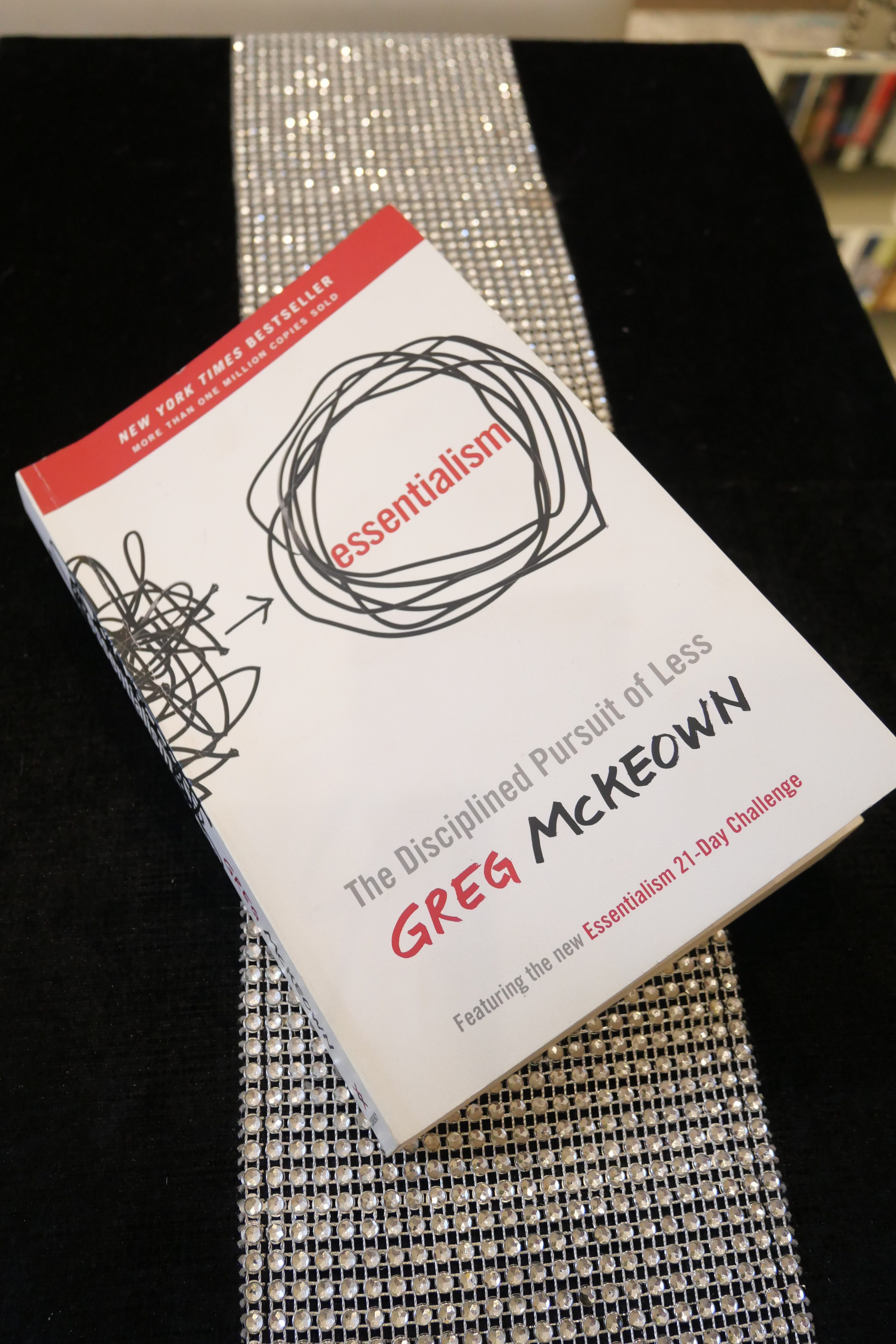
Book: Essentialism, The Disciplined Pursuit of Less
Author: Greg McKeown, speaker, bestseller author, and podcaster
Key message of the book: Essentialism is a practical and insightful guide about a lifestyle and mindset, defined by making the wisest choices – at all times – in terms of how we spend our limited time and energy:
“The life of an Essentialist is a life lived without regret. If you have correctly identified what really matters, if you invest your time and energy in it, then it is difficult to regret the choices you make. You become proud of the life you have chosen to live.”
As per the author, the essentialism is not about getting more things done nor about doing less for the sake of doing less – it is about operating “at our highest point of contribution by doing only what is essential”.
The core mindset of an essentialist is doing “the right thing the right way at the right time”.
The core truths of an essentialist are: “I choose to”, “Only a few things matter“, and “I can do anything but not everything”.
Essentialists understand that:
- We all have the ability to choose, and we need to heighten our awareness to such ability. When we forget this core truth – our ability to choose- “drip by drip we allow our power to be taken away until we end up becoming a function of other people’s choices – or even a function of our own past choices.”
- There are always trade-offs to make: “As painful as they can sometimes be, trade-offs represent a significant opportunity. By forcing us to weigh both options and strategically select the best one for us, we significantly increase our chance of achieving the outcome we want.”
- We can live a life by design vs by default – by distinguishing “the vital few from the trivial many”, and by removing “obstacles so the essential things have clear, smooth passage.” The result of such discipline – of saying no to some choices, of choosing wisely, of eliminating nonessentials – is living “a life true to yourself, not the life others expect from you“: “Everything changes when we give ourselves permission to be more selective in what we choose to do.”
- We need to create space to think, explore, and recharge. Sleep, for instance, is a necessity and a priority to achieve the highest levels of mental contribution.
- We need to be ultra selective: “If it isn’t a clear yes, then it’s a clear no”. An essentialist applies tougher criteria for decision making. For instance, the “90 percent rule” means applying the single most important criterion for a decision and give each option a score between 0 and 100. Any option rated lower than 90% gets eliminated.
- We need to be intentional about our choices and such clarity brings breakthroughs and focus on the right things and people in our lives: “Creating an essential intent is hard. It takes courage, insight, and foresight to see which activities and efforts will add up to our simple point of contribution. It takes asking tough questions, making real trade-offs, and exercising serious discipline to cut out the competing priorities that distract us from our true intention. Yet it is worth the effort because only with real clarity of purpose can people, teams and organizations fully mobilize and achieve something truly excellent.“
- We need to learn to say no and set boundaries as often as necessary. Saying no is hard because it’s engrained in our human wiring to depend on others – when our survival was tied to belonging to a tribe, hunting together for food: “Nonessentialists say yes because of feelings of social awkwardness and pressure. They say yes automatically, without thinking often in pursuit of the rush one gets from having pleased someone. But Essentialists know that after the rush comes the pang of regret. They know they will soon feel bullied and resentful -both at the other person and at themselves. Eventually they will wake up to the unpleasant reality that something more important must now be sacrificed to accommodate this new commitment.“
In summary, eliminating, condensing, limiting, cutting, reducing are ways of Essentialists. When these things happen, Essentialists have time and energy to perfect execution for what is very important in their lives. They do that by practicing extreme and early preparation, starting small and building momentum towards their goals, staying focused on making progress, and celebrating acts of progress – all in what becomes a regular routine -perfected with practice – for long term success: “The Essentialist designs a routine that makes achieving what you have identified as essential the default position. Yes, in some instances an Essentialist still has to work hard, but with the right routine in place each effort yields exponentially greater results.”
Essentialists fundamentally understand two powerful truths:
(1) “of all forms of human motivation the most effective one is progress”
(2) there is only now, meaning being tuned in and doing what is important – right now, not in the past and not in the future.
Over time, with practicing making the wisest possible choices of time and energy, essentialism becomes a way of life that brings meaning and purpose.


 Growth Is A Journey