Book Review: Tiny Experiments

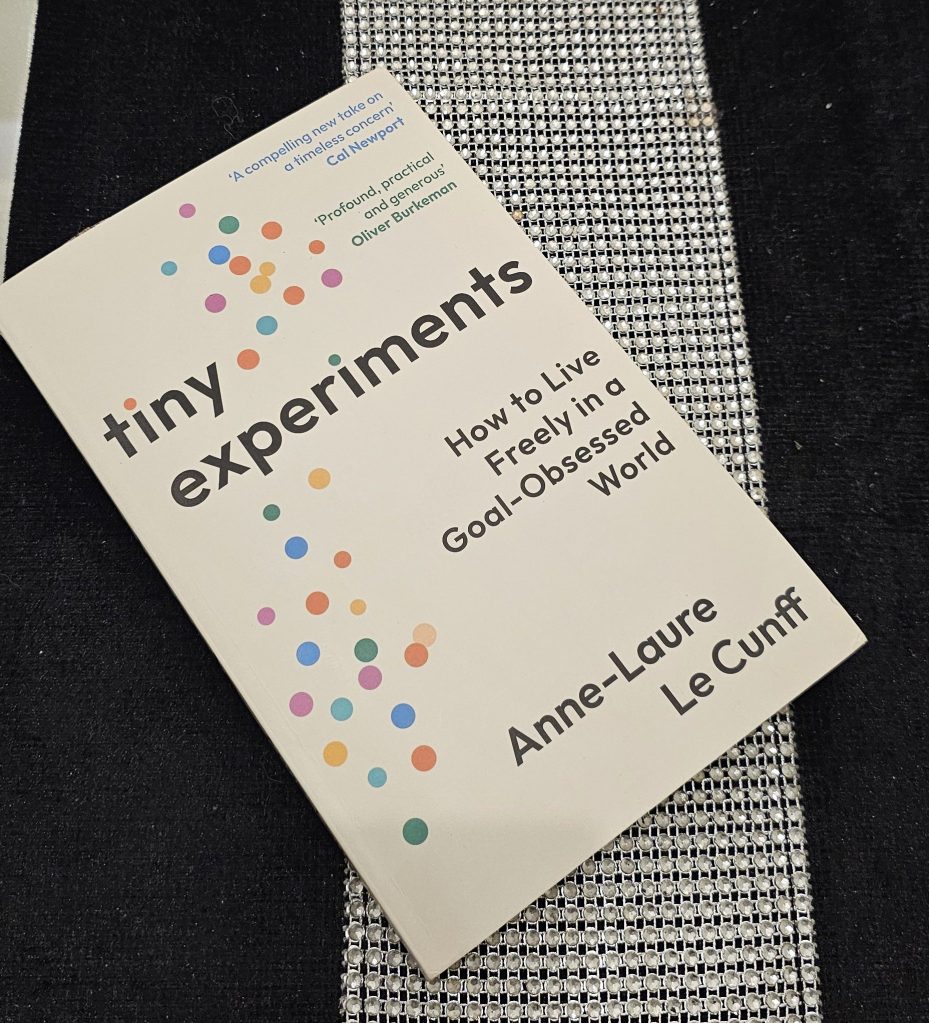
Book: Tiny Experiments, How to Live Freely in a Goal-Obsessed World

Author: Anne-Laure Le Cunff, neuroscientist, entrepreneur and educator

Key message of the book: The book is an invitation to approach life differently, by moving away from the more traditional and rigid goal setting framework (e.g. SMART goals) and embracing the concept of “tiny experiments”, following our own curiosity and genuine interests. The PACT (Purposeful, Actionable, Continuous and Trackable) framework – e.g. “I will publish 25 newsletters over the next 25 weeks”- encourages us to experiment without getting hung up on specific goals. It is more about trying new things, collecting data and feedback, and ultimately letting the experience guide us – it does not matter if we continue, stop or push for higher goals from the initial PACT. The journey in itself is the catalyst for growth: “Compared to linear goals, a pact fosters an experimental mindset – an attitude of openness and curiosity, a willingness to learn with a sense of receptiveness, and a lack of preconceived notions.”

One reflection practice supporting the “tiny experiments” framework is highlighted in the book as the Plus, Minus, Next journaling practice, whereby we let our brain unload positive or negative developments of the day, week or month, and next steps we can experiment with, creating compounding growth.

Some favorite quotes from the book:

“Confidence isn’t a quality we are born with or something that magically happens; it’s built through action. To create confidence, you need to get started. Every time you act, you bet on yourself and gather evidence that you can do what you set out to do.”

“…the most reliable way to be successful is to try, fail, learn and try again.”

“When you focus on being more – finding ways to be present and to slow down time – you can avoid burnout without abandoning your ambitions.”

“You are an evolving canvas, an unfolding story, a great work in the making. All you can do is imagine a world of possibilities and keep on experimenting until you discover what works. Each experience, whether a success or a failure by conventional standards, opens new doors, which you’ll pass through with new capability and wisdom.”

“This is how you discover your life’s meaning—by focusing on your daily actions rather than the content of your future eulogy. When generativity becomes your focus, the immediate impact of your actions is all the motivation you need. Every pact you make, every shift, every “What if?” becomes not just a step in your own journey, but a chance to inspire and elevate others. Your career is no longer a linear ladder you climb alone, but a nonlinear path of shared discovery.”

“When we fixate on finding one singular purpose, we rule out the side quests that help us grow the most. Your life doesn’t need to follow predictable acts and arcs. The best stories are full of surprises, with colorful characters and unexpected plot twists.”

“When we use trial and error, we set in motion a series of growth loops where progress emerges in conversation with our environment. Each cycle adds a layer of learning to how we understand ourselves and the world around us. Instead of an external destination, our aspirations become fuel for transformation. We don’t go in circles; we grow in circles.”

“We think that once we get to that destination, we’ll be happy. What most people discover is that once they get there, they’re still the same person. All of their other problems are still here. And they’re not any happier. That’s one of the main reasons to stop focusing so much on the end goal and focus on the process instead. By focusing on the process, whatever the outcome, you’ll still be happy exploring and experimenting while you’re getting there, during the journey.”

This book review by Growth Is A Journey is an invitation for readers to discover the book in its entirety.

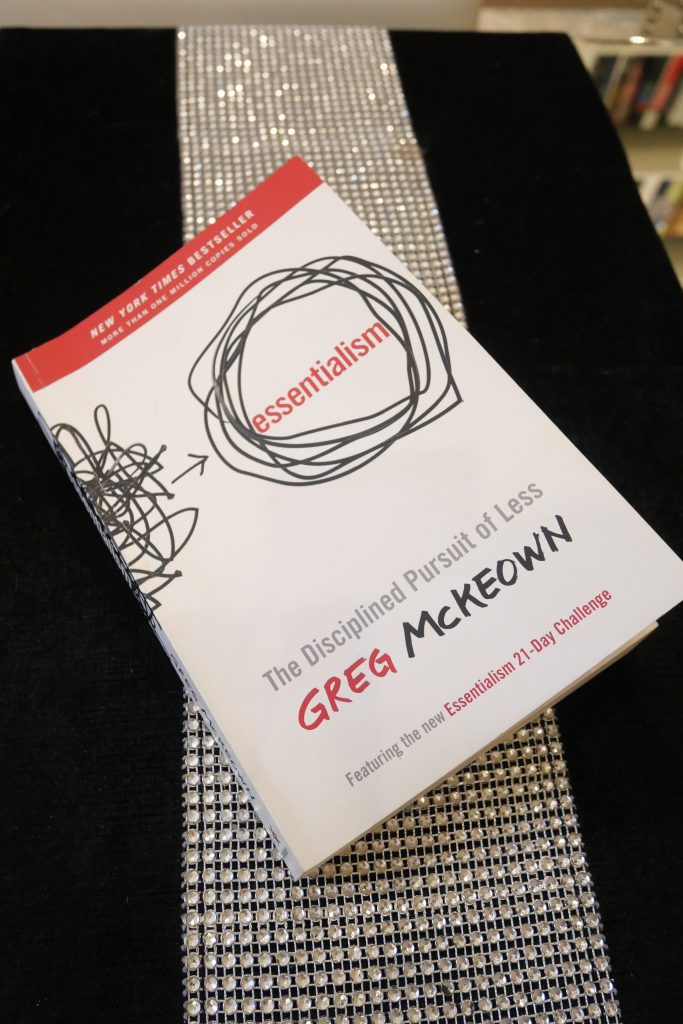
Book Review: Essentialism

Book: Essentialism, The Disciplined Pursuit of Less

Author: Greg McKeown, speaker, bestseller author, and podcaster

Key message of the book: Essentialism is a practical and insightful guide about a lifestyle and mindset, defined by making the wisest choices – at all times – in terms of how we spend our limited time and energy:

“The life of an Essentialist is a life lived without regret. If you have correctly identified what really matters, if you invest your time and energy in it, then it is difficult to regret the choices you make. You become proud of the life you have chosen to live.”

As per the author, the essentialism is not about getting more things done nor about doing less for the sake of doing less – it is about operating “at our highest point of contribution by doing only what is essential”.

The core mindset of an essentialist is doing “the right thing the right way at the right time”.

The core truths of an essentialist are: “I choose to”,Only a few things matter“, and “I can do anything but not everything”.

Essentialists understand that:

  • We all have the ability to choose, and we need to heighten our awareness to such ability. When we forget this core truth – our ability to choose- “drip by drip we allow our power to be taken away until we end up becoming a function of other people’s choices – or even a function of our own past choices.”
  • There are always trade-offs to make: “As painful as they can sometimes be, trade-offs represent a significant opportunity. By forcing us to weigh both options and strategically select the best one for us, we significantly increase our chance of achieving the outcome we want.”
  • We can live a life by design vs by default – by distinguishing “the vital few from the trivial many”, and by removing “obstacles so the essential things have clear, smooth passage.” The result of such discipline – of saying no to some choices, of choosing wisely, of eliminating nonessentials – is living “a life true to yourself, not the life others expect from you“: “Everything changes when we give ourselves permission to be more selective in what we choose to do.”
  • We need to create space to think, explore, and recharge. Sleep, for instance, is a necessity and a priority to achieve the highest levels of mental contribution.
  • We need to be ultra selective: “If it isn’t a clear yes, then it’s a clear no”. An essentialist applies tougher criteria for decision making. For instance, the “90 percent rule” means applying the single most important criterion for a decision and give each option a score between 0 and 100. Any option rated lower than 90% gets eliminated.
  • We need to be intentional about our choices and such clarity brings breakthroughs and focus on the right things and people in our lives: “Creating an essential intent is hard. It takes courage, insight, and foresight to see which activities and efforts will add up to our simple point of contribution. It takes asking tough questions, making real trade-offs, and exercising serious discipline to cut out the competing priorities that distract us from our true intention. Yet it is worth the effort because only with real clarity of purpose can people, teams and organizations fully mobilize and achieve something truly excellent.
  • We need to learn to say no and set boundaries as often as necessary. Saying no is hard because it’s engrained in our human wiring to depend on others – when our survival was tied to belonging to a tribe, hunting together for food: “Nonessentialists say yes because of feelings of social awkwardness and pressure. They say yes automatically, without thinking often in pursuit of the rush one gets from having pleased someone. But Essentialists know that after the rush comes the pang of regret. They know they will soon feel bullied and resentful -both at the other person and at themselves. Eventually they will wake up to the unpleasant reality that something more important must now be sacrificed to accommodate this new commitment.

In summary, eliminating, condensing, limiting, cutting, reducing are ways of Essentialists. When these things happen, Essentialists have time and energy to perfect execution for what is very important in their lives. They do that by practicing extreme and early preparation, starting small and building momentum towards their goals, staying focused on making progress, and celebrating acts of progress – all in what becomes a regular routine -perfected with practice – for long term success: “The Essentialist designs a routine that makes achieving what you have identified as essential the default position. Yes, in some instances an Essentialist still has to work hard, but with the right routine in place each effort yields exponentially greater results.”

Essentialists fundamentally understand two powerful truths:

(1) “of all forms of human motivation the most effective one is progress”

(2) there is only now, meaning being tuned in and doing what is important – right now, not in the past and not in the future.

Over time, with practicing making the wisest possible choices of time and energy, essentialism becomes a way of life that brings meaning and purpose.

This book review by Growth Is A Journey is an invitation for readers to discover the book in its entirety.

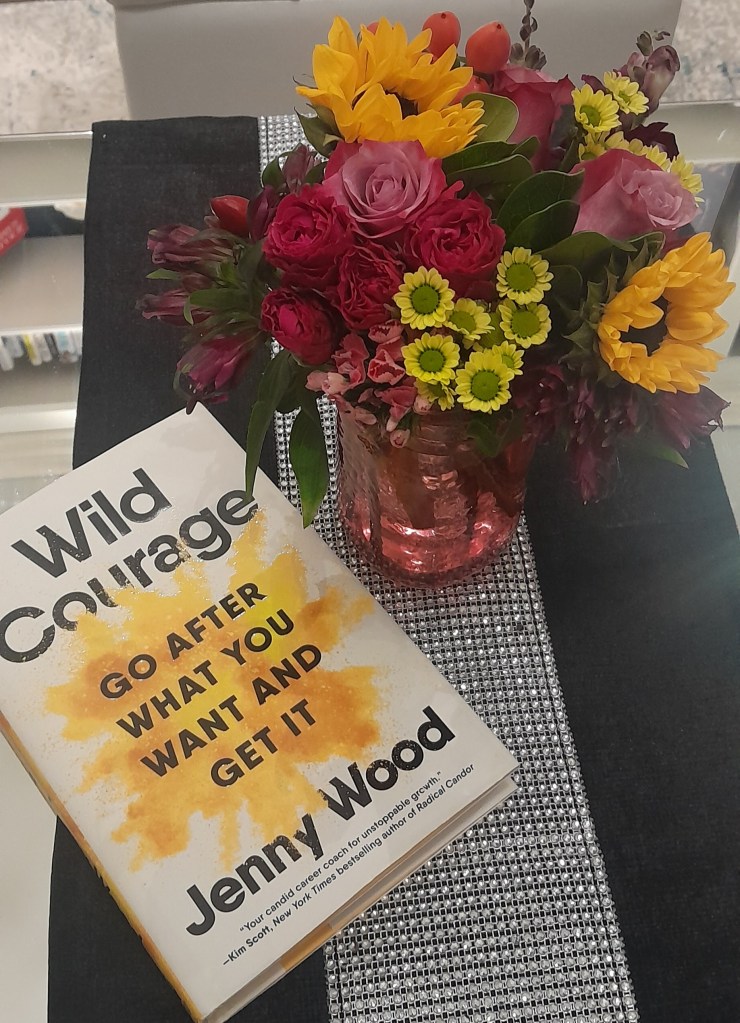
Book Review: Wild Courage

Book: Wild Courage, Go After What You Want And Get It

AuthorJenny Wood, a former successful executive at Google, and a speaker and writer on leadership development

Key message of the book: “Wild Courage” is an easy-to-read book, written with a clear purpose to fuel your personal and professional growth ambitions. With a lot of anecdotes and funny stories from her own life and career, the author is reframing nine negatively labeled traits into skills to develop to achieve success.

Each of these nine traits is defined by the author with the word “courage”:

  • Weird is “the courage to stand out”.
  • Selfish is “the courage to stand up for what you want”.
  • Shameless is “the courage to stand behind your efforts and abilities”.
  • Obsessed is “the courage to set your own standard”.
  • Nosy is “the courage to dig deeper”.
  • Manipulative is “the courage to influence others”.
  • Brutal is “the courage to protect your time and energy”.
  • Reckless is “the courage to take calculated risks”.
  • Bossy is “the courage to listen and lead”.

Courage is presented as key to success: “Successful people take action despite their fear. They muster the courage to do what’s necessary to succeed before it’s encouraged by others -or even considered socially acceptable.”

Each trait is defined in a new perspective, a constructive and positive one, in a way that makes it clear why such trait is necessary to get what we want in life.

  • Weird is owning your greatest strengths and being authentic about them “instead of second-guessing yourself out of desperation to fit in.”
    • “It’s about being yourself and revealing that self appropriately, both in your resume and everywhere else.”
    • “Figuring out who you are – how you think and solve problems, what you enjoy and dislike, the values that matter most -is essential in (a) deciding what to chase in life and (b) actually catching in.”
  • Selfish is the courage to “champion your agenda at least as strongly as you champion the needs of others.”
    • “Fighting for yourself just as enthusiastically as you fight for your friends and colleagues.”
  • Shameless is “no more apologizing for who you are and what you can do”. While shame is “a normal and healthy reaction”, “applying shame’s energy to finding a solution brings relief. Taking action tells your brain that you’re solving the problem. It’s the lingering shame that has to go.”
    • “Shame doesn’t care what you’re saying or asking. It just wants you quiet, inoffensive, invisible -“safe”. Opening that big mouth habitually builds that shameless muscle.”
  • Obsessed is having the inner drive to excel. “When you’re obsessed, you find the discipline to get out of your own way” and adopt a growth mindset where everything can be learned: “I’m not the leader I need to be yet”, while taking care of your physical and mental health and having proper boundaries.
    • “Obsession derives from two convictions: (1) that what you want matters and (2) that you can achieve what you want with sufficient effort.”
    • “You will never grow and evolve without pushing yourself to do the hard, careful and deliberate work that tests the limits of your capabilities.”
  • Nosy is letting curiosity be a compass, without being too aggressive, obnoxious or disrespectful in interactions with others.
    • “Ask [questions] politely, prioritize the mutual win and act on what you learn”.
    • “Answer questions with the same degree of vulnerability, authenticity and candor you expect from others.”
  • Manipulative is not about using others but “being influential, inspiring, motivating and persuasive” by adding positive energy in any room – in a truthful and authentic way.
    • “Warmth isn’t being complicated. It can be as simple as framing a neutral message in a more positive way.”
  • Brutal is being “direct, clear and consistent with your words and actions.”
    • “To achieve your goals, you must commit to spending your time and energy in accordance with your true priorities, no matter how painful it sometimes feels.”
    • “Brutal frees up time, energy and mental bandwidth”.
  • Reckless is to “err on the side of action”.
    • “You can seek perfection or progress. Not both. And, unlike perfection, progress is possible.”
    • “To the fragile ego, any failure is unacceptable. Successful people fail far more than most people do.”
  • Bossy is about being a “genuine boss: an empathic, supportive, yet decisive leader who knows when to speak up and when to listen, when to let the team figure a problem out themselves, and when to step in with help and a fresh perspective.”
    • “Use your power responsibly”.

This book review by Growth Is A Journey is an invitation for readers to discover the book in its entirety.

Resolutions vs Commitment

At the beginning of every year, there is a lot of talk about New Year’s Resolutions. Many of them become already obsolete or failed attempts by the end of January.

I’m a big fan of New Year’s resolutions, goals and vision boards. I started doing some of these practices with my kids as well to get them to think of life achievements in many ways, including in terms of setting and reaching specific goals.

New Year’s and birthdays are a great time to set new resolutions and goals because we benefit from the “fresh start effect”, a psychological boost that helps us build momentum for creating change and new habits. But one of the most critical considerations for successful resolutions is commitment.

How committed are we to our goals?

As a kid, every time my mom asked me to do something, she always reminded me to first get committed to doing it well. I wondered at times if she had some magic power to know when I was not committed 100% because she knew it. Once, she told me to stop doing something I was doing to help in the house and go back and play. I felt the sting of disappointing my mom but above all, I got the lesson that shaped my strong work and learning ethic. A job well done is one that starts with the commitment of doing a good job. Not a perfect job … but one to which best effort is put forward.

Returning to the concept of New Year’s resolutions, to which goal or goals are we really committed to?

… To put the best effort forward even when no one watches.

… To take matters into our own hands and design a strategy with the resources and ideas we have today. No perfection required, just a genuine start.

… To do the hard work even when the easy work could be tempting.

… To be consistent with habits, behavior or action that are required to reach our goal.

… To start again tomorrow even if we feel we might have failed today.

… To take ownership of the momentum created over time with consistency and efforts, and adjust as necessary to reach the end goal.

Sometimes, our commitment is driven by pressure, social comparison or fears. But this type of commitment is weak and cannot endure. Pursuing goals from such commitment usually leads to stress, burnout or lack of fulfillment.

Real commitment comes when we set resolutions from our most honest and sturdiest self. If clarity lacks, there are a few questions that can help. For instance:

  • If there is one goal or change that if achieved by the end of the year would make you truly happy – what would that be?
  • How would you like this year or chapter of life to be remembered and how can you get there?
  • Start with the end in mind – at the end of your life, what would you like people to say about you?

The question is not what New Year’s Resolutions we have set.

The real question is what are we willing to commit to and why?

As a practical application of this reflection, think about any goal you have set or are considering setting for this year, and go through the above questions to test your commitment to it. This can be done for both personal and professional goals. Only when we are ready to truly commit to what it entails to reach a goal – meaning understanding our what, why and how – we can position ourselves for successfully reaching it. And most of the time, the real success is not in reaching a specific goal, it is in the growth achieved in the process. 

As James Hollis describes in his book, “Living an Examined Life”:

“Our life begins twice: the day we are born and the day we accept the radical existential fact that our life, for all its delimiting factors, is essentially ours to choose. And the moment when we open to that invitation and step into that accountability, we take on the power of choice.”