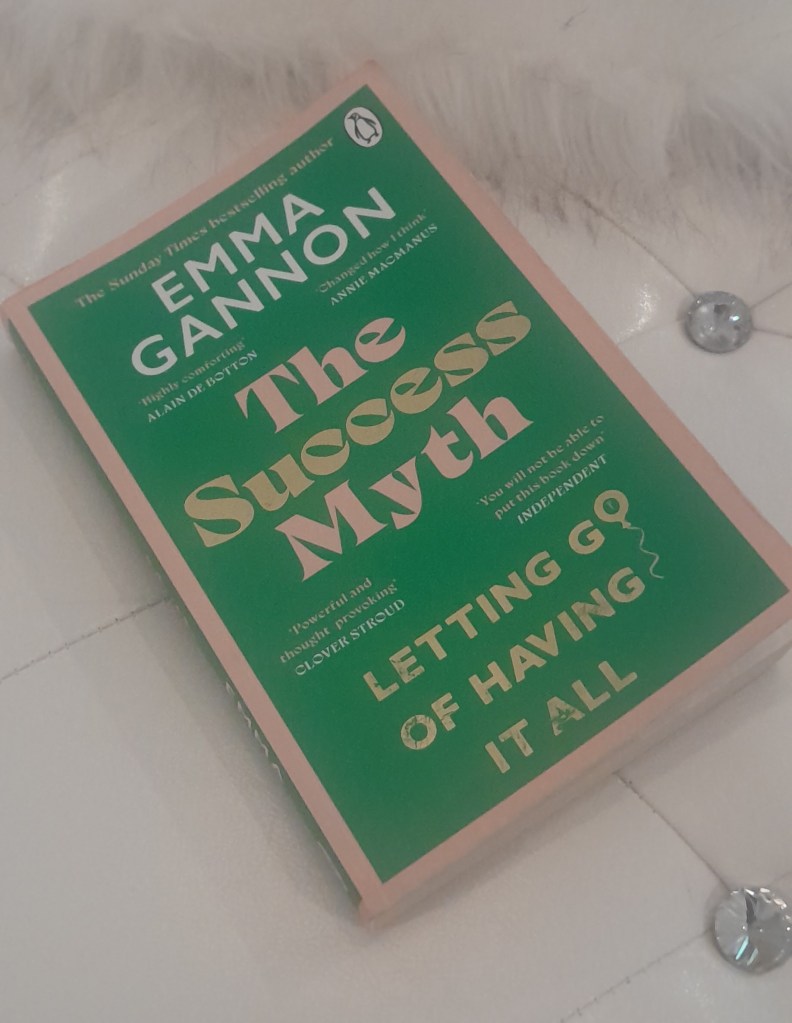
Book: The Success Myth, Letting Go of Having It All
Author: Emma Gannon, speaker, bestseller author, and podcaster
Key message of the book: “The Success Myths” encourages readers to examine what is our modern world’s usual idea of success – more achievement, money, status, productivity and fame – and to embrace instead a success definition that is personal and shaped by a person’s unique values, relationships and a lifestyle that represents who that person is in an authentic fashion, free of any conditioning from society or social media.
The book is born from the author’s personal story of burnout and overworking.
Each chapter debunks a success myth with anecdotes from the author, some level of criticism and insights from other authors and researchers to support the author’s main point; and ends with pointy reflection questions for the readers.
The following success myths are presented in the book:
- There is no success formula – that is universally reliable for all human beings – because there are many factors that shape a person’s success – including personal history, behavior, gifts, and sheer luck. “If someone acts as like they have the answers to what you should do with your life, be wary of them”. Emma goes on and notes “we can spend our entire lives trying to work out other people’s success formula – or we can try a new formula, our own formula – which is doing our very best with what we have and finding ways to enjoy ourselves along the way.” There are, however, qualities and behaviors, that can be consistently observed in successful people – and their mindset can be summed up as “they believe in the path they are taking”.
- The happiness myth – a never ending and permanent state of happiness does not exist, in part due to our primitive human brain that wants to protect us by over-reacting to perceived dangers: “Many of us have the idea that one day we will crack the happiness code, that once we make it, we will reach an everlasting state of contentment.” Not running away from negative emotions and accepting them is avoiding a happiness trap that would prevent us from embracing the temporary joys in life: “If we can’t be happy right now in whatever way possible, we won’t be happy if all the things we ever wanted fall into our laps.” Forcing happiness or looking at happiness as a test that we need to pass is toxic positivity and out of touch with the reality of the wide range of human emotions.
- The productivity myth – working hard is a virtue unless when it leads to burnout, excessive stress or nervous breakdown: “Rest feels like an act of rebellion in a world that doesn’t want us to stop.”; “For a lot of us, we were praised as young children for how much we worked, and our hard work was seen as the value we brought to the world, so as adults we build a codependent relationship with productivity. The challenge now is to see our inherent value outside of what we produce in a capitalist world that wants to take, take, take.” To escape this myth, Emma is recommending developing rest as a skill and considering process goals in addition to milestone goals. For instance, “running a marathon” is a milestone goal, but “enjoying training for a marathon” is a process goal. “As a society, we need to embrace the art of rest, and as individuals we can start to set better boundaries and see our value outside of our output. Only then can we truly enjoy the process of achieving our goals.”
- The “You are not your job myth” – a job is something you do that shouldn’t define your identify, purpose or worth. “Untangling ourselves from our work selves is quite the task, because work makes up such a large, and important, proportion of our lives.” – “When we wrap ourselves up so tightly in our work, we are in danger of losing important parts of ourselves” and neglecting important people or aspects of life like health and family. Creating more boundaries between work and home preserves a sense of self and balance that is conducive to feeling fulfilled.
- The celebrity myth – a celebrity status is not a reliable model for success with so many examples of celebrities feeling lonely and unhappy. “Status brings validation, and it’s natural that we’re all seeking that. We want to be seen, understood and recognized.” However, internal validation and being appreciated by the people in your life are a lot more important for a fulfilled life: “We don’t need to chase outward markers of success or status in a big way to feel seen, as there are so many other ways to feel authentically appreciated and validated. The first step is seeing ourselves. Not through a lens, not through the eyes of thousands of followers, but really, truly seeing ourselves for who we are, and understanding what matters to us. Validating ourselves first is an important but overlooked part of building an authentic sense of status. When we crave the approval of others, really, we are craving our own approval.” ” The key is building recognition on your own terms, having good boundaries and feeling appreciated by the people in your life, not strangers on the other side of a screen.”
- The money myth – money helps with security and solving problems, but chasing money for the sake of financial success does not guarantee security, fulfillment or a better life. “Your time is also a currency. Your energy is a currency. Your mental wellbeing is a currency.”
- The ambition myth – ambition is not a problem, until we push ourselves beyond the limits of our bodies and ignore our true needs, which can lead to burnout and self‑abandonment. “We can have big dreams, but we don’t need to burn ourselves out to get there.” We can be “ambitious for a better life. Ambitions for a healthier life. Ambitious on our own terms.”
- The checkbox myth – ticking the box of certain traditional life milestones – like getting married, buying a house, having kids, or having a certain income – is not a guarantee for a fulfilled life. As per the author, there is no single path to adulthood or success, and we should attain any life milestone without the pressures of society, families or peer comparison.
- The arrival myth – success is not a finish line we arrive to. “There is an assumption that once we reach a big life or career goal, we will finally be version 2.0 and we will stay there. You will feel different, better. Then the disappointment sets in. We realize the fictional ‘destination’ doesn’t exist.” The author is discouraging from banking happiness on a “future” state or goal – “A lot of enjoying life in the moment is about patience, and the ability to be OK with where we are right now.”
In summary, “The Success Myth” is about being OK with not having it all and responding to a critical question with honesty: “How much is your current version of success costing you? If it’s costing you too much, what, if anything, are you prepared to give up?” The answer does not mean giving up to everything or to, too much, it’s finding your own equation for success: “Enjoy the ride, enjoy your success, whatever that means for you.”
This book review by Growth Is A Journey is an invitation for readers to discover the book in its entirety.

