There are so many inspiring quotes from Eleonor Roosevelt that it is hard to limit the list to only the ones below:
“Great minds discuss ideas; average minds discuss events; small minds discuss people.”
“A woman is like a tea bag; you never know how strong it is until it’s in hot water.”
“The purpose of life is to live it, to taste experience to the utmost, to reach out eagerly and without fear for newer and richer experience.”
“One’s philosophy is not best expressed in words; it is expressed in the choices one makes.”
“You must do the things you think you cannot do.”
“Many people will walk in and out of your life, but only true friends will leave footprints in your heart.”
“Yesterday is history. Tomorrow is a mystery. Today is a gift.”
“You gain strength, courage, and confidence by every experience in which you really stop to look fear in the face.”
“No one can make you feel inferior without your consent.”
“Do what you feel in your heart to be right – for you’ll be criticized anyway.”
Who Was Eleonor Roosevelt?
Anna Eleonor Roosevelt (1884-1962) is the longest-serving First Lady of the United States – from 1933 to 1945 – during her husband President Franklin Delano Roosevelt’s four terms in office. Former First Lady Eleonor Roosevelt is remembered for her humanitarian and activist work, which reshaped the role of a first lady from hostess to a powerhouse, and for her lead role in the drafting of the United Nations ‘Universal Declarations of Human Rights in 1948. President Harry S. Truman later referred to Eleonor as the “First Lady of the World” in recognition of her excellent service as the first United States Delegate to the United Nations General Assembly after the death of her husband in 1945.
Eleonor’s Journey of Strength and Empowerment
Eleonor was born in a prominent and wealthy family in Manhattan, New York City and was, through her father, a niece of President Theodore Roosevelt. Her childhood didn’t get spared by unfortunate events and pain which further contributed to her shyness and loneliness. By the age of 10, Eleonor mourned the death of both of her parents and of one of her two brothers. She was cared by her maternal grandmother and by age 15, Eleonor was sent to attend a boarding school in London, where she was taught, among others, a sense of independence, service and social responsibility. Upon her return in the U.S. in 1905, Eleonor married her fifth cousin, Franklin Delano Roosevelt, who later became the President of the United States. A turning point in Eleonor’s life was when her husband was diagnosed with polio and lost the use of his legs. Despite the diagnosis, Eleonor convinced her husband to not give up his political career and started taking a very active part in her husband’s political life and presidential ambitions, supporting him and at times, speaking on his behalf at public events. Eventually, Eleonor turned into a strong advocate and activist for human and civil rights, for women’s empowerment, children’s causes and racial justice. As First Lady, she wrote a daily column in the national press, did weekly radio broadcasts, held press conferences for women correspondents, and traveled across the United States to experience first-hand what the state of the nation and its people – especially the forgotten and oppressed – were during the Great Depression, as a way to shape and influence the work of her husband. She had become her husband’s “eyes, ears and legs” on the ground helping to shape policies like New Deal and beyond. During World Word II, Eleonor traveled extensively to visit troops as a Red Cross ambassador. By the time of her death in 1962, Eleonor became “one of the most esteemed women in the world”.
Her life is recounted in her “Autobiography” released in 1961 which included several of her books published earlier like “This Is My Story”, “This I Remember”, and “On My Own”.
As part of the Empowerment initiative, Growth Is A Journey is very excited to highlight a story that is well known to so many – as any world champion’s story would be – while reflecting so well the essence of growth as a journey which more often than not starts with a first step of challenging oneself to go beyond fears, insecurities, and unknown.
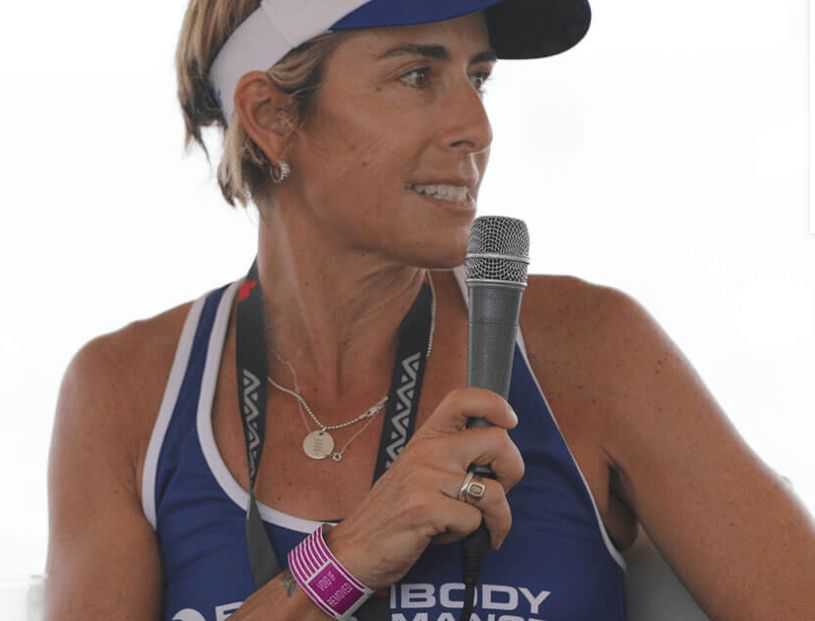
Siri Lindley‘s amazing and beautiful story of challenging what’s possible and of self-discovery includes becoming a world triathlon champion. But Siri is not only a strong and world-renowned athlete and coach, she is a beautiful human being who lives to see others grow and resonate with her own story of overcoming self-doubt and insecurities: “Creating strength from struggle and learning to live my life from a place of Love, not fear, is such a powerful one: a story that can relate to business, family and all aspects of life! It is my mission to share my message, as I know it can positively influence so many on multiple different levels!!!“ This article – published with Siri’s permission -is a testimony to Siri’s humbleness and love for others. Thank you, Siri.
Who is Siri Lindley? Siri dominated the International Triathlon Union (ITU) World Rankings over the course of her career as a pro, winning 13 World cup races between 2000-2002, and becoming the 2001 and 2002 ITU World Champion and World Cup Series. After transitioning to coaching in 2003, Siri coached a number of Olympic and Ironman athletes and champions. Her accomplishments lead to her being inducted to the USA Triathlon Hall of Fame. Besides triathlon coaching, Siri is also a public speaker, an author and a life coach, and together with her wife, Rebekah Keat, Siri is the co-founder of Believe Ranch and Rescue, a non-profit with a mission to rescue horses from slaughter, abuse and neglect by giving them love, care, a home and a second chance.
How did Siri’s story start? Siri grew up in Greenwich, Connecticut and as a kid who had to go through the sadness and pain of her parents ‘divorce, she had a lot of anxiety, insecurities and fears. She partially managed them via her love for sports and finding mentors and friends in her coaches. She played three sports in high school – field hockey, ice hockey and lacrosse, which she continued playing at Brown University where she earned a degree in psychology. A turning point in Siri’s life was her just missing the qualification for the national lacrosse team after her graduation – this event caused her to be heartbroken and feel lost. In 1992, at 23 years old, Siri was introduced to triathlon by watching a friend race at a local event. The challenge of the sport caught Siri’s attention and despite her very poor swimming skills at the time, she fell in love with the sport. Across a variety of ages, sizes and abilities, everyone “was looking alive” – the opposite of how insecure and afraid Siri had always felt- and “pushing themselves to the limits to see what they are capable of“. All of a sudden, the sport of triathlon presented a vehicle for Siri to challenge herself to dig deep inside, beyond her fears and insecurities. In 1992, she competed in her first triathlon event and despite the race being a total disaster, Siri had made her mind to become the best she can be in the sport and go “as far as she can possibly go”; by 1996, Siri was starting to get better competing at the national level, and by 1999, Siri started rising to the top rankings at the international level.
Siri’s most important lessons in her journey to the podium? Siri’s journey to becoming a world champion encompassed a couple of key lessons that are now woven in Siri’s coaching philosophy:
Strength is not about doing everything on your own. By 1999, with a 3rd place in the ITU World Cup series, Siri got obsessed about making the 2000 US women’s Olympic triathlon team. She had gotten so close to proving to herself and everyone around her about how strong she had become on her own, that she felt she had to isolate herself in Australia to focus on her practice, living like a monk for six months and visualizing her perfect race every single day. The big day came and instead of the perfect race, within 200 meters, Siri got dunked into the water, which caused her to finish the swim near last and qualify only as an alternate. She had made the race to be all about herself and it was too much. In acknowledging what happened, Siri was able to move forward instead of making up an excuse and not getting any better.
It is not about winning a race, it is about the hunger of going out and being better than you were yesterday. Following the failed Olympic trials, Siri accepted an invitation to train with Brett Sutton, an eccentric Australian coach, known for his tough love while being one of the best triathlon coaches in the world. For several months, Siri went through a regiment of killer practices, designed to challenge her physical and mental limits and abilities. Instead of quitting, Siri blossomed: she understood that in order to do what she dreamed of doing, she needed to do whatever it took to make that happen, break patterns of self-doubt and insecurities, and change her thinking. Later on, Siri discovered why coach Sutton accepted to train her: he had seen Siri in an early race, and despite being in the 42nd place in that race, during the last few minutes of the race, Siri was absolutely killing herself to catch the 41st place. Coach Sutton had seen Siri’s hunger and desire of being better than she was yesterday. “If you do that, success is inevitable“, Siri says, “having that hunger, passion, work ethic, respect for team mates, and that appreciation for this amazing opportunity to race at this level” changed everything – “it wasn’t about having to make the team or winning a race, it was about the gratefulness of being there and doing my best“.
With the learned appreciation of whom she had become and the gratefulness to race at an elite level, eight years after declaring to her mom that she would win the world championships, Siri’s dreams came true at the 2001 and 2002 Triathlon World Championships and World Cup Series.
In her journey as a coach -life coach and triathlon coach via the Team Sirius program for elite and amateur athletes-, the following Michelangelo quote is Siri’s favorite and representative of her coaching mindset and vision: “I saw the angel in the marble and I carved until I set her free”.
Another type of battle? In late 2019, Siri had to make another big decision – upon being diagnosed with leukemia, Siri made her mind that she would not accept her life to end so soon: “I am going to survive. I am going to survive and I am going to thrive again.” With strong determination and support from her family, friends and beloved horses, after going through intense treatment that involved a clinical trial and a bone marrow transplant, Siri is cancer-free with another lesson learned: “It’s taught me that life is not a straight line and to never expect that. Yet as someone who finds the gift in everything, no matter how tough, no matter how hard, I mean, this has brought me to my knees—but there has been so much grace and so many gifts.”
During this time of trials, Siri drew often from her life and lessons as an athlete: “You can be in a race and be having a tough day and things are really hard. If you focus only on how bad you feel, how slow you’re going, you’re just going to get worse and worse. But if you’re out there and your legs feel a little tired but your breathing is great and you start focusing on putting out your best effort, focusing on what you can do, not on what you can’t, then suddenly your legs will start feeling better. This kind of thinking is energizing rather than weakening. The lesson in all of this can be related to any aspect of anyone’s life.”
Common throughout all her endeavors, trials, challenges and triumphs, Siri notes: “What I’ve realized through my journey is that we are so much more powerful than we could ever imagine, as human beings. But we don’t want to believe that because it’s scary to think about what we really are capable of. And I’m a believer because I’m living proof that the impossible is really possible. I’m also a believer that you’re going to be afraid, but you’re going to do it anyway. And that’s what courage is, isn’t it?”
As part of the Empowerment initiative, Growth Is A Journey is very honored to share Michelle McManus ‘story.
Michelle is the Founder of Baby Be Brave, which is a platform for bringing awareness about adoption and supporting other adoptees. She is working hard to make Baby Be Brave a non profit organization.
Baby Be Brave Logo Credit: Michelle McManus
Michelle was born in Romania in 1988. She was a product of rape and placed in an orphanage shortly after her birth. She was adopted at 2 years old by an American family and grew up in Philadelphia in a healthy and happy home. She learned that she was an adoptee when she was 8 years old in a conversation with her father. She remembers how confused she felt during that conversation, but at the same time, a light bulb went on: she had always felt she could not fit in or that something was amiss. She was heartbroken when a schoolmate bullied her and cruelly told her that her birth mom must have never loved her, therefore her abandonment in an orphanage. Things went downhill throughout high school years with Michelle remembering how she started partying too much, always in need of attention and validation. She would always look in the mirror growing up creating images of her birth parents as she did not have photos of them. At some point, she felt she really needed answers and at 18 years old, she hired a private investigator to find her birth mother in Romania. The journey only resulted in more heartache and abandonment as her birth mom refused to have to do anything with her first born. The private investigator had found out that her mom was raped when she was 23 years old and had to abandon her because she didn’t feel she could care well for her. Her mom had two kids after getting married and Michelle was able to get some pictures done with her mom, half brother and sister, and her grandparents. When her mom made it clear that she didn’t want to do anything with her, Michelle felt the pain of rejection again and started blaming herself because her existence caused her mom so much pain. She continued to be heartbroken until into her early 20s. An incident when Michelle was 21 dramatically changed the way she had been seeing her birth mom. Tightly escaping a rape aggression in the subway made Michelle look at her mom with more grace and empathy. She saw her mom not as a birth mom who had abandoned her but more like a person and a woman who felt powerless and had to endure the trauma of a rape.
Fast forward several years, Michelle is a vibrant, beautiful and energetic human being, dedicated to being a voice for Adoptees and a brave soul. Statistics and research show that adoptees are 4 times more likely to commit suicide because they feel unseen and unheard. Adopted children are also at more risk to suffer from mood disorders like anxiety, depression and behavioral issues.
Michelle is making it her mission to make sure she gives as many adoptees as possible a voice. She wants them to feel seen, heard, and that they matter.
You can follow Michelle on instagram @babybebrave_
There are millions of orphans in the world just waiting for a family.
It is estimated that about 1 million children in the United States live with adoptive parents.
Birthmothers who have on-going contact with their children’s adoptive families report having less grief, regret, guilt and sadness than do those who do not have contact.
(Article published with Michelle McManus’permission)
January is National Human Trafficking Awareness month in the U.S. The statistics below, shared by Candle In A Dark Room are daunting:
Human trafficking is a $150 billion a year industry, of which $99 billion is specifically from commercial sex slavery
There are over 40 million victims globally and 1 in 7 victims are children
Roughly over 1 million children are trafficked each year.
Common age of victims is between 11-15 and 19-33, but ages between 0-1 years are common for children born into sex trafficking
Globally 71% enslaved are women and girls, and 29% are men and boys
90% of the time victims are trafficked by someone they know
Runaways, homeless children and foster children are most vulnerable to trafficking. A study shows over 57% of prostituted women were initially runway youth
Internationally only .04%. of human trafficking cases are identified. Meaning a vast majority of trafficking cases are undetected.
Candle In A Dark Room is a non profit, founded by Desi Garcia, a counselor and crisis social worker, a mother, a wife and a survivor of child sexual abuse. Desi is also the creator of a podcast series called Candle In A Dark Room, available on several platforms: Anchor, Apple, Spotify and Iheartradio. Desi’s podcast gives a voice to survivors of sexual violence, sex trafficking, eating disorders and any life trauma. In Desi’s words, “We talk about all of the “off limit” subjects that society has taught us to sweep under the rug. You won’t finish an episode feeling sad, but you will finish the episodes with hope & encouragement. This podcast helps survivors take their power back!”
Who is Desi? Desi is 31 years old, a wife and a mom of two children, 6 and 8. She is a survivor of child sexual and physical abuse. Desi was sexually abused by her old step father from age 8-15 when her perpetrator was exposed and arrested, an experience in itself traumatizing, that involved a lot of police interviewing and even a lie detector test to prove her case. Even with the perpetrator in jail, the next several years were tough. At age 16, Desi was living in a residential treatment program, diagnosed with major depression, anxiety, PTSD, body dysmorphia disorder and dissociation disorder, a rare disorder that only 1% of population has as result of severe trauma. The dissociation disorder refers to someone disassociating and going back to being at the age when the trauma or abuse happened, with no recollection of what happens during that time period which sometimes would last for hours. Desi was in a residential center for two years and at one point the facility told her mom that she would be in a mental hospital her whole life. Finally, at age 17, Desi moved to New Mexico where she eventually met her husband and started working in the trauma and mental health field.
Desi specializes in trauma and adolescent treatment: “I LOVE what I do even though as a survivor it can be extra challenging at times. I’ve fought like hell EVERY SINGLE DAY to learn how to live a life full of happiness and joy despite what I’ve been through and what I still struggle with today.” Following her old step dad’s release from jail after 10 years, and upon his arrest in 2020, on child pornography charges, it was found that Desi was re-victimized by her old step father. Determined to fight for her future, Desi’s testimony was powerful and instrumental in getting the perpetrator back in jail.
As per Desi, the mission of Candle In A Dark Room is to help survivors take their power back and live the life they want, by learning lifetime skills to deal with what has happened and finding the purpose in their trauma.
Photo Credit: Desi Garcia, Candle In A Dark Room
For more information on Candle In A Dark Room, see links below:
As part of the Empowerment initiative, Growth Is A Journey is very honored to share Paul’s story of finding renewed purpose in his work, while getting ready to embark on a new chapter in life: retirement.
Paul Faeth is an executive in the environmental world, who recently got certified as an executive coach. As part of his environmental work, Paul is the founding president of a coalition of 24 organizations working to provide safe drinking water, hygiene, and sanitation (WASH) to the poor in Africa, Latin America and India; and served as the Executive Vice-President at the World Resources Institute (WRI), the world’s top environmental think tank. Paul also worked in over 40 countries and has been named one of Washingtonian magazine’s “Local Eco-Heroes.” For more details: https://paulfaethcoaching.com/
GIAJ: When is retirement for you, Paul, and what or who inspired you to look for renewed purpose at this point in life?
Paul: I am not old enough for retirement, but I can see it from here. I’m close enough that two years ago I began thinking about it intentionally. Having grown up in St. Petersburg, Florida, (a.k.a “God’s waiting room”), I saw many retirees who had given up their careers only to become disengaged from the world. My model, however, is my mother, who in retirement volunteered in the local hospital and numerous times won the county’s volunteer of the year award. She went to the Ringling Clown College and became a certified clown with her own trademark just so she could entertain the patients in the children’s ward. As she had been an accountant, my five siblings and I were pleasantly surprised by my mother’s rather dramatic shift later in her life.
My oldest brother has been similarly involved in retirement, starting off as a volunteer truck driver for the Red Cross, then moving up to be a local, then state field coordinator in Florida. For over a decade, he has been a national first-responder for domestic emergencies, including being the first Red Cross staff person in place for several emergencies every year, from the Fargo floods, to hurricanes Rita and Sandy.
GIAJ: What was the thought pattern and values that guided you the most in this soul-searching process?
Paul: As I started thinking about my own retirement, I tried to outline what I want from it. First, perhaps obviously, I want to cut my work schedule but not stop working altogether. Second, I want to use the skills I’ve acquired during my 35 years working in the environmental field. I’ve been all over the world, managed numerous teams, and at various times been a CEO, a COO, and even for a while, a CFO. I’d like to think that what I’ve learned could be useful to others in some way.
That got me thinking about my professional value at this stage of my life. As I reflected on the highlights of my own career, the times that I found the greatest enjoyment included my own successes, of course, but also included the growth and success of others. A particular example I recalled stood out. When I took over as the Managing Director and EVP of the World Resources Institute, our president had charged me with leading an organizational shift from a think tank, to a “do tank.” We set up a system to focus on outcomes and to collect and reward them. As part of this, we celebrated our top ten outcomes every year with a staff party, a public report describing the outcomes, and modest bonuses for the team that generated them.
One year, a young woman who had recently been promoted to a team leader asked why her team did not make the top ten. I explained what we were looking for and why her team missed. She asked if she could come to me for advice during the following year, and I agreed. We met about a dozen times that year to discuss everything from developing a strategy to managing her team. When the next time came around to recognize our top ten outcomes, the team she led made it. And when she was recognized, I was about as proud of her accomplishment as if I had done it myself.
As I reflected on this example and recalled many others like it, I discovered that my highest value in retirement may be as a coach for others. Not only have I “been there and done that”, but I enjoy listening, engaging and supporting others.
GIAJ: As you started thinking about coaching, how did you go about positioning yourself to become one?
Paul: I started by speaking with coaches I know. Reactions ranged from “If I knew then what I know now, I wouldn’t have done it”, to “It’s easy, you’ll be great.” I suspected the truth was somewhere in between. The most helpful advice was to get certified as a coach. So, I found a highly recommended course and began the journey to certification. Between classwork, mentored coaching sessions, getting enough compensated hours of coaching to qualify, and a certification exam, the process took me about a year.
I was lucky to take a course that was loaded with people who either were already coaches or were professional counselors. I was the odd man out with no formal coaching or counseling background. I started out feeling very insecure and unsure of myself, but as the course progressed and I got feedback and encouragement from my mentors and colleagues, I became more confident in my ability to become a coach. I also realized that for what I wanted to do, executive coaching, that my executive experience was unusual – few executive coaches have been executives. This gave me confidence.
Eventually, I bit the bullet and decided to commit. I went part-time at my “regular” job to give me the time to invest in building a practice. I’ve found great enjoyment in coaching others and in the coaching approach, which focuses on helping clients through change processes by guiding them in identifying issues, developing action options and implementing them. The core of coaching is asking great questions that make a client come up with their own insights, not in giving them the perfect advice.
GIAJ: What has been the most rewarding part of these life changes and what piece of advice would you give to someone looking for a change in their career?
Paul: It has been a fun and rewarding journey. I have found great satisfaction in helping clients make a breakthrough, successfully try to do something differently and get a positive response, and ultimately, to achieve their professional or organizational goals. As to changing career, you have to recognize that a substantial investment of time and energy will be required to do that successfully. Be thoughtful about exploring opportunities and keep your expectations in check regarding how quickly you can do it. You may have to take a cut in pay and/or responsibility to make the move. And, I have to say this as a coach, it helps to get advice from someone who can guide you through the process.
As part of the Empowerment initiative, Growth Is A Journey is very honored to share the amazing story of artist Mariam Paré.
Mariam Fatima Paré was born in Kenitra, Morocco. Her father, a Marine Sargent was stationed in Morocco after the Vietnam War to work at the American Embassy and her mother was from near Tangier, Morocco. They came to live in the United States when she was very young. She always loved painting as a girl, and once her talent became obvious to her family, it was very natural that Mariam would be pursuing a career in arts.
In 1996, Mariam, a bourgeoning artist pursuing a degree in arts was visiting friends in Richmond, Virginia. Her life completely changed in a split of a second, when she was hit by a random bullet while sitting at a stop sign in her car. The bullet pierced her back and left her paralyzed for the rest of her life. At 20 years old, with her ability to keep a brush in her hands suddenly lost, her dream to become an artist appeared dead. Mariam’s expressive joy and passion were replaced by depression: “In the beginning I grieved a lot. I was very sad. Depressed. There’s no way to explain what it’s like to completely start over from ground zero in your life”. She was eventually introduced to the idea and technique of painting with her mouth: “Learning to paint with my mouth was very humbling. I really sucked at first. Months before my accident, I was painting sophisticated portraits and landscapes. I had a great talent and people loved it. But once I became disabled, it was like starting all over again. I had to learn how to draw again, learn how to paint again, learn how my mouth made brush strokes differently than my hand would make brush strokes. It really knocked my ego down because all my life, I had been praised for my artistic abilities. But here I was starting all over again.”
The fact that she could paint again gave Mariam a renewed purpose in life and her dream to become an artist came alive: “It was like a lifeline for me. And it gave me purpose. It gave me something to work on.” Seeing the potential again, Mariam’s goal had become to paint with her mouth at least as good as she once was with her hands. In Mariam’s own assessment, that took about 8-9 years. A few years later, Mariam realized how in fact her own disability has been actually setting her apart as an artist – a lot of her artwork differentiates itself by giving a voice to the disabled: “As a disabled person, being creative can be cathartic. It took me a long time to be able to make art about my disability. I was a painter of faces and landscapes and still lives, but there was a part of me that wanted to express my experience. When I finally got to the point where I felt I could paint about my experience as a paralyzed person, I painted all these birds tied to rocks and people buried up to their chest. I called the series Heavy. It was the first time in my life I was able to make art based on that. But once I was, it really helped me come to terms with my disability and my place in the world.”
In 2003, Mariam began a degree in Fine Art and in 2006, she was accepted as a member of the Association of Mouth and Foot Painting Artists (MFPA), an international, exclusive, and esteemed association of artists who paint professionally either by use of their mouth or feet.
Fast forward to 2020, her artwork has been exhibited at galleries and festivals in the U.S. and internationally. Mariam’s work has even impressed celebrities like John Stamos, Neil Patrick Harris, and Pierce Brosnan, who commissioned her for a portrait. As a matter of fact, in October of 2014 international film star Pierce Brosnan learned about Mariam’s work and invited her to his Malibu California home where she presented him with a painting she had done of him in his iconic James Bond role.
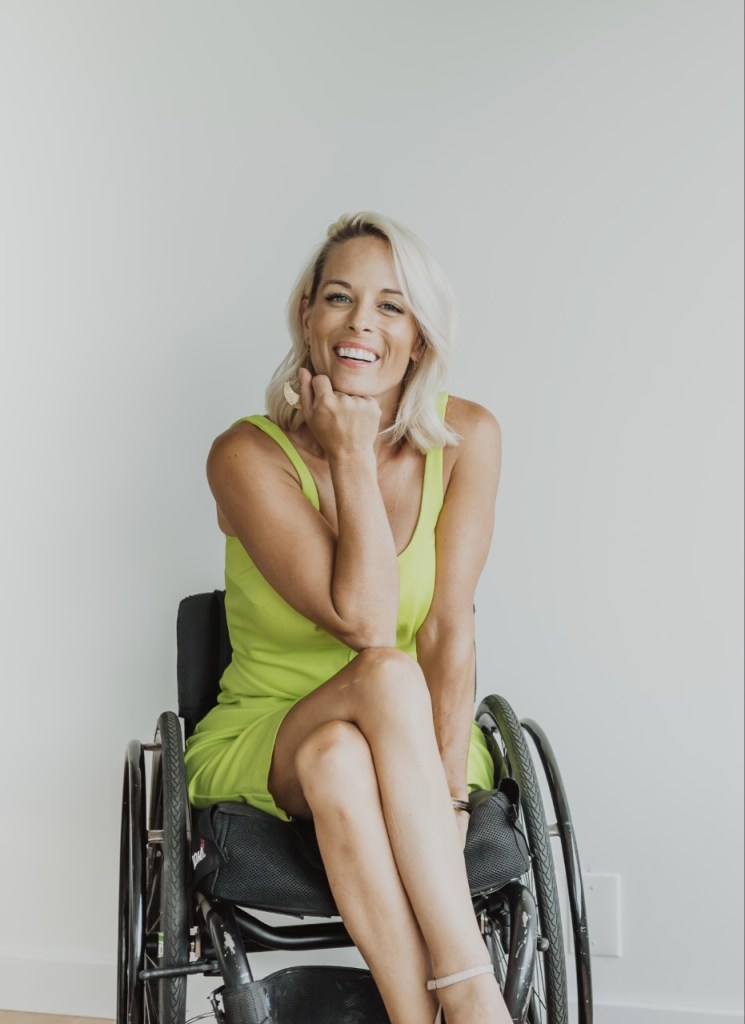
Growth Is A Journey is honored to share Sarah Foley’s incredible story of healing and empowering others via her Vertical Blonde mission as a writer, speaker, lifestyle coach and disability icon coach.
Over 8 years ago, during a vacation in Southern Utah with her boyfriend and some friends, Sarah felt at the top of the world – newly in love, with a dream job and supporting family and friends. Sarah recalls saying to her boyfriend that day: “My life is perfect. I wouldn’t change a thing.”
Little did she knew that her life would change forever later that day. During an ATV ride through the backroads, Sarah got into an accident, trying to avoid a collision and veering off the trail. The ATV landed twice on her before she was thrown in a ditch. That ATV accident left her paralyzed with both her legs.
After multiple surgeries and weeks in rehabilitation and learning how to move around in a wheelchair, Sarah first wanted to go back to normal including going back to work. While strong outwardly as if she had everything under control, Sarah was hurting in part because she was in denial: “I never thought it would get to five years and I wouldn’t be walking; the thought never crossed my mind. I always had this knowledge, even up on the mountain: It’s all going to be okay.”
After her marriage to her boyfriend, and becoming a mom, Sarah moved to Hawaii where she started her journey of healing emotionally and physically: “Once I got through that grief and the acceptance started to come, then I could just embrace it. Then it was like, ‘OK! This is my life”.
Still obsessed with reaching verticality again, Sarah found purpose and joy in offering this kind of elevation to others feeling disabled by their circumstances. By seeing herself as “sexy” again, she began a blog titled “Vertical Blonde” to “share her struggles of being partially paralyzed, and the triumphs of overcoming adversity“.
Later in 2018, Sarah launched the Vertical Beauty Project, which gives women with disabilities, specifically Spinal Cord Injury, makeovers, and photo shoots to “capture their strength and allow their outer beauty to match their inner beauty: My driving force is to be there for the next woman who becomes injured…I didn’t understand how I could have a disability, use a wheelchair and still feel sexy. I started working with a photographer, and as she’s taking my photo, it was the first time I felt a connection to my chair. It was instant. I call it my glow. My glow was turned on, it was ignited: I found my calling.”
Sarah is Ms. Wheelchair Hawaii 2018 and finished first runner-up at the US Wheelchair America competition that year.
As part of the Empowerment initiative, Growth Is A Journey is honored to share the story of Women’s Bean Project and its amazing founder, Josepha “Jossy” Eyre whose generous spirit and legacy will continue to touch lives and be an inspiration to many.
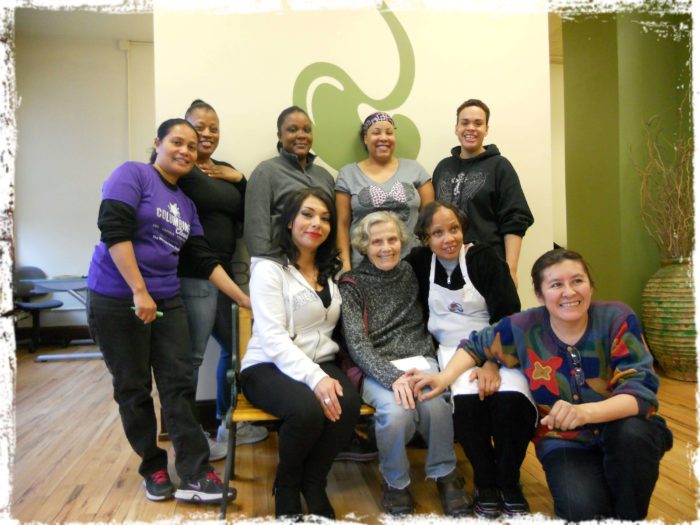
Women’s Bean Projectis a social enterprise that employs chronically unemployed and impoverished women in a transitional job in gourmet food and handmade jewelry manufacturing. By working in an active business, the women of Women’s Bean Project learn basic job readiness, interpersonal and life skills such as reliability, accountability, problem-solving and goal-setting. After seven months, they transition into career entry-level jobs – some for the first time in their lives.
The Women’s Bean Project products (e.g. bean soups, chilis, cookie & brownie mixes, bread mixes, salsa & spice rubs, marinades, dip mixes, instant teas, instant meals, organic coffees, popcorns and sweets) can be bought from nearly 1,000 retail and grocery stores in 39 states in the United States, or online including via Amazon.
Since its foundation by Josepha “Jossy” Eyre in 1989, the Denver, Colorado-based Women’s Bean Project has helped over a thousand women gain self-sufficiency, and, as per the Women’s Bean Project statistics, has positively impacted more than 18,000 lives by striving to break the seemingly endless cycle of recidivism, unemployment and poverty. A glimpse of the program is shown below:
95: Percent of women who are employed one year after graduating from the program. This is based on the responses of women from a 12-month follow-up.
62: The average number of women hired each year.
60+: Number of hours each woman spends in a core curriculum of five classes: Financial Literacy, Computer Literacy, GED Coursework, Dress for Success and Group Therapeutic Workshops. Women also attend numerous additional programming courses.
50+: Number of hours each woman receives in career services training, working 1-on-1 with a job search coach and attending computer lab and other workshops.
The founder of Women’s Bean Project, “Jossy” Eyre was a child who at a very young age witnessed the dark side of humanity in Nazi-occupied Holland during World War II. She lost siblings and her family home during a bombing raid, she faced famine and lived in terror. Eventually, her family fled to the United States.
“That loss, plus the war experience, gave me a sense that things weren’t right with my world,” Jossy wrote in a 1994 Chicago Tribune story. “That was a major influence why I decided to work with women who are disenfranchised.”
In the United States, Jossy Eyre became a nurse and was headed west to California, when she fell in love with Denver, where she stopped after passing through a traumatizing snowstorm in Kansas.
In her 50s, with all four of her children out of the house, Jossy went back to school, earning a master’s degree in social work. She volunteered at a homeless shelter for women and kids, where she observed how the same women were returning again and again.
With her own memories of helplessness, Jossy envisioned a place where women who don’t feel as though they have a lot of control over their lives, get help and start getting a sense of control. “That was something she could very much relate to,” as per Tamra Ryan, CEO of Women’s Bean Project. “She was driven by this idea that if she could teach the women by actually doing, that would give them the ability to change the trajectory of their lives.”
In 1989, Jossy Erye used $500 of her own money to establish the Project beginning with one staff member, two program participants, and three soup products. In one of Jossy’s talks to university students, Jossy shared some of her fond memories of those early times: “We had a very caring atmosphere — people working together, people learning together, people being supported together and trying to help them to ease their way into the mainstream. One of the ways we did that was to take them when we had opportunities to sell the products. At first, they didn’t like the idea at all, but when they found out that the products of their hands had monetary value, they started to believe in themselves a little bit more.”
“When she started the organization, Jossy never imagined it to be what it is today, she was merely looking for a way to help women gain a sense of empowerment over their circumstances by learning the skills of working by actually making a product” noted Tamra Ryan.
Jossy is remembered as someone who truly walked the walk – “We all look around and see things we don’t like, but not all of us do something about. And that to me is the thing that defines Jossy. We honor her legacy every day when we go to work” Tamra Ryan noted.
At age 89, Josepha “Jossy” Eyre passed away in April 2020 due to complications of COVID-19.
As part of the Empowerment initiative, Growth Is A Journey is honored to share the story of Cameron’s Coffee And Chocolates in Fairfax, Virginia (US). Cameron’s Coffee And Chocolates offers a variety of products from warm cookies, chocolate-covered toffee and dark chocolate salted caramels to flavorful jams, quiche, and sandwiches. Its offerings also include custom orders and catering for weddings and special events.
What is unique about Cameron’s Coffee And Chocolates is that it is the first business enterprise of the non-profit foundation, Every1 Can Work with a mission to provide employment opportunities for young adults with developmental and intellectual disabilities.
Alongside her husband, Ellen Graham is the co-founder of Cameron’s Coffee and Chocolates, and mother of Cameron. When it had become apparent that Cameron was having development challenges, early on in her childhood, Ellen decided that she would try to find as many doctors as she could to help her daughter. One of the doctors told her that she “should accept the fact that her daughter would function on a cognitive level of a three-year-old for the rest of her life“. Ellen never accepted that, and she worked very hard to help her daughter grow and develop. In her 20s, Cameron found her passion through a culinary arts program at the Davis Career Center, a part of Fairfax County Public Schools’ vocational training. Seeing how much her daughter loved baking and finding very few bakeries that employ people with disabilities in the region, Ellen and her husband decided to build a bakery business that offers work opportunities to Cameron and others like her. They opened Cameron’s Coffee and Chocolates officially on October 1, 2013.
Before launching Cameron’s Coffee and Chocolates, Ellen and her husband did quite a bit of research to learn about different models of what worked best for employing individuals with intellectual disabilities and developmental delays. As per Ellen, one of the most important pieces of advice was that “no matter what you do, always make sure that you are producing a superior product“. Indeed, Cameron’s Coffee and Chocolates makes products that compete in Chocolate Festivals and only uses the best ingredients including Callebaut Belgian chocolate.
Cameron’s Coffee And Chocolates has grown from 5 to over 30 employees over the last few years and has a unique employment model, based on a parallel cooperative work environment where disabled and non-disabled employees work side-by-side. Job coaches are trained in this concept of cooperative parallel work, with the employee, being both a model and a co-worker. In Ellen’s experience, when job coaches are working side by side with employees with cognitive disabilities, the experience for the employees is much more positive and the work product improves.
As per Ellen, one of the most rewarding parts is seeing “the growth in everyone we employ and how all our employees grow in both work and life skills. Statistics are very dim. Over 84% of young adults with cognitive disabilities are unemployed, but they are not unemployable”. It is Ellen’s conviction that even though people may have intellectual disabilities, “they are capable of so much. Work provides meaning and purpose.”
Thank you, Cameron’s Coffee And Chocolates, for staying true to the customer promise to taste “the love in every single bite” while setting an example in the business community by innovating, excelling in the bakery business, and creating purpose.
For more information on Cameron’s Coffee and Chocolates story, address and hours of operation, please visit: https://every1canwork.com/
As part of the Empowerment initiative, Growth Is A Journey is delighted to share the story -if you have not heard about it yet – of a wonderful 10-year-old who is making the world a better place with her love for art, and a heart to give and help children via homemade art kits.
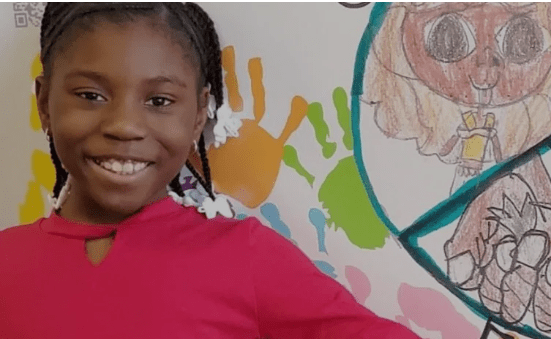
How did Chelsea’s Charity start? For her 10th birthday in August 2019, Chelsea Phaire asked her guests to donate art supplies instead of gifts. Her desire to donate art kits to children in need went viral on social media and got enough attention for Chelsea and her family to be encouraged to officially start Chelsea’s Charity. Since then, Chelsea’s Charity has distributed thousands of art kits to children across the country and has had a first international distribution in Haiti. While the in-person distributions have been postponed because of COVID-19, the mail distribution continues – for homeless shelters, orphanages, hospitals, and schools. Each art kit comes with a few essential art materials such as colored pencils and paper, and a handwritten note from Chelsea with her heartfelt wishes and the motto “Art Is A Start”.
Chelsea’s conviction is that “Art Is A Start”, with the potential to support children’s mental health and social-emotional development, and to help them cope with everyday life. She lived the power of healing via art herself, at 8-years-old, when her swim coach passed away from gun violence: “The only thing I felt like I had left to make me happy was art”. Therefore, Chelsea has been looking to donate to children who have experienced traumatic events. She traveled to El Paso, Texas and Jersey City, New Jersey to deliver her art kits to children who were directly affected by mass shootings. She also distributed art kits at homeless shelters in Queens, NY and has been working with several low-income schools across the country.
Chelsea is a strong believer of kindness – “One act of kindness can cause a big effect on other people’s lives” and that art should be available for everyone as a conduit for healing and healthy mental development, especially for children in needs. Chelsea’s point of view is supported by research in early education, with psychologists and experts recommending art as a way for children to externalize their feelings but also as a way to support their visual, fine motor, mental and social development.
Chelsea’s goal is to distribute over 50,000 kits by 2021 in all U.S. states and internationally, and she is on her journey to become a professional in arts.
Thank you, Chelsea, for being an inspiration to children and adults alike, and demonstrating that no one is too young to show kindness and make a difference in this world!
Growth Is A Journey is honored to share Emilia’s story of service and excellence. Emilia is an English teacher at an elementary and secondary school in a small rural community in Romania. Over the last years, Emilia has engaged in multiple initiatives with other schools in Europe. In many of those programs, Emilia’s school was the only school or among very few participating schools in Romania and Europe.
GIAJ: Can you tell us a little bit how your interest in such initiatives started and how you moved from finding out about those programs to pursuing them?
Emilia: First, I am glad to be here and talk about education as I consider it to be very important for all of us and for all countries. A famous German philosopher said : “A people without culture can be easily manipulated” . I totally agree with this idea.
My passion for educational programs started in 2008 when I joined the European community of enthusiastic teachers called eTwinning. I really enjoyed learning by sharing and I tried to find ways to motivate my students to learn a foreign language in a practical way. As my students couldn’t afford travelling abroad for summer camps or with their families to practice their English language skills, I decided to partner online with different European schools and work together in a collaborative and communicative way via the eTwinning platform. Our projects were eventually successful and our school was recognized by receiving an eTwinning Quality label award. Little by little, kids started dreaming about meeting each other one day and enjoyed mailing nice postcards, brochures and souvenirs from Romania. So through these international projects, I focused on sharing about my country’s values, culture and traditions, while learning about tolerance, respect and friendship. It’s a practical way to enrich your life when we travel online without spending money and having in mind an educational goal.
GIAJ: I know your proposals were rejected several years in a row and representing a school from a rural community might have been a disadvantage, however you continued to submit year over year. What kept you going?
Emilia: Yes, I have applied for 3 years. The first year we were on the back-up list. We had a good score but the European Commission’s budget wasn’t sufficient that year. It was disappointing that the project was so close to being accepted and financed, after the huge work put into finding the international school partners and a project around common needs and problems that we face every day in our schools.
I continued applying thanks to the support of my team and colleagues at school. I discovered that they really wanted to make a change for our school. In this small community we want to bring innovation and new ideas to involve more our students in their learning. I realized that without people to support your ideas, who are ready and open to apply new things, you can’t succeed. Fortunately after 3 years of hard work, to our big surprise, all my projects were approved and we are now implementing four projects with schools from nine European countries. One project is called “Unblocking Limits Together” and is focused on social inclusion, diversity, empathy, tolerance and resilience. Students share experience and knowledge with schools from the UK, Spain, Greece, Ireland and Italy. Another project is “Wise Online Web Surfers” with a goal to make students aware of the importance of staying safe online and of becoming wise digital citizens. For this project, my students will collaborate and visit with students from Spain, Greece and Lithuania.
GIAJ: Can you share with us what ages the participating students generally are and what changes you have seen after the experience of those programs?
Emilia: Participating students are between 11 and 15 years old. I think this type of international and educational program positively impacts students’ lives and futures. It opens their horizons. Two years ago while attending a seminar, I met a former student. She was happy to thank me because as a student at my school she used to take part in an eTwinning project doing online collaborative activities. This experience was a small but impactful step for her towards learning about other cultures, how to collaborate and share ideas with fellows in a diverse world.
I also generally see a change in my students’ behavior and attitude. They become more responsible and eager to get involved themselves in different activities for our community and of course to put into practice what they have seen and experienced in the schools visited abroad. They are more receptive and motivated to change the community and the world around them.
GIAJ: When looking back at past trips, countries and schools visited with your students, can you share with us a couple of memorable moments?
Emilia: Yes, it’s a pleasure to talk about these moments. For example, I remember how excited my students were to prepare for our trip and to fly for the first time. Also it was a first time when they were apart from their parents for a whole week. Everybody was excited and also anxious –how would they manage alone in a foreign country, trying to put into practice what they had learned at school? In the midst of such mixed emotions, the host school welcomed us warmly by singing songs in the native language of the partner schools. I also still remember how during breaks we were surrounded by different students from the host schools trying to talk to us even if not all of them could speak English. I can see their curious eyes, smiley faces, waving their hands and trying to communicate with us : ”Ola! Hello! Ciao! Bonjour ! Buna!”.
GIAJ: What has those experiences most taught you as a teacher and at a personal level?
Emilia: These experiences have showed me that everywhere you can meet wonderful people, starting with a simple person on the street. During our educational trips we met friendly people eager to learn from us and to hear about our country. I learned once again that it’s not good to judge a book by its covers. I am referring here to my official meeting with the Romanian Ambassador in Dublin, who in spite of her function, showed us her friendly personality during our visit to the Romanian Embassy in Dublin. The Ambassador gave an informal talk explaining to my students the roles of an Embassy in a foreign country. In turn, my students recited some Romanian and Irish poems, which made the Ambassador express her wish to come and visit my school. For all of us, this was a special and unique event, for many of us it was the first time in an Embassy.
As a teacher, you learn all your life. This is not a myth at all if you like your job and you want to keep up with new methods and trends. All these projects are different and represent pieces of a big puzzle that at the end will lead to a richer personality and a more motivated and enthusiastic teacher.
GIAJ: By pursuing all those programs, you and your colleagues engaged in those initiatives are doing something unique and exceptional in your community and profession, behind which there is a lot of hard work. What is your hope in doing this?
Emilia: Through these programs, we want to open new doors to our students, make them aware that our world is in continuous change and movement and that we have to live in peace and harmony by understanding better what social inclusion and diversity mean. Generations are also changing thus we have to stay relevant and in touch with technology and the new trends in education. We also hope that our students will be more responsible and more involved in their communities.
GIAJ: As we are at the end of the interview, do you have any special message for the Growth Is A Journey community?
Emilia: Yes, I have. It’s important to guide children with this Chinese proverb in mind : “Tell me and I will forget, teach me and I may remember, involve me and I will learn”. By starting with small steps and involving them in their own learning process, the experience and teaching will stay in their minds for a long time. My experience as a teacher showed me this. Making their learning memorable is my aim.
In a post-interview exchange, Emilia shared the letter below written by a London school professor for Emilia to read to her students upon their return from the Dublin trip. This is not only a beautiful token of the power of those programs but also a good reminder for all of us during those COVID-19 days to stay strong and positive.
As part of its Empowerment initiative, Growth Is A Journey is very honored to share Ramona’s story of persevering in life, while on a mission to give back to the less privileged.
Ramona’s profound belief is that irrespective of circumstances, the best way to recharge oneself is by helping others.
GIAJ: We will learn a little bit more about your life stories throughout this interview, Ramona, but I will start by asking youhow do you think you managed to persevere through hardships and come out stronger?
Ramona: First, thank you for the opportunity of this interview and being part of the Growth Is A Journey community! As to your question, I would say that everyone has a sad story to tell or maybe more, including me! From personal disappointments to business decisions that have cost me my health, sanity and almost loosing my faith in humanity… How I managed to stay sane through tough times and get where I am today? I think first and foremost, it’s because at every low point in my life, irrespective of the pain of the drama involved, professional or personal, I have managed to find solutions. In retrospect, I believe what has always helped is that I have faith and never lose my hope. Overall, with all the good and the bad, I am so grateful for everything I have and I am. I guess the key for me was that I never gave up during difficult times and over time I have developed my ability to control my panic levels so I do not take rushed decisions.
GIAJ: What principles have most guided you through your life journey?
Ramona: I have three principles I never ever break … even for the sake of just having more or getting out of a bad situation.
First, I never respond back with anger if other people do. I am not a crowd follower. I believe that bad words can hurt more than a punch and you can never retract them. So for me, whoever does that only helps me to see the true colors of the situation or person. So I filter the energy that surrounds me.
Second, I do not seek revenge even in the utmost circumstances as I always believe in a greater force than all of us above, a force who sees and knows it all, I call it God. Life has showed me that what goes around comes around and it so happened that whoever harmed me or tried to destroy my life they ended up miserable, harming themselves and destroying their own life and I had to do nothing. The universal law is always there keeping a balance.
Third, I never cut corners. Integrity represents the most valuable asset for me. If I loose my integrity I have no value personally or professionally. So I never stepped over others or go behind others to obtain any benefits. I am actually straightforward in all my discussions and relationships, I don’t waste time with fake compliments. I believe that having always kept my integrity is the reason life has opened plenty of amazing opportunities for me and helped me get out of difficult times.
GIAJ: Can you share with us about your passion to give back and your most recent experience in this area?
Ramona: Something that always lifts my soul during difficult times is to focus on helping others less fortunate to have access to the education I had and the opportunities I was provided with.
This year, before all the Covid-19 episode started, I took part in a second bike ride of 280 mile/ 450 km #Ride4Ceylon, a charity which encompasses and tackles 3 main causes dear to my heart: (1) Access to healthcare, (2) Education and (3) Empowering Orphans. I am not a bike rider, this experience has been very painful and tiring for my body, not to mention my achy back😬. But what kept me going, in this case biking, was reminding myself the purpose of riding for 4 days to cover a distance of 280miles/450km – to fundraise for the restoration of the first Medical School in South Asia which was built in 1848 to serve both the poor and the rich for free. After 30 years of civil war this amazing hospital is now slowly rebuilt to its former glory. The restoration of the pediatric ward, cardio unit and the neuro rehabilitation center and formation of a nursing academy have made a tremendous difference to hundreds of families in South Asia.
The Hospital is now able to provide support to parents dealing with autistic children, and to victims of war to deal with various mental conditions. Moreover, the hospital is also supporting the war orphans and other orphans by giving them a chance to have a better life and providing them with training and options to a medical career.
GIAJ: Thank you, Ramona, very inspiring. As we near the end of the interview, do you have any special message for the Growth Is A Journey community?
Ramona: I would encourage everyone to think about this. If people will only stop for a second and realize they have the power to rebuild not only to destroy and that irrespective of beliefs, we are all humans and by definition we should be compassionate and do good, this world will quickly change for the better. By giving this interview my message is, look for the light within you, do not be blinded by darkness. It is easy to destroy life but remember that humans do not have that right, so whoever does that, cannot be called human again.
GIAJ: Lastly, before we conclude, how would you describe Ramona in a few words?
Ramona: Ramona became an orphan at an early age but she managed to take the good path in life and get educated at highly recognized international schools, became a respected corporate professional, worked for several multinationals and as a trusted advisor to several Company Boards and later embraced the world of entrepreneurship. Ramona is a serial entrepreneur in multiple industries, a wife, a mother, a humanitarian and an enthusiast for martial arts.




 Growth Is A Journey